

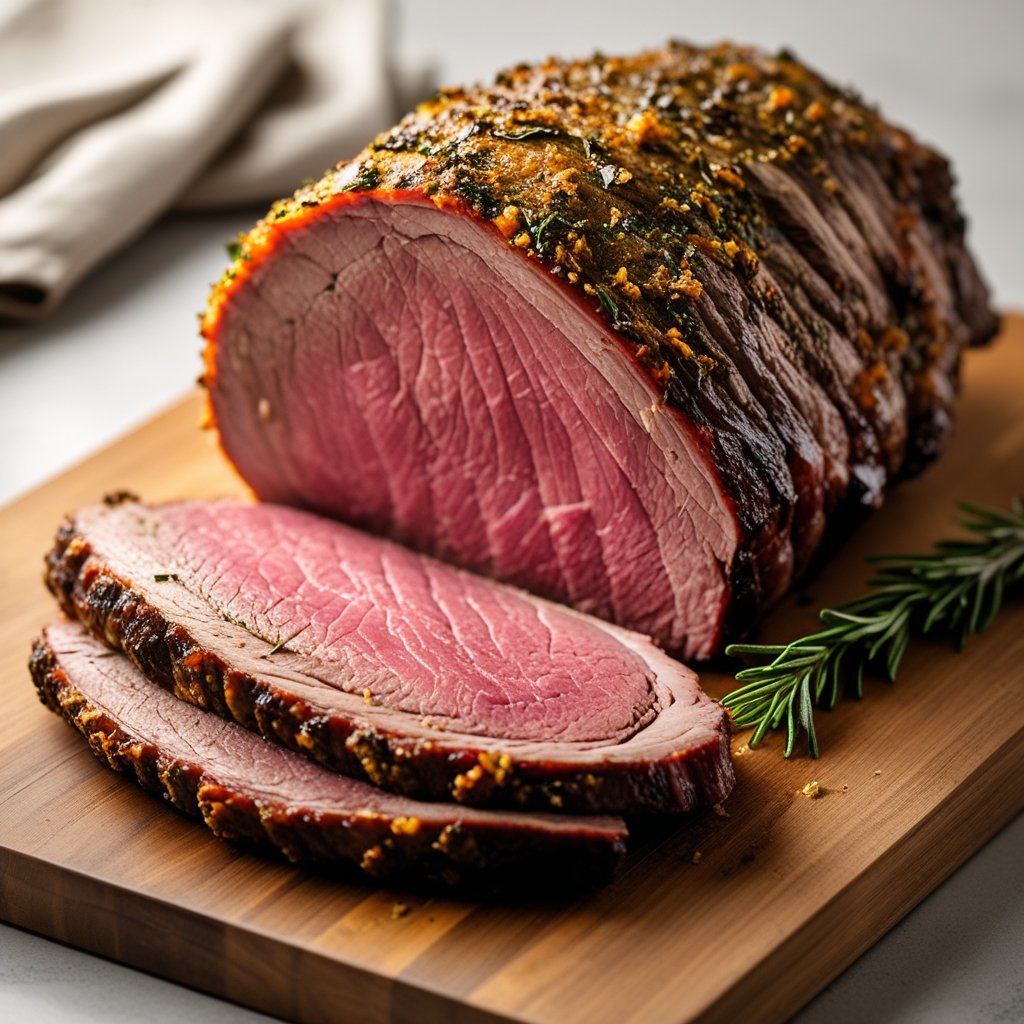
Easy Christmas Prime Rib Recipes for a Show-Stopping Holiday Dinner
Easy Christmas prime rib recipes are the way to make your holiday dinner unforgettable. There is a moment at every Christmas table when the roast comes out of the oven — golden and crackling, rosemary-scented, the whole room going quiet for a second — and that moment is what a prime rib dinner is all about. A standing rib roast is the classic centrepiece of a Christmas dinner: rich, tender, deeply beefy, and far easier to cook than its reputation suggests. This collection brings you eight easy Christmas prime rib recipes for a show-stopping holiday dinner — the classic garlic-herb roast, the foolproof reverse sear, a smoky version, and a horseradish-crusted showpiece — plus the sides, sauces and carving tips that turn a good roast into a great one. If you are planning the full menu, our Easy Christmas Dinner Recipes for a Crowd has more dishes to round out the table.
The secret to prime rib is simple: a good cut, a hot oven at the start, a thermometer, and patience. You do not need a fancy technique or a decade of experience. You need a roast, salt, time, and the confidence to let the oven do the work. Follow the methods below and your prime rib will come out juicy, rosy in the middle and golden on the outside — every single time.
How to Choose and Prepare a Prime Rib Roast
A prime rib is a standing rib roast — the rib section of the beef, cut with the bones still attached. Ask your butcher for a roast with three to five ribs, which feeds six to ten people generously. One rib feeds about two people, so a four-rib roast is the right size for most Christmas dinners. Choose a roast with good marbling, the white flecks of fat running through the meat, because that marbling is what keeps the roast juicy and flavourful.
Buy your roast a few days ahead and keep it in the fridge, uncovered, on a rack over a tray. The dry air of the fridge dries the surface of the meat, which helps the crust brown beautifully. Take the roast out of the fridge two hours before cooking so it comes to room temperature — a cold roast cooks unevenly. Season it generously with salt and pepper at least an hour before it goes in the oven, and do not be shy: a big roast needs a lot of salt. Our Easy Christmas Side Dishes for Holiday Dinner has the sides that pair best with a rich roast like this.
8 Easy Christmas Prime Rib Recipes
1. Classic Garlic and Herb Prime Rib
The classic garlic and herb prime rib is the recipe every Christmas cook should know. A paste of garlic, fresh rosemary, thyme, olive oil and plenty of salt and pepper, rubbed all over the roast. Into a hot oven at 450 degrees for twenty minutes to build the crust, then down to 325 until a thermometer in the centre reads 120 degrees for medium-rare. Rest it for thirty minutes before carving — that rest is not optional, it is what keeps the juices in the meat instead of on the cutting board. This is the roast that built the Christmas dinner tradition, and it has earned its place.
2. Reverse Sear Prime Rib
Reverse sear prime rib is the most foolproof method in this collection, and the one professional cooks quietly prefer. The roast goes into a low oven, around 250 degrees, and cooks slowly for hours until the centre reaches 120 degrees. Then it rests, and right before serving it goes back into a blazing hot oven for ten minutes to build a deep golden crust. The result is edge-to-edge pink meat with almost no grey band — the kind of perfect slice you usually only see in restaurants. It takes longer, but it is almost impossible to overcook, which makes it perfect for a Christmas cook who has ten other things going on.
3. Smoked Prime Rib with Rosemary Butter
Smoked prime rib is the show-stopping option for cooks with a smoker or a grill. The roast is seasoned with salt, pepper and garlic, then smoked low and slow over oak or cherry wood until the centre reaches 120 degrees, and finished with a brush of rosemary butter. The smoke adds a deep, savoury flavour that pairs beautifully with the richness of the beef, and the rosemary butter gives the crust a glossy, herb-flecked finish. If you are cooking for guests who love barbecue, this is the version they will remember. Serve it with the same sides as a classic roast — the smoke is the star, not a reason to change the menu.
4. Horseradish-Crusted Prime Rib
Horseradish-crusted prime rib is the bold, punchy version of the classic roast. A crust of prepared horseradish, breadcrumbs, garlic, Dijon mustard and fresh herbs, pressed onto the roast before it goes into the oven. As it cooks, the crust turns golden and crisp, and the horseradish gives every slice a gentle heat that cuts through the richness of the beef. Serve it with extra horseradish sauce on the side for guests who want more. This is the roast for a table that likes a little kick with its Christmas dinner, and it looks spectacular carved at the table.
5. Herb Butter Basted Prime Rib
Herb butter basted prime rib is the richest, most indulgent version on this list. A compound butter of softened butter, garlic, rosemary, thyme and a little lemon zest, spread thickly over the roast before it goes into the oven, and basted over the meat as it cooks. The butter melts into the crust, keeps the meat moist, and fills the kitchen with a smell that will have everyone hovering near the oven. It is a little more hands-on than the other methods, because you baste every half hour, but the result is a roast with a crackling, buttery crust that tastes like a steakhouse. Use good butter — it is the main flavour here.
6. Slow Cooker Prime Rib
Slow cooker prime rib sounds unusual, but it works beautifully for a smaller roast. A boneless rib roast, seasoned well, seared on all sides in a hot pan, then cooked on low in the slow cooker with a little beef stock, garlic and herbs for four to five hours. It comes out tender and juicy, and — best of all — it frees up your oven entirely for the sides and desserts, which on Christmas Day is worth its weight in gold. Finish it under the grill for five minutes to crisp the crust before carving. Our Easy Slow Cooker Christmas Recipes for Busy Holiday Nights has more hands-off holiday dishes that free up the oven.
7. Garlic Rosemary Prime Rib with Au Jus
Garlic rosemary prime rib with au jus is the classic restaurant-style presentation. The roast cooks the same way as the classic method, but the real star is the au jus — the pan drippings deglazed with red wine and beef stock, simmered with garlic and rosemary, and served warm in a jug at the table. Guests spoon it over their slices, and it turns a great roast into a luxurious one. Save every drop of the pan drippings, because that is where the flavour lives. Serve the au jus alongside a creamy horseradish sauce, and let everyone choose their favourite.
8. Prime Rib with Red Wine Reduction
Prime rib with red wine reduction is the elegant, special-occasion version. The roast itself is seasoned simply — salt, pepper and garlic — and the drama comes from the sauce: red wine, shallots, beef stock and a knob of butter, reduced slowly until it coats a spoon. It is the kind of sauce that makes the whole table feel like a fine restaurant, and it takes only twenty minutes while the roast rests. Make it in the same pan as the roast drippings for the deepest flavour. This is the version to choose when you want the Christmas dinner to feel truly special.
The Best Sides for Christmas Prime Rib
A prime rib needs sides that can stand up to its richness without competing with it. Creamy mashed potatoes are the classic partner — they soak up the au jus and the meat juices beautifully. Roasted root vegetables, like carrots and parsnips with a little honey, bring sweetness and colour. A green vegetable, like roasted Brussels sprouts or green beans, adds freshness and balance. And Yorkshire puddings, if you want the full traditional experience, are made from the roast drippings and are worth every minute of effort.
Do not overdo the sides. A prime rib dinner is about the roast, so three good sides are plenty: one potato, one green vegetable, and one salad or roasted vegetable. Our Easy Christmas Potluck Recipes for Holiday Gatherings has more crowd-pleasing dishes, and our Easy Christmas Appetizers for Holiday Parties will keep guests happy while the roast rests.
How to Carve and Serve Prime Rib
Carving a prime rib is easier than it looks. First, let the roast rest for at least thirty minutes after it comes out of the oven — this is the most important step, because the juices need time to settle back into the meat. Then stand the roast on its end, bones down, and slice the meat away from the bones in one long cut. Slice the roast into thick slices, about half an inch each, and arrange them on a warm platter.
Carve at the table if you can — it is part of the theatre of Christmas dinner, and guests love watching it. Keep the horseradish sauce and the au jus on the table so everyone can help themselves. And save the bones: they make the best beef stock you will ever taste, and a pot of soup the day after Christmas is one of the great pleasures of the holiday. Our Easy Make-Ahead Christmas Recipes for a Stress-Free Holiday has more dishes you can finish before the big day, so the roast gets your full attention.
Prime Rib Cooking Times and Temperatures
A meat thermometer is the only tool that matters for prime rib. Pull the roast at 120 degrees for rare, 130 for medium-rare, and 140 for medium — the temperature will rise another five to ten degrees while it rests. For a bone-in roast, plan on about fifteen minutes per pound at 325 degrees after the initial hot sear, but always trust the thermometer over the clock, because every oven and every roast is different.
Let the roast rest for thirty minutes, tented loosely with foil, before you carve it. If you cut into it too soon, the juices run out onto the board and the meat dries out. If the roast has cooled too much by serving time, warm the slices gently in the au jus for a minute — never put them back in the oven. And remember: you can always cook a slice a little more for a guest who likes it well done, but you can never uncook one.
What to Do with Leftover Prime Rib
Leftover prime rib is one of the best parts of Christmas dinner. Thin slices make extraordinary sandwiches on crusty bread with horseradish sauce and arugula. Diced prime rib turns into a rich hash with potatoes and onions for Boxing Day breakfast. And the bones, simmered with vegetables, make a stock that becomes soup for the rest of the week. Wrap leftovers tightly and refrigerate them within two hours of serving, and use them within three days. Our Easy Christmas Eve Dinner Ideas for a Cozy, Stress-Free Holiday Night has more ideas for the nights around Christmas, and our Easy Thanksgiving Casserole Recipes for a Crowd has casserole ideas that work beautifully with leftover roast beef.
Frequently Asked Questions
How much prime rib do I need per person?
Plan on about half a pound of boneless prime rib per person, or one rib bone for every two guests on a bone-in roast. A four-rib roast, about eight to nine pounds, feeds eight to ten people generously. Buy a little extra if you want leftovers — prime rib sandwiches the next day are worth it.
Should I cook prime rib bone-in or boneless?
Bone-in roasts cook more evenly and stay juicier, because the bones insulate the meat and add flavour. Boneless roasts are easier to carve and take up less oven space. If you are confident carving, choose bone-in; if you want the simplest carving, choose boneless. Either way, the flavour is excellent.
What temperature should prime rib be cooked to?
Pull the roast from the oven at 120 degrees for rare, 130 for medium-rare, or 140 for medium. The temperature rises five to ten degrees during the thirty-minute rest. Medium-rare is the classic choice for prime rib, because the fat renders beautifully at that temperature.
Can I make prime rib ahead of time?
You can season the roast up to two days ahead and keep it uncovered in the fridge — this actually improves the crust. But the roast itself should be cooked on the day you serve it. Cook it early, let it rest, and keep it warm tented in foil; it holds beautifully for an hour before carving.
What is the best sauce for prime rib?
The two classics are au jus, made from the pan drippings with wine and stock, and creamy horseradish sauce. Serve both and let guests choose. A red wine reduction is the elegant third option for a special dinner. All three are simple, and all three make the roast taste even better.