

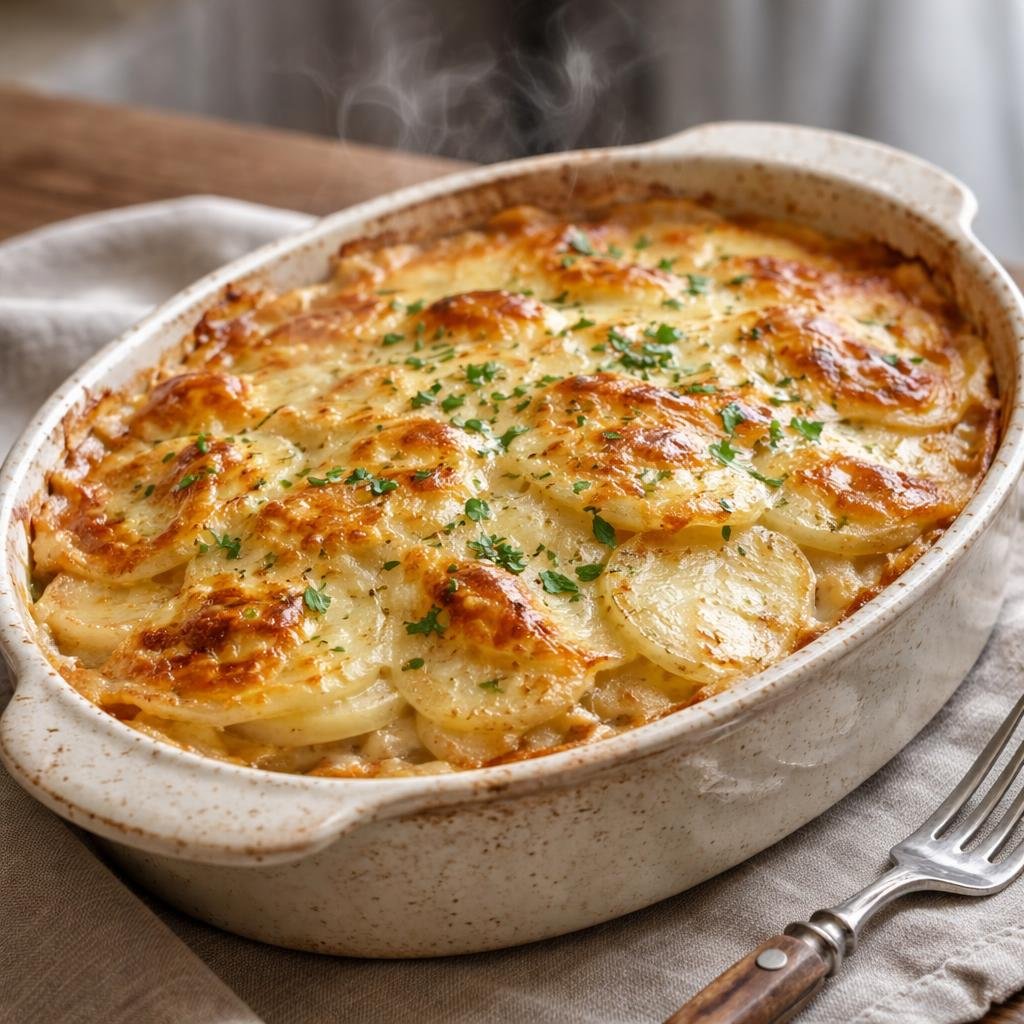
Scalloped potatoes are the Thanksgiving side dish that turns a good dinner into a memorable one. Thin slices of potato baked slowly in cream until they are soft, rich, and golden on top — it is comfort food at its best, and it has been on American holiday tables for generations. If you want scalloped potatoes that fit your table, your time, and your guests, you do not need to settle for one recipe. This guide walks through three scalloped potato recipes already on Recipes Walay, from Martha Stewart’s classic cream version to Joanna Gaines’ cheesy cheddar bake and Ina Garten’s hearty version with ham and Gruyere. Pick one, and your side dish is done.
Why Scalloped Potatoes Belong on the Thanksgiving Table
Scalloped potatoes are one of the most searched Thanksgiving side dishes every November, and for good reason. They use simple ingredients — potatoes, cream, milk, butter, garlic, and cheese — they can be assembled the day before, and they feed a crowd from a single baking dish. A 9×13 pan serves six generously, and doubling the recipe covers even a big family gathering. They also solve a real Thanksgiving problem: oven space. Scalloped potatoes bake happily at 375°F, the same temperature as many turkey accompaniments, and they hold their heat well while the turkey rests. That is why they show up on nearly every holiday table and why searches for scalloped potatoes climb every November. They are rich enough to feel special and simple enough that anyone can make them.
What Makes Great Scalloped Potatoes?
Great scalloped potatoes come down to four things. First, the slices. Cut the potatoes thin and evenly — a mandoline slicer is ideal, but a sharp knife and patience work too. Thin, even slices cook at the same speed and soak up the creamy sauce instead of staying hard in the middle. Second, warm cream. Warm the cream and milk before pouring them over the potatoes, because warm sauce blends smoothly and will not curdle the way cold dairy can. Third, layering. Layer the potatoes and sauce slowly, a little at a time, so every slice is coated and the flavour reaches every bite. Fourth, the bake. Bake the dish covered with foil first so the potatoes soften and cook slowly inside, then uncover it so the top turns golden and lightly crisp. Let the dish rest for ten to fifteen minutes before serving — the sauce thickens as it cools slightly, and the potatoes slice cleanly instead of falling apart. Keep these four rules in mind and every variation below will work.
The Classic: Martha Stewart Scalloped Potatoes Recipe
If you have never made scalloped potatoes, start here. Martha Stewart’s version is the classic: pure comfort food, creamy, rich, and very easy to make. It serves six at 320 calories a serving, with 20 minutes of prep and 60 minutes of cooking, for a total of 80 minutes. The ingredients are simple: four large potatoes, thinly sliced, two cups of heavy cream, one cup of whole milk, two tablespoons of butter, two cloves of garlic, minced, one teaspoon of salt, half a teaspoon of black pepper, half a teaspoon of paprika, and one cup of grated cheese, which is optional but recommended. Wash and peel the potatoes, slice them thin and evenly, and warm the cream before adding it — this step makes the sauce smooth and helps it blend with the potatoes. Layer the potatoes and sauce slowly in a buttered baking dish, so every layer carries rich flavour. Bake the dish covered first, then uncover it for a golden top, so the potatoes come out creamy inside and lightly crisp outside. The result is soft potatoes in a silky sauce with a golden finish, and it works for family meals, holidays, and cozy evenings alike. Fresh potatoes and good cream matter most here — they give the dish its deep, comforting taste.
Variation 1: Joanna Gaines Scalloped Potatoes Recipe
When your family wants scalloped potatoes with a little more richness, this is the version to make. Joanna Gaines’ recipe keeps the classic method but builds a proper cheese sauce, so the dish comes out golden, cheesy, and deeply satisfying. It serves six at 320 calories a serving, with 20 minutes of prep and 60 minutes of cooking. The ingredients are two pounds of russet potatoes, thinly sliced, two tablespoons of butter, one small onion, finely chopped, two cloves of garlic, minced, two tablespoons of all-purpose flour, two cups of whole milk, one cup of heavy cream, one teaspoon of salt, half a teaspoon of black pepper, one teaspoon of paprika, one and a half cups of shredded cheddar cheese, a quarter cup of grated Parmesan cheese, and two tablespoons of fresh parsley, chopped. Slice the potatoes into thin rounds and keep them in a bowl of cold water so they stay fresh and do not turn brown. Melt the butter in a medium saucepan, cook the onion until soft, add the garlic for one minute, then sprinkle in the flour and stir well. Slowly pour in the milk while whisking, add the heavy cream, and cook until the sauce is smooth and slightly thick. Season with salt, black pepper, and paprika, and taste the sauce before you use it — a well-seasoned sauce makes the whole dish taste richer. Grease a baking dish lightly with butter, layer potato slices, sauce, and a little cheddar, and repeat until everything is used. Cover with foil and bake at 375°F for about 40 minutes, then uncover and finish baking until the top is golden and the potatoes are tender. The secret, as Joanna Gaines puts it, is simple: slice the potatoes very thin, use warm cream and butter, add a little garlic and onion, and bake slowly. Good scalloped potatoes need time, and slow baking creates the creamy texture and golden top that make this dish unforgettable.
Variation 2: Ina Garten Scalloped Potatoes And Ham Recipe
This is the version that turns a side dish into the main event. Ina Garten’s Scalloped Potatoes and Ham adds salty, savoury ham and nutty Gruyere cheese to the classic, so the dish is hearty enough to serve on its own on a busy weeknight — and generous enough for a holiday table. The ingredients are two and a half pounds of Yukon Gold potatoes, two cups of heavy cream, one and a half cups of whole milk, two tablespoons of unsalted butter, one small onion, finely sliced, two cloves of garlic, minced, one and a half cups of cooked ham, diced, one cup of Gruyere cheese, grated, half a cup of Parmesan cheese, grated, one teaspoon of kosher salt, half a teaspoon of black pepper, and half a teaspoon of fresh thyme. Preheat the oven to 375°F and butter a 9×13 inch baking dish. Slice the potatoes thin and uniform, then heat the butter in a saucepan, cook the onion gently, stir in the garlic briefly, and pour in the cream and milk. Season with salt and pepper and simmer the sauce lightly. Layer the potatoes in the dish with the ham and cheeses, repeat the layers carefully, and pour the warm sauce over everything. Cover tightly with foil and bake for 45 minutes, then uncover and bake for 25 minutes more, until the top is golden and bubbling. Rest the dish before serving. The balance is what makes this recipe work: thin potatoes cook evenly in the cream sauce, the ham provides protein and salty contrast, and the cheese melts smoothly without overpowering the flavours. Use full-fat dairy for the best texture, warm the sauce so it does not curdle, slice the potatoes evenly, and let the dish rest before slicing. Leftover ham from a holiday dinner is perfect here, which makes this the smartest recipe in the guide for the days after Thanksgiving.
Make-Ahead and Storage Tips
Scalloped potatoes are one of the easiest Thanksgiving sides to make ahead, which is exactly why they belong on a holiday table. You can assemble the whole dish the day before: slice the potatoes, make the sauce, layer everything in the baking dish, cover it tightly, and keep it in the fridge. On the day, let the dish sit at room temperature for about 30 minutes while the oven heats, then bake as directed, adding ten extra minutes if it went into the oven cold. Baked scalloped potatoes keep well in the fridge for three to four days in an airtight container, and they reheat beautifully without drying out — warm individual portions in the oven at 300°F for about ten minutes rather than the microwave, which can make the sauce separate. The ham version keeps just as well and makes excellent leftovers for lunch the next day. You can also freeze baked scalloped potatoes for up to a month, though the sauce may be slightly less smooth after thawing; thaw overnight in the fridge and reheat covered in the oven. Do not freeze an unbaked dish, because the potatoes can turn grey and the sauce can split. For any version, let the dish cool completely before covering it, or condensation will soften the golden top. If the top browns too quickly while baking, lay a loose sheet of foil over it and keep going.
What to Serve with Scalloped Potatoes
Scalloped potatoes are rich and creamy, so pair them with something fresh and green. On a Thanksgiving table, they sit happily next to the turkey, cranberry sauce, and green bean casserole — the cool tang of cranberry and the snap of green beans balance the soft, rich potatoes. A crisp green salad with a sharp vinaigrette cuts through the cream, and roasted Brussels sprouts add crunch and a mild bitterness that keeps the plate from feeling too heavy. Garlic green beans keep the meal fresh and light, and they are one of the pairings the ham recipe itself suggests. For a full holiday plate, serve the classic Martha Stewart version beside the turkey and save the ham version for the day after, when it becomes the main dish with just a salad on the side. Strong coffee or black tea balances the richness at the end of the meal, and a small green salad between courses gives everyone a fresh bite before dessert. Keep the sides simple — the potatoes are the star, and they do not need competition.
Frequently Asked Questions
Can I make scalloped potatoes ahead of time?
Yes. You can assemble the whole dish the day before, cover it tightly, and keep it in the fridge. On the day, let it sit at room temperature for about 30 minutes, then bake as directed, adding about ten extra minutes if it went into the oven cold. Baked scalloped potatoes also keep for three to four days in the fridge and reheat well in the oven at 300°F for about ten minutes.
What potatoes are best for scalloped potatoes?
Russet potatoes and Yukon Gold potatoes both work well. Russets are starchy, so they absorb the cream and turn soft and fluffy — Joanna Gaines uses two pounds of russets in her version. Yukon Golds hold their shape a little better and taste buttery on their own — Ina Garten uses two and a half pounds of Yukon Golds with ham. Whichever you choose, slice them thin and evenly so they cook at the same speed.
Why are my scalloped potatoes watery?
The most common cause is slicing the potatoes too thick, so they release water faster than the sauce can thicken. Slice thin and evenly, use full-fat cream and milk rather than low-fat versions, and let the dish rest for ten to fifteen minutes before serving — the sauce thickens as it cools slightly. Warming the cream before pouring it over the potatoes also helps the sauce stay smooth instead of splitting.
Do I need to peel the potatoes?
Peeling is recommended for the classic versions in this guide, because peeled slices give the smooth, creamy texture scalloped potatoes are known for. If you like a more rustic dish, you can leave the skins on well-scrubbed Yukon Golds — the skins add colour and a little texture, but the sauce will not be quite as silky. Either way, slice the potatoes evenly.
Can I freeze scalloped potatoes?
You can freeze baked scalloped potatoes for up to a month in an airtight container. Thaw them overnight in the fridge and reheat covered in the oven until hot all the way through. The sauce may be slightly less smooth after thawing, but the flavour stays good. Do not freeze an unbaked dish, because the potatoes can turn grey and the sauce can split.
Final Thoughts
Scalloped potatoes are simple, classic, and full of comfort. They bring rich flavour in every bite, they cost very little to make, and they are the side dish guests ask for by name. Once you learn how to make them — the thin even slices, the warm cream, the slow layering, the covered-then-uncovered bake — you will always return to them. Make the classic Martha Stewart version for tradition, add the cheesy Joanna Gaines version for richness, and let Ina Garten’s ham version turn leftovers into the next day’s dinner. Make them once, and they may become your favourite holiday side dish.