

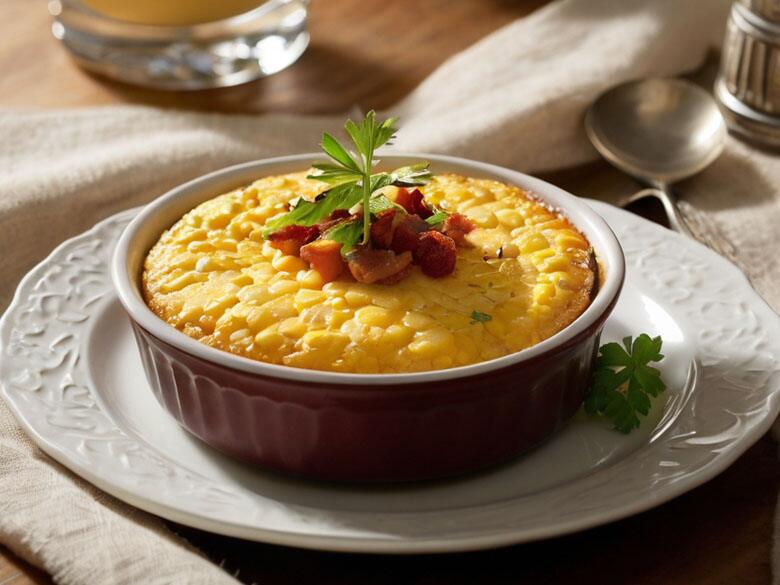
Easy Corn Pudding for Thanksgiving: Classic Southern Recipe, Variations & Make-Ahead Tips
Thanksgiving dinner has its stars, the turkey, the stuffing, the cranberry sauce, but the dish guests quietly ask about on the way home is often the corn pudding. It is warm, golden, and spoonable, halfway between a savory custard and a soft casserole, with sweet corn flavor, a smoky edge, and a creamy texture that melts on the tongue. One spoonful next to roast turkey or smoked ham tastes like the best part of a Southern holiday table.
This guide walks you through the Buxton Hall Corn Pudding Recipe from Recipes Walay, a smoky, creamy version of the Southern classic from Buxton Hall Barbecue in Asheville, North Carolina. You will learn exactly how to make it, which corn to use, how to tell when it is perfectly set, which variations are worth trying, and how to make it ahead so Thanksgiving Day stays calm. Whether this is your first corn pudding or your fiftieth, this is the version to make.
Why Corn Pudding Belongs on the Thanksgiving Table
Corn pudding belongs on the Thanksgiving table because it does a job no other side dish does. Mashed potatoes are rich and starchy, stuffing is savory and dense, and green bean casserole is creamy and crisp, but corn pudding is soft, sweet, and custardy, and it balances the whole plate. It brings a gentle sweetness that pairs beautifully with salty turkey, smoky ham, and tangy cranberry sauce, and its golden top looks gorgeous next to everything else on the table.
It is also one of the easiest Thanksgiving sides to make. The whole dish comes together in one bowl, bakes in a single dish, and needs only 15 minutes of prep before the oven takes over. It serves 6 people from a 9 by 9 inch baking dish, and the recipe doubles easily for a crowd. Make it the day before, reheat it gently, and it tastes just as good, which is exactly what a busy Thanksgiving cook needs.
What Makes a Great Corn Pudding
A great corn pudding starts with the right texture. It should be soft and custardy in the middle, lightly golden on top, and firm enough to spoon neatly onto a plate without falling apart. The secret is the balance of eggs, cream, milk, and sour cream, which set into a silky custard around the corn kernels, while a little flour helps the pudding hold its shape.
The second secret is flavor. Fresh corn brings natural sweetness, sauteed onion and garlic add savory depth, and a teaspoon of smoked paprika gives this version its signature Buxton Hall twist, a gentle smokiness that sets it apart from plain corn pudding. A little sugar, salt, black pepper, and a pinch of cayenne round out the seasoning, and optional sharp cheddar melts into the custard for extra richness. Every ingredient earns its place, and none of them is hard to find.
The Buxton Hall Corn Pudding Recipe
The Buxton Hall Corn Pudding Recipe is the classic starting point, and it is the one to choose if you want a corn pudding that tastes like a Southern restaurant side dish. It comes from Buxton Hall Barbecue in Asheville, North Carolina, a place celebrated for its traditional whole-hog barbecue and innovative Southern sides, and it blends old-school charm with a gourmet edge. The result is a golden, custard-like dish with a subtle smokiness, rich corn flavor, and a luscious, melt-in-your-mouth texture.
This recipe serves 6 people, with 15 minutes of prep time and 55 minutes of cooking time, for a total of 1 hour and 10 minutes. Each serving has about 280 kcal. You will need 4 ears of fresh corn, or 2 cups of frozen corn, thawed, 1 tablespoon of unsalted butter plus more for greasing, 1 small yellow onion, finely chopped, 2 garlic cloves, minced, 3 large eggs, 1 cup of heavy cream, half a cup of whole milk, half a cup of sour cream, 1 tablespoon of sugar, 1 teaspoon of salt, half a teaspoon of black pepper, a quarter teaspoon of cayenne pepper, which is optional, 2 tablespoons of all-purpose flour, 1 teaspoon of smoked paprika, and half a cup of sharp cheddar cheese, shredded, which is optional but recommended.
You will also need a few basic tools: mixing bowls in medium and large sizes, a whisk, measuring cups and spoons, a chef’s knife, a cutting board, a box grater if you want it, a skillet, preferably cast iron, an oven-safe baking dish of 9 by 9 inches or similar, aluminum foil, and a rubber spatula or spoon.
Get the full recipe: Buxton Hall Corn Pudding Recipe
Step-by-Step: How to Make Corn Pudding
Making corn pudding is simple, and the whole process has six easy steps. Start by preparing the corn. If you are using fresh corn, cut the kernels off the cob and scrape the cobs to extract the milky liquid, which adds extra corn flavor to the custard. If you are using frozen corn, make sure it is completely thawed and drained before you start.
Next, saute the aromatics. In a skillet over medium heat, melt the butter, add the chopped onion and garlic, and cook until they turn translucent, about 5 minutes. Remove the skillet from the heat and set it aside. This step matters more than it looks, because cooking the onion and garlic first adds depth and removes any raw bite.
Then mix the base. In a large bowl, whisk together the eggs, heavy cream, milk, sour cream, sugar, salt, black pepper, and cayenne. Add the flour and smoked paprika, mixing until smooth. Now combine everything: fold in the corn kernels, the sauteed onion and garlic, and the shredded cheddar if you are using it, mixing gently until everything is incorporated.
Finally, bake the pudding. Preheat your oven to 350 degrees Fahrenheit, or 175 degrees Celsius. Grease your baking dish and pour in the mixture. Cover the dish loosely with foil and bake for 30 minutes. Remove the foil and bake for an additional 20 to 25 minutes, until the top is golden and the center is set. Let the corn pudding rest for 10 minutes before serving. It will firm up slightly while keeping its soft, creamy texture.
Fresh Corn vs Frozen Corn: Which Should You Use?
Fresh corn is the best choice when it is in season, because fresh kernels bring a natural sweetness and a pop of texture that frozen or canned corn cannot quite match. Four ears of fresh corn give you about 2 cups of kernels, and scraping the cobs adds a milky sweetness to the custard that makes a real difference. If you are making this for Thanksgiving, fresh corn is worth the extra few minutes.
Frozen corn works very well too, and it is the practical choice in November when fresh sweet corn is out of season. Thaw it completely and drain it well before mixing, and pat it dry so extra water does not thin the custard. Canned corn also works if you drain and rinse it well, though the texture is softer. Whichever corn you use, the smoked paprika, sauteed onion, and cheddar keep the flavor rich and smoky.
How to Tell When Corn Pudding Is Done
The trickiest part of corn pudding is knowing when to take it out of the oven, and the signs are easy to read once you know them. The top should be golden brown, the edges should look set and slightly puffed, and the center should jiggle slightly when you gently shake the dish, but it should not look liquid. A knife inserted near the center should come out mostly clean.
The foil step is what makes this work. Baking covered for the first 30 minutes lets the custard set gently without drying out, and baking uncovered for the last 20 to 25 minutes gives the top its golden color. If the top is browning too fast, cover it loosely with foil again. And do not skip the 10-minute rest after baking: the pudding firms up as it cools, so a pudding that looks a little soft in the oven will be perfect by the time it reaches the table.
Corn Pudding Variations to Try
Once you know the base recipe, corn pudding is easy to make your own. For a bacon corn pudding, stir in crisp crumbled bacon for a savory crunch that pairs beautifully with the sweet corn. For a spicy version, dice fresh jalapeños and fold them in with the corn, which adds heat without changing the creamy texture.
For a vegetarian table, simply leave out the bacon and use a vegetarian-friendly cheese, since the rest of the recipe is already meat-free. For extra texture, line the baking dish with a thin layer of cornbread batter before adding the pudding mixture, which bakes into a soft cornbread crust underneath. For a fresh finish, garnish the baked pudding with chopped chives or parsley, which adds color and a light herbal note. You can also try a dash of liquid smoke alongside the smoked paprika for an even deeper smoky flavor.
Make-Ahead Corn Pudding for Thanksgiving Day
Corn pudding is a wonderful make-ahead side dish, which is exactly why it suits Thanksgiving. You can assemble the whole mixture the day before, cover the baking dish, and keep it in the refrigerator overnight, then bake it fresh on Thanksgiving Day while the turkey rests. Baking it fresh means the top comes out golden and the center stays creamy.
If you prefer to bake it ahead, let the baked pudding cool completely, cover it tightly, and refrigerate it. On the day, reheat it gently in a low oven until it is warmed through, and add a few extra minutes if it went into the oven cold. Avoid reheating it at a high temperature, which can dry out the custard and toughen the edges. A gentle reheat keeps it soft, creamy, and ready for the table.
What to Serve with Corn Pudding
Corn pudding pairs beautifully with the rest of the Thanksgiving table. It is at its best next to roast turkey, smoked ham, or barbecue pork, and it also works wonderfully with brisket or roasted chicken. The sweet, creamy pudding balances salty, smoky meats in a way that few other sides can.
For the full holiday spread, serve it alongside our Easy Sweet Potato Casserole for Thanksgiving, our Easy Green Bean Casserole for Thanksgiving, and our Easy Mashed Potatoes for Thanksgiving, all classic holiday sides with make-ahead tips. Add our Easy Deviled Eggs for Thanksgiving to the appetizer table and our Easy Thanksgiving Turkey Recipes for the Holiday Table for the main event, and the whole meal comes together around this one golden dish.
Storing and Reheating Leftover Corn Pudding
Leftover corn pudding keeps well, so do not throw away a single spoonful. Let it cool completely, then store it covered in the refrigerator. When you are ready to eat it again, reheat individual portions gently in the microwave, or warm the whole dish in a low oven until it is heated through.
Reheat it gently rather than blasting it with high heat, because the custard is delicate and high heat can make it rubbery. A splash of cream stirred in before reheating helps bring back the soft texture if the pudding has firmed up in the fridge. Leftover corn pudding also makes a wonderful next-day lunch next to leftover turkey, and it reheats well enough to serve to guests a second time.
Common Corn Pudding Mistakes to Avoid
The most common corn pudding mistake is skipping the saute step. Raw onion and garlic taste sharp in a baked custard, while five minutes in a skillet turns them sweet and mellow, so always cook them first. The second mistake is using corn that is still wet, whether frozen corn that was not drained or canned corn that was not rinsed, because extra water thins the custard and keeps it from setting.
The third mistake is baking without foil for the whole time, which dries out the top before the center sets. Cover the dish for the first 30 minutes, then uncover it to brown. The fourth mistake is slicing into the pudding straight from the oven. Give it 10 minutes to rest so it firms up and slices cleanly. Finally, do not overbake it. A center that jiggles slightly is perfect, because it finishes setting as it rests, while an overbaked pudding turns dry and grainy.
Frequently Asked Questions
Can I use frozen or canned corn instead of fresh corn?
Yes, both frozen and canned corn work in the Buxton Hall Corn Pudding Recipe, though fresh corn offers the best texture and flavor. If you use canned corn, drain and rinse it well. If you use frozen corn, thaw it completely and pat it dry before adding it to the mixture, so extra water does not thin the custard.
What dishes pair well with corn pudding?
Corn pudding pairs beautifully with smoked or grilled meats like barbecue pork, brisket, or roasted chicken. It also complements collard greens, roasted vegetables, and other Southern-style sides like mac and cheese or baked beans. On a Thanksgiving table, it sits happily next to turkey, stuffing, sweet potato casserole, and green bean casserole.
Can I make corn pudding gluten-free?
Yes. Simply substitute the all-purpose flour with a gluten-free flour blend or cornstarch. All the other ingredients in the standard recipe are naturally gluten-free, but double-check the labels to be safe, especially the sour cream and cheese.
Can I make corn pudding ahead of time?
Yes, corn pudding is a great make-ahead side. Assemble the mixture the day before, cover it, and refrigerate it overnight, then bake it fresh on the day. Or bake it ahead, let it cool, cover it, and refrigerate it, then reheat it gently in a low oven until warmed through. Either way, Thanksgiving Day stays calm.
How do I know when corn pudding is done?
The pudding is done when the top is golden, the edges are set, and the center jiggles slightly when you gently shake the dish without looking liquid. A knife inserted near the center should come out mostly clean. Let it rest for 10 minutes after baking, because it firms up as it cools, and a center that looks a little soft in the oven will be perfect at the table.
Final Thoughts
Corn pudding is proof that the simplest side dishes are often the most loved ones. With fresh corn, eggs, cream, and a spoonful of smoked paprika, you can make a dish that tastes like a Southern restaurant and feels like home, golden on top, creamy in the middle, and gone before the second helping round.
Start with the Buxton Hall recipe for a smoky, creamy classic, try the bacon or jalapeño variation when you want a twist, and make it ahead so Thanksgiving Day is about the people, not the oven timer. Now that you know how to make corn pudding for Thanksgiving, gather your ingredients and enjoy a warm, golden spoonful with the people you love.