

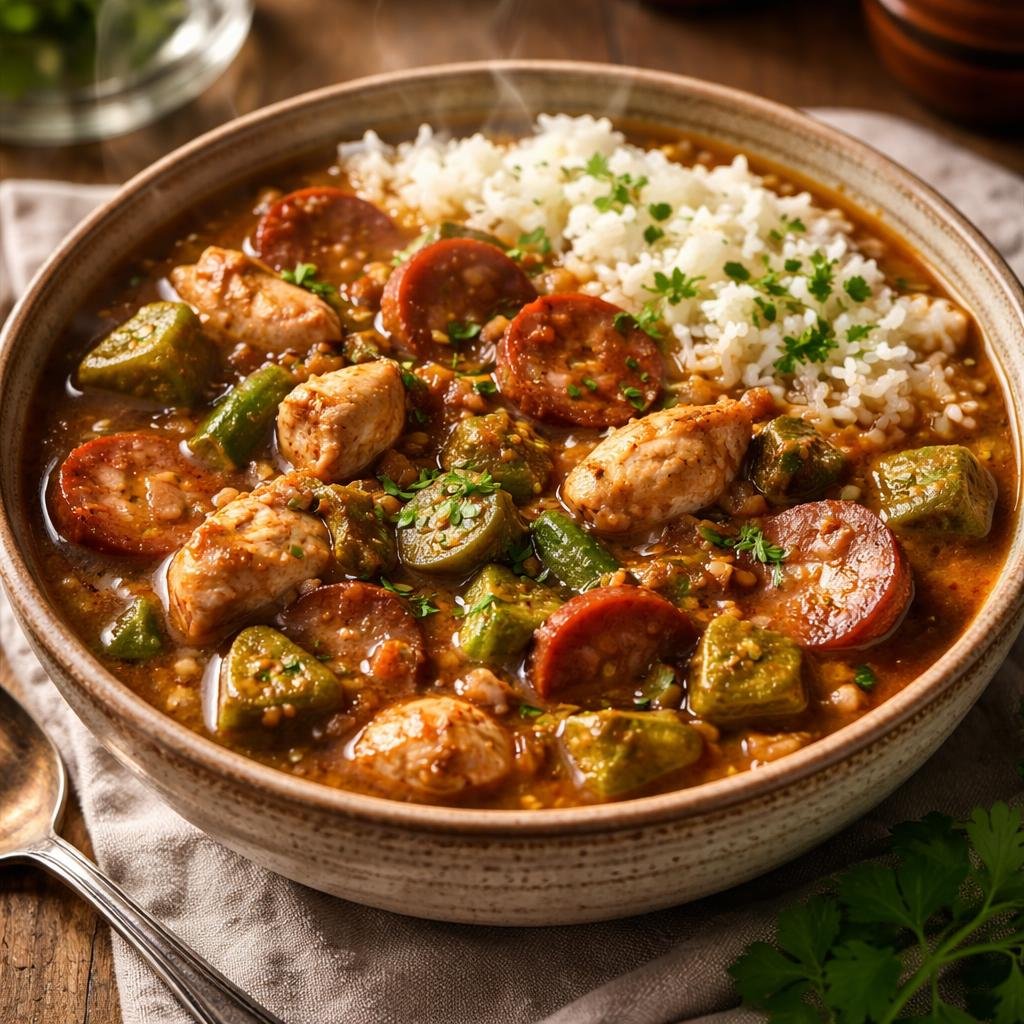
When the evenings turn cold and dark early, few meals feel as comforting as a pot of gumbo simmering on the stove. Gumbo is warm, rich, and deeply satisfying, and it turns a handful of simple ingredients into a dinner the whole family gathers around. On a winter night, when you want something cozy that feeds a crowd without spending the whole evening in the kitchen, a good gumbo is one of the easiest wins in home cooking.
This guide brings together two classic gumbo recipes from Recipes Walay, compares them side by side, and shows you how to pick the right one for your night. You will learn how to make a dark roux without burning it, how to choose between a chicken and sausage gumbo and a seafood gumbo, which variations are worth trying, and how to make gumbo ahead so dinner is ready when you are. Whether you want a hearty Southern classic, a restaurant-style seafood pot, or a make-ahead meal that tastes even better the next day, you will find it here.
Why Gumbo Is the Perfect Winter Night Dinner
Gumbo works so well in winter because it asks very little and gives back a lot. A roux made from oil and flour, the holy trinity of onion, bell pepper, and celery, broth, and your choice of meat or seafood are the whole foundation, and most of these are already in the kitchen. The gumbo cooks in one pot, it scales up easily for a crowd, and it tastes even better the next day, which makes it ideal for busy weeknights and relaxed weekends alike.
It is also one of the most flexible stews you can make. Serve it over white rice for a filling family dinner, make it spicy with extra cayenne for adults, or keep it mild for children. The pot feeds six to eight people from a single batch, so it is perfect for family gatherings and holiday weekends. On a cold night, a warm bowl of gumbo with crusty bread is comfort in its simplest form.
What Makes a Great Gumbo
A great gumbo starts with a great roux. Equal parts oil and flour, cooked slowly and stirred constantly until dark brown and nutty-smelling, give the gumbo its deep color and rich flavor. The roux is the foundation of the whole dish, and patience here pays off in every spoonful. A pale roux makes a thin, pale gumbo, while a dark roux makes the deep, complex bowl that gumbo is famous for.
The second secret is the holy trinity: onion, green bell pepper, and celery, cooked in the hot roux until soft. Garlic, paprika, cayenne, thyme, and bay leaves build the warm Southern seasoning, and a long, gentle simmer lets the flavors marry together. Okra adds body and a classic texture, while rice served underneath soaks up the rich broth. Get the roux right, season boldly, and let it simmer, and the gumbo almost takes care of itself.
1. Paula Deen Gumbo Recipe
Paula Deen Gumbo Recipe is the classic starting point, and it is the one to choose if you are new to gumbo. It builds a dark, nutty roux, then adds chicken thighs and smoked sausage with the holy trinity, tomatoes, and okra for a hearty, crowd-pleasing pot that tastes like a Southern family dinner.
This recipe serves 6 to 8 people, with 20 minutes of prep time and 1 hour and 30 minutes of cooking time, for a total of 1 hour and 50 minutes. Each serving has about 350 kcal. You will need half a cup of vegetable oil, half a cup of all-purpose flour, 1 large onion, chopped, 1 green bell pepper, chopped, 2 celery stalks, chopped, 3 cloves of garlic, minced, 1 pound of smoked sausage, sliced, 1 pound of boneless chicken thighs, cut into pieces, 1 teaspoon of paprika, half a teaspoon of cayenne pepper, 1 teaspoon of dried thyme, 2 bay leaves, 6 cups of chicken broth, 1 can of diced tomatoes (14.5 oz), 1 cup of okra, sliced, salt and black pepper to taste, cooked white rice for serving, and chopped parsley for garnish.
To make it, heat the oil in a large pot over medium heat and gradually whisk in the flour, stirring constantly until the roux is dark brown and smells nutty. Add the onion, bell pepper, and celery to the roux and cook until soft, about 5 minutes, then mix in the garlic and cook for another 1 to 2 minutes until fragrant. Brown the chicken pieces lightly on all sides, then add the sliced smoked sausage and cook for 3 to 5 minutes until slightly caramelized. Stir in the paprika, cayenne, thyme, and bay leaves, pour in the chicken broth and diced tomatoes, and bring to a gentle boil. Reduce the heat to low, cover, and simmer for 1 hour, stirring occasionally to prevent sticking. Mix in the sliced okra about 10 minutes before finishing and cook until tender. Taste and adjust the seasoning with salt, pepper, or extra cayenne, then spoon the gumbo over cooked white rice and garnish with chopped parsley.
Paula Deen’s version is wonderfully forgiving for a first gumbo. The chicken thighs stay tender through the long simmer, the smoked sausage adds a deep, savory note, and the tomatoes give the broth a gentle tang. Make it a day ahead if you can, because the flavors improve overnight. Freeze leftovers in airtight containers for up to 3 months, and add a dash of hot sauce at the table if you love extra heat.
Get the full recipe: Paula Deen Gumbo Recipe
2. Pappadeaux Gumbo Recipe
Pappadeaux Gumbo Recipe is the richer, restaurant-style version, and it is the one to make when you want a gumbo that tastes like it came from a famous Louisiana seafood kitchen. It pairs andouille sausage with shrimp and crab meat, so every spoonful has smoky, sweet, and briny notes layered over the same dark roux base.
This recipe serves 6 people, with 20 minutes of prep time and 1 hour of cooking time, for a total of 1 hour and 20 minutes. Each serving has about 350 kcal. You will need half a cup of vegetable oil, half a cup of all-purpose flour, 1 large onion, chopped, 1 green bell pepper, chopped, 3 celery stalks, chopped, 4 cloves of garlic, minced, 1 pound of andouille sausage, sliced, 1 pound of okra, sliced, 6 cups of chicken broth, 1 teaspoon of dried thyme, 2 bay leaves, 1 teaspoon of smoked paprika, half a teaspoon of cayenne pepper, salt and black pepper to taste, 1 pound of shrimp, peeled and deveined, 1 cup of crab meat, half a cup of chopped parsley, 4 green onions, chopped, and cooked rice for serving.
To make it, warm the oil in a sizable pot over medium heat and whisk in the flour, stirring continuously until the mixture turns a rich, dark brown color, which should take about 20 minutes. Add the chopped onion, bell pepper, celery, and garlic to the roux and cook until soft, about 5 minutes. Stir in the andouille sausage and okra and cook for another 5 minutes. Gradually add the chicken broth, stirring constantly, then add the thyme, bay leaves, smoked paprika, and cayenne pepper. Reduce the heat to low and let the gumbo simmer for 45 minutes, seasoning with salt and black pepper. Stir in the shrimp and crab meat and cook for an additional 10 minutes, or until the shrimp are pink and firm. Remove the bay leaves and stir in the parsley and green onions just before serving. Ladle the gumbo over cooked rice in bowls.
The Pappadeaux version is the showstopper of the two. The andouille sausage brings a smoky heat that plain smoked sausage does not, and adding the shrimp and crab meat only in the last 10 minutes keeps the seafood tender instead of rubbery. Fresh shrimp makes the biggest difference here, so buy the best you can find, and finish with plenty of parsley and green onions for color and freshness.
Get the full recipe: Pappadeaux Gumbo Recipe
Gumbo Recipes Compared: Which One Should You Make?
Both recipes make a wonderful winter gumbo, but they suit different nights. The Paula Deen version is the best all-rounder: it serves 6 to 8 people, uses everyday chicken and smoked sausage, and includes tomatoes for a slightly tangier broth, so it is the one to make for a family dinner or a first gumbo. The Pappadeaux version is the richer, more special-occasion pot, with andouille sausage, shrimp, and crab meat, so it is the one to serve to guests or on a holiday weekend.
If you are short on time, pick Pappadeaux, with a total time of 1 hour and 20 minutes against Paula Deen’s 1 hour and 50 minutes. If you want the biggest batch for a crowd, pick Paula Deen, which stretches to 8 servings. If you love seafood, the choice is easy: Pappadeaux. Both use the same core method, a dark roux, the holy trinity, a long simmer, and rice underneath, so once you have made one, the other feels easy.
How to Make the Perfect Roux Without Burning It
The roux is the one step that worries new gumbo cooks, and it is simpler than it looks. Use a heavy pot or Dutch oven, keep the heat at medium, and whisk the flour into the oil gradually so no lumps form. Then stir constantly with a wooden spoon, scraping the bottom and corners of the pot, until the roux turns the color of dark chocolate and smells nutty. For these recipes, that takes around 20 minutes.
Never walk away from a roux, and never turn the heat up to rush it, because a burnt roux tastes bitter and cannot be fixed. If you see black specks or smell burning, throw it out and start again; it is only oil and flour. Keep the chopped vegetables ready beside the stove, because adding them to the hot roux stops the cooking and cools it down. Once the vegetables are in, the hard part is over.
Gumbo Variations to Try
Once you know the base method, gumbo is easy to make your own. For a chicken gumbo, substitute the seafood with diced chicken breasts or thighs, as the Pappadeaux recipe itself suggests. For a vegetarian gumbo, omit the meats and add more vegetables like carrots and potatoes, using vegetable broth in place of chicken broth. A Creole-style gumbo includes tomatoes in the broth for a tangier taste, which is exactly what the Paula Deen version does.
For extra body, stir in a teaspoon of file powder at the end, which thickens the gumbo and adds a distinctive earthy flavor. A cheese gumbo gets a sprinkle of shredded cheese on top before serving for a creamy twist. Swap the chicken thighs for shrimp in the Paula Deen recipe for a seafood twist, and adjust the cayenne up or down to set the heat exactly where your family likes it.
What to Serve With Gumbo
A warm bowl of gumbo is a full meal on its own, but the right sides make it a feast. Cooked white rice is the classic partner, and it is the one both recipes call for, because the rice soaks up the rich broth and stretches the pot to feed a crowd. Crusty French bread or cornbread is perfect for mopping up the bowl, and a simple green salad adds a crisp, fresh contrast to the rich stew.
For a heartier spread, add potato salad, collard greens, or fried okra on the side. A cold drink and a little hot sauce on the table let everyone finish their own bowl exactly how they like it. Keep the sides simple so the gumbo stays the star, and set out extra chopped parsley and green onions for garnish.
If you love cozy winter soups and stews, you will also enjoy our Easy Winter Soup Recipes and our Easy Chicken Pot Pie for Winter Nights, both classic recipes with variations and make-ahead tips. For more Southern comfort from the same kitchen, see our Easy Paula Deen Winter Recipes for Cozy Nights.
Make-Ahead, Storage and Freezing Tips
Gumbo is one of the best dishes to make ahead, because the flavors deepen as it rests. Make the gumbo a day before you need it, cool it completely, and store it in a sealed container in the refrigerator. In fact, Paula Deen’s recipe notes that the gumbo tastes even better the next day, so a day ahead is the ideal plan for a party or a busy weeknight.
For longer storage, gumbo freezes very well. Cool it completely before freezing, store it in airtight containers, and use it within 3 months for the best quality. Thaw frozen gumbo overnight in the refrigerator before reheating, and reheat gently on the stove over medium heat, stirring now and then. Cook the rice fresh on the day you serve it, and stir in fresh parsley and green onions when you reheat to bring the flavor back to life. If the gumbo thickens in the fridge, loosen it with a little extra broth while reheating.
Common Gumbo Mistakes to Avoid
The most common gumbo mistake is rushing the roux. A pale, hurried roux makes a thin, pale gumbo, and a burnt roux makes a bitter one, so give it the full 20 minutes at medium heat and stir constantly. The second mistake is adding the seafood too early: shrimp and crab meat need only 10 minutes at the end, and any longer turns them tough and rubbery.
Do not skip the simmer, either. The full 45 minutes to 1 hour of gentle simmering is what marries the flavors together, so keep the heat low and the lid on, stirring occasionally to prevent sticking. Season at the end, not the beginning, because the broth reduces as it simmers and salt concentrates. Finally, always serve gumbo over rice in a bowl, never mixed into the pot, so the rice stays fluffy and each person gets the right balance of stew and rice.
Frequently Asked Questions
How long does it take to make gumbo?
The Paula Deen gumbo takes 1 hour and 50 minutes in total, with 20 minutes of prep and 1 hour and 30 minutes of cooking. The Pappadeaux gumbo is a little faster at 1 hour and 20 minutes in total, with 20 minutes of prep and 1 hour of cooking. Most of the cooking time is hands-off simmering, so you can relax while the pot does the work.
What is the secret to a good gumbo roux?
The secret is a dark, nutty roux made from equal parts oil and flour, cooked slowly at medium heat and stirred constantly for about 20 minutes until it turns dark brown and smells nutty. Use a heavy pot, never walk away, and keep the chopped vegetables ready to add the moment the roux is done, because they stop the cooking. If the roux burns, start again; a burnt roux cannot be saved.
Can I make gumbo ahead of time?
Yes, gumbo is one of the best make-ahead dishes, and it actually tastes better the next day as the flavors deepen. Make it a day before you need it, cool it completely, and store it in a sealed container in the refrigerator. Reheat gently on the stove and cook fresh rice on the day you serve it.
Can I freeze gumbo?
Yes, gumbo freezes very well. Cool it completely before freezing, store it in airtight containers, and use it within 3 months for the best quality. Thaw it overnight in the refrigerator and reheat gently on the stove, stirring often. Stir in fresh parsley and green onions when you serve it to bring the flavor back.
What is the difference between Cajun and Creole gumbo?
The Paula Deen gumbo is Southern and Cajun-style, with a dark roux, chicken, and smoked sausage. A Creole-style gumbo includes tomatoes in the broth for a tangier taste, which is the variation the Pappadeaux recipe suggests. Both styles start with the same roux and holy trinity, and both are served over rice.
Final Thoughts
Gumbo is proof that the simplest meals are often the best ones. With oil, flour, onion, bell pepper, celery, broth, and your choice of chicken, sausage, or seafood, you can make a winter dinner that warms the whole house and brings everyone to the table. Take your time with the roux, season boldly, and let the pot simmer until the flavors come together.
Start with the Paula Deen recipe for a reliable family favorite, try the Pappadeaux version when you want a special seafood gumbo, and keep the variations in your back pocket for meat-free nights and holiday weekends. Make a double batch, freeze the extra, and enjoy the comfort of knowing dinner is already done. Now that you know how to make gumbo for winter nights, gather your ingredients and enjoy a warm, satisfying bowl with the people you love.