

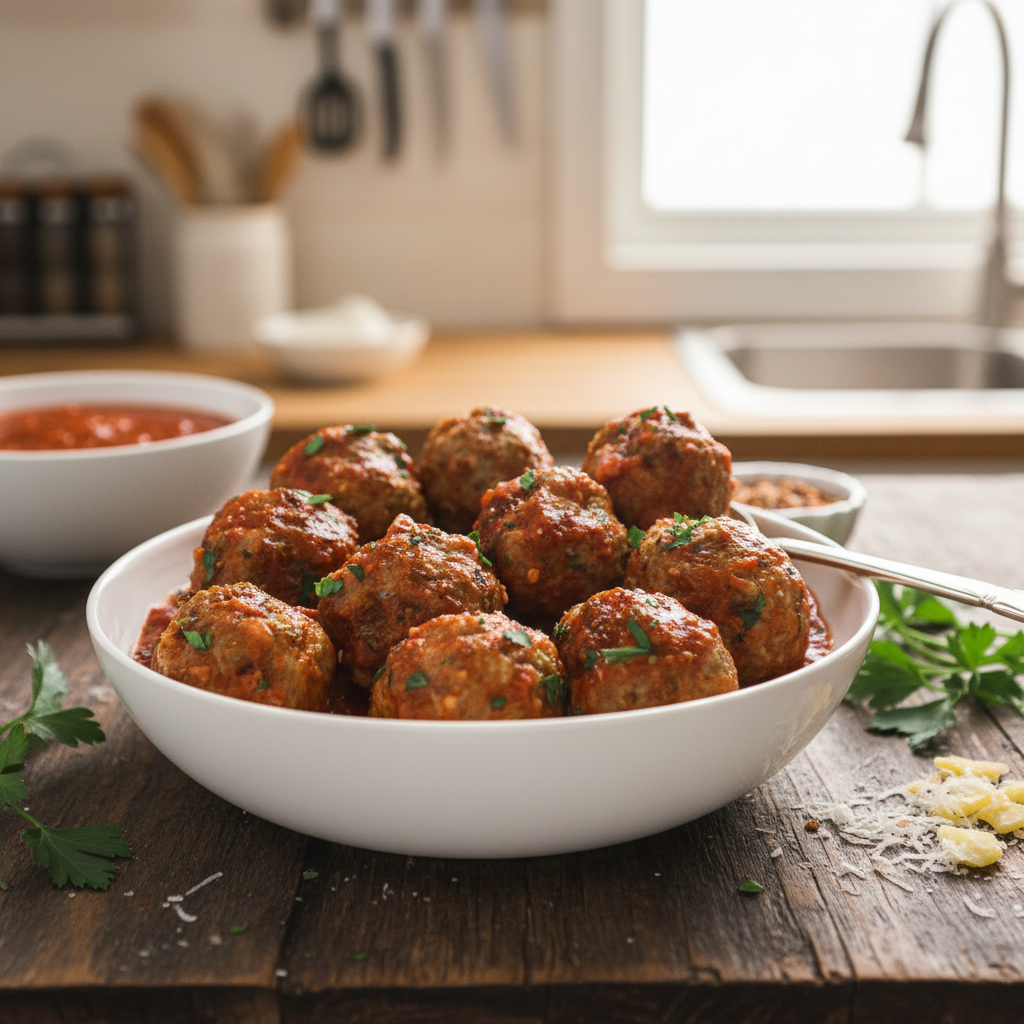
Light, juicy, and full of gentle flavor. That is what Martha Stewart turkey meatballs taste like. Lean ground turkey, soft breadcrumbs soaked in milk, fresh parsley, garlic, and Parmesan come together in a pan, then simmer in warm marinara sauce until every meatball is tender and full of flavor. This guide covers the Martha Stewart turkey meatballs recipe in full depth, from the exact ingredients and the twelve-step method to variations, what to serve with them, and how to store the leftovers for a busy holiday week.
If you want a holiday dinner that feels comforting but not heavy, these meatballs are the answer. Turkey keeps the dish lighter than beef, the breadcrumb and milk mixture keeps every bite moist, and the whole meal is ready in thirty-five minutes. Follow the steps below and you will get soft, golden meatballs in a rich tomato sauce every single time.
For more meatball dinners for cold nights, see our Easy Winter Meatball Recipes for Cozy Family Dinners.
The full original recipe this guide is based on is the Martha Stewart Turkey Meatballs Recipe, with the same ingredients, times, and method used below.
Why Martha Stewart Turkey Meatballs Belong on the Holiday Table
The holidays ask a lot of the cook. There are big meals to plan, guests to feed, and a table that needs to look generous without keeping you in the kitchen all day. Martha Stewart turkey meatballs fit that moment perfectly. They are quick to make, they feed a family of four from a single pound of turkey, and they taste like something you spent hours on.
Turkey is the heart of the Thanksgiving table, and these meatballs bring that same flavor in a smaller, weeknight-friendly form. They work as a main course over spaghetti, as a warm appetizer with toothpicks at a holiday gathering, or as a make-ahead dish you reheat when guests arrive. The flavor is mild and comforting, which makes them a safe choice when children and picky eaters are at the table.
They also solve the most common complaint about turkey: that it turns out dry. The breadcrumb and milk mixture in this recipe is the fix. It adds moisture from the inside, so the meatballs stay soft even after simmering in sauce. Once you learn this one technique, you will use it for every turkey meatball recipe you make.
For more turkey ideas for the holiday table, see our Easy Thanksgiving Turkey Recipes for the Holiday Table.
What Makes These Turkey Meatballs So Good
Three things make this recipe stand out. The first is the texture. Soaking the breadcrumbs in milk for two minutes before mixing gives the meatballs a soft, almost creamy crumb. The milk hydrates the crumbs, and the crumbs hold that moisture through cooking. Without this step, lean turkey dries out fast. With it, the meatballs stay juicy from the first bite to the last.
The second is the flavor balance. Garlic brings warmth, fresh parsley brings brightness, and Parmesan brings a salty, savory depth that turkey needs. A little onion powder rounds everything out without the extra work of chopping an onion. Salt and black pepper do the rest. Nothing in the list is fancy, and everything is easy to find in a regular kitchen.
The third is the cooking method. The meatballs brown in a hot skillet first, which builds a golden crust and a deeper flavor, and then they finish by simmering in marinara sauce. The simmer does two jobs at once: it cooks the centres gently so they never toughen, and it lets the meatballs soak up the sauce. The result is a dish that tastes slow-cooked even though it took thirty-five minutes.
Each serving has about 320 calories, with 28 grams of protein, 12 grams of carbohydrates, 18 grams of fat, 1 gram of fiber, and 520 milligrams of sodium. That is a filling, protein-rich dinner that still leaves room for the rest of the holiday table.
Ingredients You Need for Martha Stewart Turkey Meatballs
You need one pound of ground turkey. Choose regular ground turkey rather than extra-lean if you can, because a little fat keeps the meatballs moist. If you only have extra-lean turkey, add an extra tablespoon of olive oil to the mixture to make up for it.
You need half a cup of breadcrumbs and a quarter cup of milk. Plain dried breadcrumbs work well, and fresh breadcrumbs work even better because they soak up the milk more gently and give a softer texture. Whole milk gives the richest result, but any milk you have will work.
You need one large egg, which binds the mixture so the meatballs hold their shape. You need two cloves of garlic, minced, and a quarter cup of fresh parsley, chopped. Fresh parsley matters here: dried parsley does not give the same bright flavor. You need a quarter cup of grated Parmesan cheese, one teaspoon of salt, half a teaspoon of black pepper, and half a teaspoon of onion powder.
For cooking, you need two tablespoons of olive oil for the skillet and two cups of marinara sauce for simmering. Use a marinara sauce you enjoy eating on its own, because its flavor becomes the flavor of the finished dish. A simple jarred marinara works well, and a homemade sauce works even better if you have some ready.
Everything on this list is affordable and easy to find. You probably already have most of it in your kitchen, which is exactly why this recipe is such a good choice for a busy holiday week.
Equipment You Will Need
You need a large mixing bowl for the meatball mixture. A wide bowl makes gentle mixing easier, and gentle mixing is the whole secret to soft meatballs. You need measuring cups and spoons for the breadcrumbs, milk, and seasonings.
You need a cutting board and a sharp knife for the garlic and parsley. Mince the garlic finely so no one bites into a sharp piece, and chop the parsley small enough that it mixes evenly through the meat.
You need a large skillet or frying pan with a lid. The skillet must be wide enough to hold the meatballs in a single layer with a little space between them. If the pan is crowded, the meatballs steam instead of browning. A lid is important for the final simmer, because it traps steam and keeps the sauce from reducing too fast.
You need a wooden spoon or spatula for turning the meatballs gently. Tongs also work, but a spoon is gentler on the soft meatballs. A baking sheet lined with parchment paper is optional but useful for holding the shaped meatballs before cooking, and for the baked version of this recipe.
How to Make Martha Stewart Turkey Meatballs
- Soak the breadcrumbs. Place the half cup of breadcrumbs in a large mixing bowl and pour the quarter cup of milk over them. Let the mixture sit for about two minutes. The breadcrumbs absorb the milk and soften. This simple step is the foundation of the whole recipe, because it is what keeps the turkey meatballs moist and tender during cooking. Do not skip it, and do not rush it.
- Add the turkey and seasonings. Add the pound of ground turkey to the bowl with the soaked breadcrumbs. Then add the egg, the minced garlic, the chopped parsley, the grated Parmesan, the salt, the black pepper, and the onion powder. Everything goes into the same bowl, so there is no extra washing up.
- Mix gently, just until combined. Use clean hands or a spoon to mix everything together. Mix only until the ingredients look evenly distributed, then stop. Do not press the meat, do not squeeze it, and do not keep mixing after it looks combined. Overmixing is the fastest way to make turkey meatballs dense and tough, because it compacts the protein. Gentle hands give you soft meatballs.
- Shape the meatballs. Take small portions of the mixture and roll them gently between your hands. Make each meatball about one inch wide, roughly the size of a golf ball. Try to keep them all the same size so they cook evenly. Place them on a plate or a parchment-lined baking sheet as you finish shaping them. You should get about sixteen to twenty meatballs from one pound of turkey.
- Heat the skillet. Place a large skillet on medium heat and add the two tablespoons of olive oil. Let the oil warm for about one minute. It should shimmer but not smoke. If the oil smokes, the pan is too hot: take it off the heat for a few seconds and lower the flame before you start cooking.
- Brown the first side. Carefully place the meatballs into the skillet, leaving a little space between each one. Do not crowd the pan; cook in two batches if you need to. Let them cook for about four minutes on one side without moving them. They need that undisturbed time to build a golden-brown crust.
- Turn and brown the second side. Use a spatula or spoon to turn each meatball gently. Cook the other side for another three to four minutes. The outside should look nicely browned all over. The meatballs will not be fully cooked yet, and that is fine, because the sauce simmer finishes the job.
- Check the heat and add the sauce. Lower the heat slightly and pour the two cups of marinara sauce into the skillet. Spoon some sauce over the meatballs so they stay moist while they cook. The sauce should bubble gently, not boil hard. If it boils too fast, turn the heat down a little more.
- Simmer until fully cooked. Cover the pan with a lid and let the meatballs simmer for about ten minutes. This gentle simmer lets the meatballs finish cooking inside while soaking up the sauce flavor. The lid keeps the moisture in, so nothing dries out.
- Check that they are done. The meatballs are ready when they are cooked through to the centre. The safest check is a meat thermometer: turkey must reach 165 degrees Fahrenheit inside. If you do not have a thermometer, cut the largest meatball in half and check that the centre is no longer pink and the juices run clear.
- Rest for a minute. Take the pan off the heat and let the meatballs rest in the sauce for one or two minutes. This short rest lets the juices settle back into the meat, so the first bite is as juicy as the last.
- Garnish and serve. Sprinkle extra chopped parsley or grated Parmesan cheese on top. Serve the turkey meatballs hot, with pasta, bread, or rice, and plenty of sauce spooned over the top.
The Secret to Juicy Turkey Meatballs That Never Dry Out
Turkey has very little fat, which is why so many turkey meatballs turn out dry. The fix is not complicated, but it has to happen before cooking starts. The breadcrumb and milk mixture is the first secret: the soaked crumbs act like tiny sponges inside the meat, releasing moisture as the meatballs cook. Fresh breadcrumbs work best, but dried breadcrumbs soaked for the full two minutes do the job well.
The second secret is gentle handling. Mix the meat just until it comes together, and roll the meatballs with light hands. Every extra squeeze pushes moisture out and packs the protein tighter, and tight protein means tough meatballs. If the mixture feels sticky on your hands, wet your palms lightly with water instead of pressing harder.
The third secret is gentle heat. Medium heat browns the outside without overcooking the inside, and the covered simmer finishes the meatballs slowly in sauce. High heat would dry the outside before the centre cooks through. If your meatballs ever came out dry before, the heat was almost certainly too high or the simmer too long.
Fresh herbs are the final touch. Parsley and garlic make the meatballs taste homemade and fresh, and they lift the mild flavor of turkey so the dish never tastes plain. Taste the sauce before serving and adjust the salt if it needs it, but remember the Parmesan already adds saltiness.
Variations to Try
Try Italian seasoning instead of parsley for a warmer, herby flavor. Use about one teaspoon of Italian seasoning in place of the fresh parsley, and keep the garlic and Parmesan the same. The meatballs taste more like classic Italian meatballs, and they pair beautifully with the marinara sauce.
Add chili flakes if you like a little spice. A quarter teaspoon of red pepper flakes mixed into the meat gives a gentle warmth without making the dish hot. Serve these spicier meatballs over pasta with extra Parmesan and a green salad to balance the heat.
Add chopped onions for more flavor. Half a small onion, finely chopped, adds sweetness and moisture. Cook the onion in the olive oil for two minutes before adding the meatballs, or mix it raw into the meat if you like a stronger onion flavor.
Use whole wheat breadcrumbs for a healthier option. They add a little fiber and a slightly nuttier flavor, and they soak up the milk just as well as white breadcrumbs. The rest of the recipe stays exactly the same.
Bake the meatballs at 375 degrees Fahrenheit for about twenty minutes if you prefer baking. Place them on a lined baking sheet, bake until cooked through, then warm them in the marinara sauce on the stove for five minutes before serving. Baking uses less oil and frees the stove for other dishes.
Serve with zucchini noodles for a lighter meal. The noodles catch the sauce the same way pasta does, but the meal stays light and fresh. This version works well for a weeknight dinner after a heavy holiday weekend.
Change the sauce for a different flavor. Creamy tomato sauce makes the dish richer, pesto sauce makes it bright and herby, and barbecue sauce turns it into a crowd-pleasing party dish. The meatballs themselves stay the same; only the sauce changes.
How to Tell When the Meatballs Are Done
The most reliable test is temperature. Ground turkey must reach 165 degrees Fahrenheit in the centre to be safe to eat. Push a meat thermometer into the middle of the largest meatball after the ten-minute simmer. If it reads 165 degrees or higher, the meatballs are done.
If you do not have a thermometer, use your eyes. Cut the largest meatball in half. The centre should be opaque white all the way through, with no pink remaining, and the juices should run clear rather than pink. The outside should be golden brown from the skillet, and the meatball should feel firm but still springy when you press it gently with a spoon.
Time is a useful guide, but it is not a guarantee. Four minutes on the first side, three to four minutes on the second side, and ten minutes simmering in sauce is the right timing for one-inch meatballs. If you shaped your meatballs larger, add two or three minutes to the simmer. If you shaped them smaller, check them a couple of minutes early so they do not overcook.
Overcooking is the enemy of juicy turkey meatballs. Once the centre reaches 165 degrees, take the pan off the heat. The meatballs keep cooking for a minute or two in the hot sauce, which is exactly why the short rest after cooking matters. Trust the thermometer more than the clock, and you will get tender meatballs every time.
Make-Ahead Tips for Busy Holiday Days
You can prepare the meatball mixture ahead of time. Mix the ingredients, cover the bowl tightly, and keep it in the refrigerator for up to twenty-four hours before cooking. Shape the meatballs just before cooking so they hold their shape well, or shape them in advance and keep them covered on a plate in the fridge.
You can also shape the meatballs and freeze them uncooked. Place them on a baking sheet in a single layer until they are frozen solid, then move them into a freezer bag. They keep well for up to three months. Cook them straight from frozen: brown them a little longer in the skillet, about five minutes per side, then simmer in the sauce for twelve to fifteen minutes instead of ten.
Cooked meatballs are an even easier make-ahead option. Cook a double batch on a quiet day, let the meatballs cool in their sauce, and store them in the refrigerator for up to four days. Reheat them gently in a skillet with a little extra sauce, or in the microwave for one to two minutes until warm. They taste just as good the second day, and the sauce flavor deepens overnight.
For a holiday party, keep the finished meatballs warm in a slow cooker on the low setting with the sauce spooned over them. Set out toothpicks and a small bowl of extra Parmesan, and guests can help themselves. This is one of the easiest hot appetizers you can serve, and it works because the meatballs stay moist in the sauce for hours.
For more slow cooker ideas for busy weeknights, see our Easy Winter Slow Cooker Recipes for Cozy Weeknight Dinners.
What to Serve With Martha Stewart Turkey Meatballs
Spaghetti with marinara sauce is the classic pairing. The pasta catches the sauce, the meatballs sit on top, and a shower of Parmesan finishes the plate. It is the meal most people picture when they think of meatballs, and it never disappoints.
Garlic bread is the simplest side and one of the best. Warm, buttery bread is perfect for scooping up the extra sauce, and it turns a simple pan of meatballs into a full dinner. Toast it while the meatballs simmer so everything is ready at the same time.
Creamy mashed potatoes make the meal feel like a holiday dinner. The soft potatoes and the rich sauce work together, and the meatballs add the protein the plate needs. This is a good choice when you want the meal to feel special without much extra work. For a full guide, see our Easy Mashed Potatoes for Thanksgiving.
A fresh green salad adds crunch and brightness. Mixed greens with a light vinaigrette cut through the richness of the sauce and refresh the palate between bites. Steamed vegetables do the same job: broccoli, green beans, or carrots add color and keep the plate balanced. For a holiday green bean side, see our Easy Crack Green Beans for Thanksgiving.
Buttered rice is a gentle, comforting base that lets the sauce shine. Roasted potatoes are another good option: crisp on the outside, soft inside, and happy to soak up sauce. Either one turns the meatballs into a complete, filling dinner.
For a lighter meal, serve the meatballs with zucchini noodles or a big salad and skip the bread. The meatballs themselves are already satisfying, so the meal stays light without feeling small. For a spicier turkey dinner from the same season, see our Easy Turkey Chili for the Holidays.
How to Store and Reheat Leftovers
Store leftover meatballs in an airtight container with their sauce. The sauce keeps them moist in the fridge, so always store them together rather than separately. They keep in the refrigerator for up to four days.
Freeze cooked meatballs for up to three months. Let them cool completely first, then pack them with sauce in a freezer-safe container or bag. Label the container with the date so you know when to use them. Thaw overnight in the refrigerator before reheating.
Reheat gently to keep the meatballs tender. Warm them in a skillet over medium-low heat with a little extra sauce, stirring now and then, until they are hot all the way through. A splash of water or extra marinara helps if the sauce has thickened in the fridge. In the microwave, heat for one to two minutes, stopping halfway to stir the sauce around them.
Never reheat turkey meatballs on high heat. Strong heat tightens the meat and squeezes the moisture out, which is exactly what this recipe works so hard to prevent. Low and slow keeps them as juicy as the day you cooked them.
Leftover meatballs are useful beyond dinner. Slice them into a sandwich with melted cheese, toss them with pasta for a quick lunch, or add them to soup for extra protein. A warm bowl of soup with sliced meatballs is a wonderful cold-weather lunch. For soup ideas, see our Easy Winter Soup Recipes.
Frequently Asked Questions
Can I bake turkey meatballs instead of frying them?
Yes, you can bake them easily. Place the meatballs on a lined baking sheet and bake at 375 degrees Fahrenheit for about twenty minutes until cooked through. Then warm them in the marinara sauce on the stove for five minutes before serving. Baking uses less oil and is a good choice when the stove is busy with other holiday dishes.
How do I keep turkey meatballs from becoming dry?
Add breadcrumbs and milk to the mixture, because this creates moisture inside the meatballs. Also avoid overcooking them: use medium heat, simmer gently, and take the pan off the heat as soon as the centres reach 165 degrees Fahrenheit. Gentle mixing matters too, because overmixing packs the meat tight and squeezes moisture out.
Can I prepare the meatball mixture ahead of time?
Yes. You can mix the ingredients and keep them covered in the refrigerator for up to twenty-four hours before cooking. Shape the meatballs just before cooking, or shape them in advance and keep them covered on a plate in the fridge. You can also freeze shaped, uncooked meatballs for up to three months.
What sauce works best with turkey meatballs?
Classic marinara sauce works perfectly, because its bright tomato flavor suits the mild turkey. You can also try creamy tomato sauce for a richer dish, pesto sauce for a bright and herby flavor, or even barbecue sauce for a different, crowd-pleasing twist. The meatballs stay the same; only the sauce changes.
Can I freeze uncooked turkey meatballs?
Yes, you can freeze them before cooking. Place them on a baking sheet in a single layer until frozen solid, then store them in a freezer bag. Cook them straight from frozen, browning them a little longer in the skillet and simmering them in the sauce for twelve to fifteen minutes instead of ten.
Are turkey meatballs good for kids?
Yes, they are great for children because the flavor is mild and comforting. The meatballs are soft, easy to chew, and served in a familiar tomato sauce. Serve them over pasta or with bread, and let children add their own Parmesan on top. They also pack well for lunchboxes when served with a small container of sauce.
Final Thoughts
This Martha Stewart turkey meatballs recipe is simple, delicious, and perfect for everyday cooking and for the holidays. The meatballs are juicy, tender, and full of flavor, and the method is forgiving enough for a first-time cook. Once you learn how to make Martha Stewart turkey meatballs, they will become a regular meal in your kitchen, because the ingredients are easy and affordable and the whole dinner is ready in thirty-five minutes.
Try them once on a busy holiday evening, with spaghetti and garlic bread or with creamy mashed potatoes and a green salad, and they may become your regular cold-weather dinner. The dish is simple, forgiving, and full of the warm, comforting flavor everyone loves. Enjoy cooking and sharing this light, satisfying meal with your loved ones, and see our Easy Christmas Cranberry Meatballs for the Holidays for another meatball dinner from the same season.