

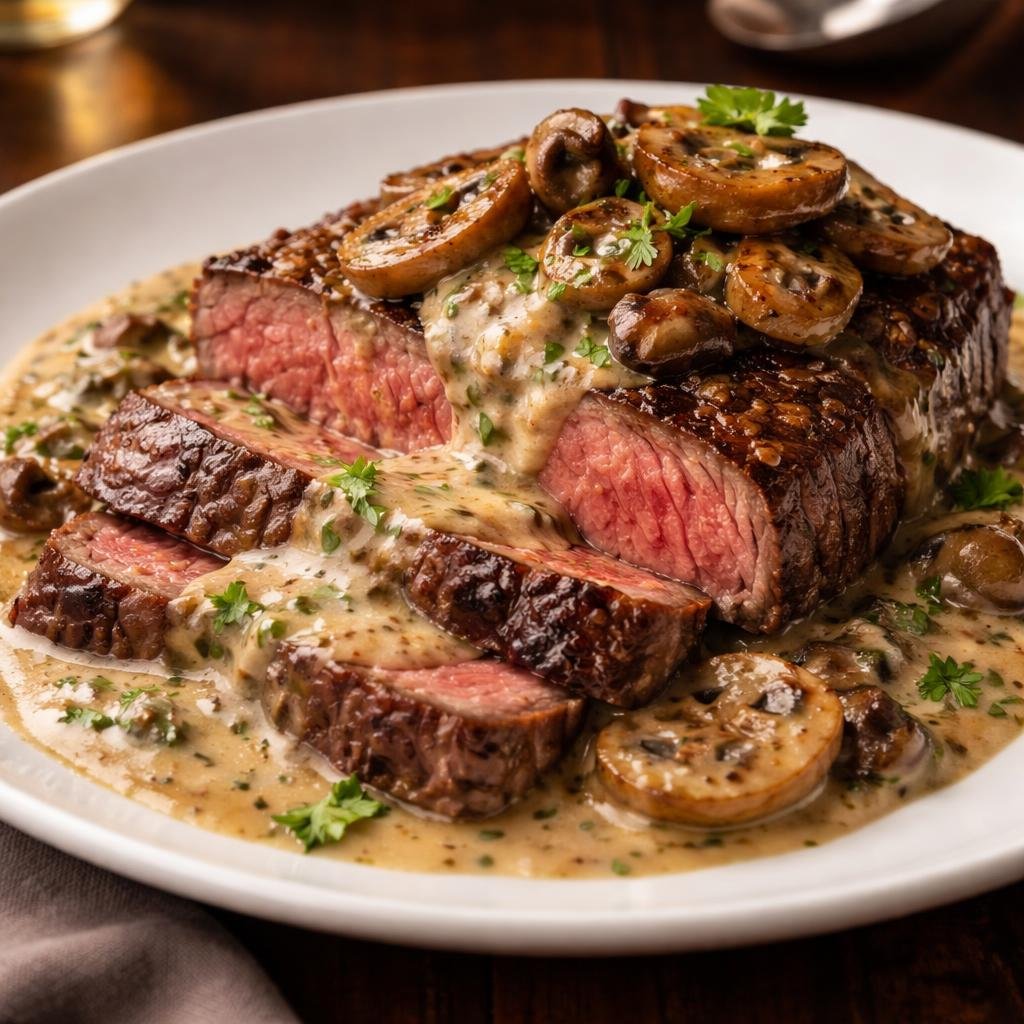
Steak Diane is the kind of dish that turns an ordinary December evening into a celebration. A beautiful steak, seared fast in a hot pan and finished in a silky sauce of mustard, mushrooms, and cream, tastes like a restaurant meal but is on the table in twenty-five minutes. This guide covers the Gordon Ramsay steak Diane in full depth, from the exact ingredients and the step-by-step method to variations, make-ahead tricks, and what to serve alongside it.
Why Steak Diane Belongs on Christmas Dinner
Christmas dinner is often a long, slow affair, with a roast in the oven for hours and a table full of sides. Steak Diane offers something different: a main course that is ready in minutes and still feels like an occasion. It is the perfect Christmas Eve main for two, a beautiful steak in a creamy sauce, cooked in one pan. There is no turkey to carve, no roast to rest, and no mountain of washing up afterwards.
It also suits the way Christmas actually unfolds. The day is busy, the kitchen is crowded, and the cook deserves to sit down too. Steak Diane asks for ten minutes of preparation and fifteen minutes of cooking, so you can spend the evening with your family and still serve a dish that tastes like it came from a fine restaurant.
The dish has a fine-dining history, too. Steak Diane became popular in classic French restaurants, where it was often cooked table-side. You get the same theatre at home, in your own kitchen, with a pan and a wooden spoon.
For more ideas to round out the holiday table, see our Easy Christmas Beef Recipes for a Festive Holiday Table.
What Makes Gordon Ramsay’s Steak Diane So Good
The Gordon Ramsay steak Diane works because every ingredient has a job, and the sauce is built in the same pan the steaks cooked in. The steaks sear fast on high heat, which gives them a golden crust outside while the inside stays tender, and the sauce is built on top of that sear, so nothing is wasted.
Onion and garlic soften in the butter and oil, mushrooms turn golden and earthy, and then the pan is deglazed so the browned bits lift into the sauce. Dijon mustard and Worcestershire sauce give the sauce its savory depth, beef stock loosens it, and heavy cream turns it smooth and glossy. A spoonful of brandy adds a rich note, and fresh parsley finishes it. The result is a sauce that is creamy but not too thick, savory but not heavy, and made to be spooned over the steak.
Ingredients You Need
This recipe uses simple ingredients, and that is part of its charm. You do not need a special shopping trip, and you probably have most of it already.
- 2 beef steaks (sirloin or tenderloin, about 200g each)
- Salt to taste
- Black pepper to taste
- 1 tablespoon olive oil
- 1 tablespoon butter
- 2 garlic cloves, finely chopped
- 1 small onion, finely chopped
- 100g mushrooms, sliced
- 1 tablespoon Dijon mustard
- 1 teaspoon Worcestershire sauce
- 60 ml beef stock
- 60 ml heavy cream
- 1 tablespoon brandy (optional)
- Fresh parsley, chopped, for garnish
A note on the steaks: sirloin and tenderloin both work well. Tenderloin gives a softer texture, while sirloin has a little more flavor and is easier to find. Look for steaks of even thickness so they cook at the same pace, and take them out of the fridge for ten minutes before cooking, so they are not ice-cold when they hit the pan.
A note on the mushrooms: slice them evenly, give them time to turn golden brown, and stir gently rather than constantly, so they brown instead of steaming.
A note on the brandy: it is optional, and the dish works beautifully without it. If you skip alcohol, use a little extra beef stock to deglaze the pan instead. The sauce keeps its richness either way.
Equipment You Need
You need very little equipment, and everything is standard kitchen gear:
- Frying pan or skillet
- Tongs
- Sharp knife
- Cutting board
- Measuring spoons
- Wooden spoon
- Plate for resting steak
A heavy frying pan is the most important piece here, because it holds high heat steady for the sear. Use tongs to turn the steaks, never a fork, because piercing the meat lets the juices escape. A wooden spoon is ideal for the sauce, because it scrapes the browned bits off the bottom without scratching the pan.
How to Make Steak Diane Step by Step
Season the steak first. Take the steaks out of the fridge and let them rest for ten minutes. Season both sides with salt and black pepper. This helps bring out the natural flavors of the beef, and a good seasoning is the key to a perfect steak. Do not skip this step, even when you are in a hurry.
Heat the pan next. Place a skillet on medium-high heat and add the olive oil and butter. Let the butter melt and foam slightly. This creates a rich base for cooking the steak properly, and the foam tells you the pan is hot enough. The pan should be properly hot before the steaks go in, or they will not sear.
Cook the steak. Place the steaks in the hot pan and cook for two to three minutes on each side. Use tongs to flip them gently, and do not press them down. Pressing squeezes the juices out and leaves the steak dry. Remove the steaks and let them rest on a plate while you make the sauce.
Cook the aromatics. In the same pan, add the chopped onion and garlic. Stir gently for two minutes and let them soften and release their aroma. This builds a strong flavor base for the sauce, and it only takes a couple of minutes.
Add the mushrooms. Add the sliced mushrooms to the pan and cook until they turn golden brown. Stir often but gently. Mushrooms add a deep, earthy flavor to the dish, and their color tells you when they are ready.
Deglaze the pan. Add the brandy carefully to the pan and let it bubble and reduce slightly. This step adds rich depth to the sauce. If you skip the alcohol, use extra stock here instead, and let it bubble the same way.
Make the sauce. Add the Dijon mustard and Worcestershire sauce, then pour in the beef stock. Stir well and let it simmer for two minutes. This forms the base of the steak Diane sauce, and it should smell savory and rich by now.
Add the cream. Pour in the heavy cream slowly and stir continuously. Let the sauce thicken slightly. It should be smooth and glossy, not too thick, and it should coat the back of a spoon. Taste the sauce before serving, because that is how you balance the flavors. A little more mustard or a pinch of salt is all it usually needs.
Return the steak. Place the steaks back into the pan, spoon sauce over them, and cook for one to two minutes more. This helps the steak absorb the flavors of the sauce without overcooking. Garnish with fresh parsley and serve hot with extra sauce.
If you want the full original recipe on its own, here is our Gordon Ramsay Steak Diane Recipe.
How to Tell When It Is Done
Two to three minutes per side at medium-high heat is the right timing for steaks of about 200 grams, but the real test is touch and color. The outside should be a deep golden brown with a proper sear, and the steak should feel tender rather than firm when pressed gently. The sauce should be smooth and glossy, thick enough to coat the steaks, but not so thick that it sits in a heavy blanket.
Do not overcook the meat. The single most important rule of steak Diane is to cook the steak fast on high heat and take it out while it is still tender. A steak that stays in the pan too long turns tough and dry, and no amount of sauce can fix that. Remember the steaks go back into the pan for another minute or two at the end, so take them out a touch earlier than you think, and let them rest so the juices settle back into the meat.
Taste the sauce before you serve it. If it tastes flat, a little more mustard wakes it up. If it is too sharp, a little more cream softens it. Small details make a big difference.
Make-Ahead Tips for a Relaxed Christmas Dinner
Steak Diane is best cooked fresh, and it only takes twenty-five minutes from start to finish. But you can still do the preparation ahead. Chop the onion, garlic, and mushrooms in advance and keep them in covered containers in the fridge, and measure out the mustard, Worcestershire sauce, stock, and cream so everything is ready to go.
Take the steaks out of the fridge ten minutes before cooking, as the recipe says, so they are not cold when they hit the pan. Cold steak in a hot pan cooks unevenly, with a grey band around the outside and a cold center. Ten minutes on the counter is enough to take the chill off.
If you are cooking for more than two people, cook the steaks in batches rather than crowding the pan. A crowded pan cools down and the steaks steam instead of searing. For more ideas for a table for two, our Easy Winter Date Night Dinner Recipes for Two has plenty of dishes that cook just as fast.
Variations to Try
Once you know the base recipe, it is easy to make it your own. The structure stays the same: a fast-seared steak and a creamy pan sauce. Change one or two things at a time, and the dish still works beautifully.
For the softest steak, use tenderloin instead of sirloin. Tenderloin is more delicate, it cooks a little faster, and it suits a Christmas dinner where you want the main to feel luxurious. For a little brightness, add a splash of lemon juice to the sauce at the end. The lemon lifts the cream and cuts through the richness, and it works especially well if your mushrooms are very earthy.
For a deeper flavor, try adding green peppercorns to the sauce with the mustard. If beef stock is not in the cupboard, chicken stock works as a substitute. For a lighter version, skip the cream and let the stock and mustard make a thinner, sharper sauce.
What to Serve With Steak Diane
Steak Diane is rich and savory, so the best sides are simple and let the steak shine. Creamy mashed potatoes are the classic partner, perfect for catching every drop of the sauce. For a full guide to the potatoes, see our Easy Mashed Potatoes for Thanksgiving.
Buttered rice is another good choice. It soaks up the sauce without competing with it, and it makes the meal feel complete with very little extra work. Steamed vegetables add freshness and color, and their clean flavor balances the richness of the cream. Garlic bread is ideal for mopping up the last of the sauce, and a fresh green salad keeps the plate light and crisp.
For more Gordon Ramsay dishes to build a holiday menu around, our Easy Gordon Ramsay Christmas Recipes for a Festive Dinner has plenty of ideas that pair with this main.
Storage and Reheating
Steak Diane is at its best served straight from the pan, hot, with the sauce spooned over the top. That is how the dish was designed: fast cooking, a fresh sauce, and a steak that has rested just long enough to stay juicy. If you can, cook exactly what you need and serve it immediately.
If you do have leftovers, let them cool, then keep the steak and the sauce together in a covered container in the fridge. Reheat them gently on low heat with a small splash of beef stock or cream to loosen the sauce. Do not reheat on high heat, because the steak will overcook and the cream sauce can split.
Common Mistakes to Avoid
The most common mistake is overcooking the steak. The steaks only need two to three minutes per side, and a steak left in the pan while the sauce is made turns tough and grey. Take the steaks out on time, rest them on a plate, and put them back only for the final minute or two.
The second mistake is pressing the steak while it cooks, which squeezes the juices out. Let the steak sit, flip it once, and leave it alone. The third mistake is a cold pan: if the pan is not properly hot when the steaks go in, they steam instead of searing, and you lose the golden crust.
The fourth mistake is skipping the rest. A steak cut straight from the pan loses its juices onto the board. A few minutes of rest makes the difference between a juicy steak and a dry one. Finally, do not let the sauce get too thick. It should be smooth and glossy, coating the back of a spoon, not a heavy paste. Add the cream slowly and take it off the heat as soon as it thickens slightly.
Frequently Asked Questions
Can I make steak Diane without brandy?
Yes. The brandy is optional, and the recipe works beautifully without it. Use a little extra beef stock to deglaze the pan instead. The sauce keeps its richness, because the mustard, Worcestershire sauce, and cream do most of the work.
What cut of steak is best for steak Diane?
Sirloin or tenderloin, about 200 grams each, are the cuts the recipe calls for. Tenderloin gives a softer texture, while sirloin has a little more flavor and is easier to find. Pick steaks of even thickness so they cook at the same pace, and do not overcook them.
Can I make steak Diane ahead of time?
You can prepare everything ahead, but cook the steaks fresh. Chop the onion, garlic, and mushrooms in advance, and measure out the sauce ingredients. The steaks only take a few minutes to cook, so the dish is best made just before serving.
Why is my steak Diane sauce too thin?
A thin sauce usually means the cream went in too fast or the sauce did not simmer long enough. Pour the cream in slowly, stir continuously, and let the sauce simmer for two minutes with the mustard and stock before the cream goes in. If it is still thin, let it simmer a minute longer.
Can I use chicken stock instead of beef stock?
Yes. The recipe suggests chicken stock as a substitute if beef stock is not available, and the sauce stays savory and rich. Beef stock gives a deeper flavor, so use it when you have it, but chicken stock is a perfectly good stand-in and the dish still tastes like steak Diane.
Final Thoughts
Steak Diane is proof that the simplest holiday cooking is often the most loved. Two steaks, one pan, twenty-five minutes, and you have a warm, creamy, restaurant-style main that feels like a celebration. Sear the steaks fast, rest them properly, build the sauce in the same pan, and spoon it over the top. Serve it with creamy mashed potatoes and a green vegetable, and you have a Christmas dinner that feels special without keeping anyone in the kitchen.
Make it on Christmas Eve, cook it fresh, taste the sauce before serving, and let the small details do their work. That is what a good steak Diane does, and it is why this Gordon Ramsay classic belongs on your Christmas table.
For more holiday beef ideas, see our Easy Thanksgiving Beef Recipes for the Holiday Table and our Easy Christmas Beef Recipes for a Festive Holiday Table.