

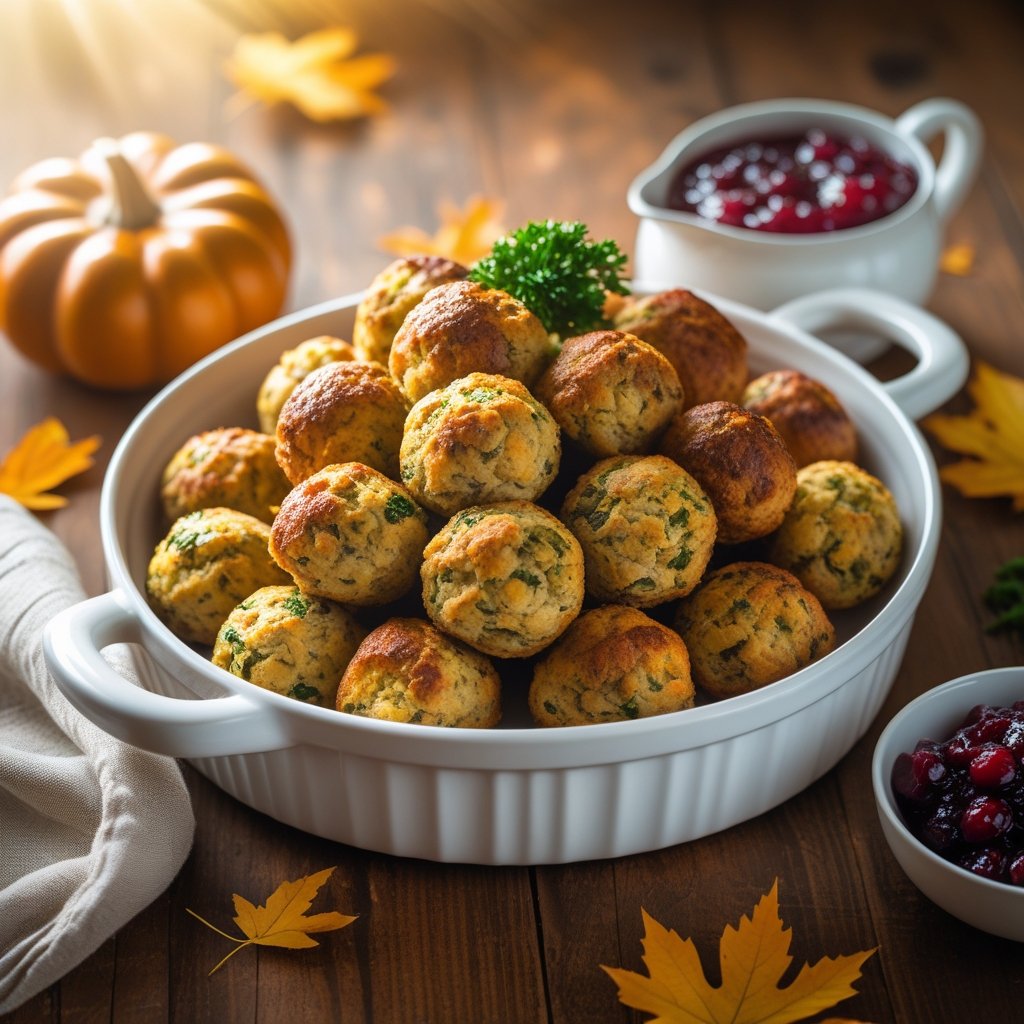
Easy Stuffing Balls for Thanksgiving: Recipe, Variations & Serving Tips
Thanksgiving dinner is never complete without stuffing, and stuffing balls are the smartest way to serve it. They are crispy outside and soft inside, filled with herbs, butter, and savory goodness, and they turn the classic side dish into perfect bite-sized pieces that are easy to serve and loved by everyone. This guide covers the Thanksgiving stuffing balls recipe in full depth, from the exact ingredients and the fifteen-step method to variations, make-ahead tips, what to serve with them, and how to freeze the leftovers.
If you have ever served stuffing from a big baking dish and watched half of it go cold while people waited their turn, these balls fix that problem. Each ball is its own golden, crispy portion with the soft, herby center everyone fights over, and they bake in just twenty-five minutes. They save time, they save space on a crowded table, and they look beautiful on a platter.
For more stuffing ideas for the holiday table, see our Easy Thanksgiving Stuffing Recipes for a Crowd.
Why Stuffing Balls Belong on the Thanksgiving Table
The holidays are full of dishes that need carving, scooping, and serving, and that is exactly why stuffing balls earn their place. They are the side dish that serves itself. Set a platter on the table and everyone takes what they want, with no serving spoon, no mess, and no one waiting.
Stuffing balls are also practical holiday food. They are a smart way to use leftover bread or stuffing mix while keeping the flavors rich and festive, and they bake in a single layer on one baking sheet, so they free up oven space for the turkey and the casseroles. At about 180 calories per serving, they are a lighter way to enjoy all the buttery, herby flavor of stuffing without a heavy portion.
They fit the season in another way too. Stuffing is one of the most searched Thanksgiving sides every November, and the ball shape is the version people share and save, because it is fun, it photographs beautifully, and kids love it. Whether you serve them as a side dish or as an appetizer while the turkey rests, these golden balls make every Thanksgiving meal memorable.
For more ideas for the holiday table, see our Easy Thanksgiving Turkey Recipes for the Holiday Table.
What Makes These Stuffing Balls Special
The magic of a stuffing ball is the contrast. The outside bakes up crisp and golden, while the inside stays soft, moist, and full of herbs. That contrast comes from three simple choices: day-old bread, the right amount of broth, and a hot oven.
The first secret is the bread. Eight cups of cubed day-old bread is the base of the recipe, and stale bread matters. Fresh bread soaks up the broth too fast and turns mushy, while day-old bread holds its shape, absorbs the broth slowly, and gives the balls their texture. If your bread is still soft, leave the cubes out on a baking sheet for a few hours, or dry them in a low oven for ten minutes before you start.
The second secret is the butter and herb base. Half a cup of unsalted butter carries the flavor of the onion, celery, sage, parsley, and thyme through every cube of bread. The onion and celery are sauteed in the butter first, which softens them and sweetens them, and the fresh herbs go in at the end so their flavor stays bright.
The third secret is gentle handling. The mixture is stirred just until it is evenly combined, and the balls are shaped lightly, not packed tight. That is what keeps them airy inside instead of dense. Overmixing is the one mistake that can spoil the texture, so mix gently and stop as soon as everything comes together.
Thanksgiving Stuffing Balls Recipe at a Glance
Before you start, here is the whole recipe in one place. This is the recipe as published on Recipes Walay, and every number below comes from that original post.
- Servings: 8 people
- Prep time: 20 minutes
- Cook time: 25 minutes
- Total time: 45 minutes
- Course: Appetizer, Side Dish
- Cuisine: American
- Calories: About 180 kcal per serving
It is a light, flexible side dish that works as an appetizer or as part of the main meal, and the recipe doubles easily if you are feeding a crowd. Because the balls bake in twenty-five minutes, they can go into the oven while the turkey rests, which is perfect timing on Thanksgiving Day.
Ingredients You Need for Thanksgiving Stuffing Balls
You need eleven simple ingredients, and most of them are probably in your kitchen already. Measure everything before you start, because the shaping goes fast once the mixture is ready.
- 8 cups cubed day-old bread
- 1 cup chopped celery
- 1 cup chopped onion
- Half a cup of unsalted butter
- 2 eggs, beaten
- 2 cups chicken or vegetable broth
- 1 tablespoon chopped fresh sage
- 1 tablespoon chopped parsley
- 1 teaspoon dried thyme
- Salt and black pepper to taste
- Olive oil spray, for baking
A few notes on the ingredients make the difference between good stuffing balls and great ones. The bread is the star, so use a sturdy loaf like white bread, sourdough, or French bread, cut into small cubes about half an inch across. Small, even cubes absorb the broth evenly and shape into neat balls.
For the broth, chicken broth gives the richest flavor, but vegetable broth works just as well and keeps the dish vegetarian. Use low-sodium broth if you can, because you can always add salt at the end, but you cannot take it away. Fresh sage and parsley are worth buying for this recipe, because dried herbs cannot match their bright, piney flavor. The eggs are the binder that holds each ball together, so beat them well before they go in, and use unsalted butter so you control the salt yourself.
Equipment You Need for This Recipe
You do not need any special equipment for stuffing balls. A large mixing bowl is the main piece, because it gives you room to combine eight cups of bread cubes without spilling. A medium skillet is where the butter, onion, and celery cook, and a wooden spoon is best for stirring, since it handles the thick mixture easily.
You will also need a baking sheet lined with parchment paper, which stops the balls from sticking and makes cleanup simple. Measuring cups and measuring spoons keep the broth and herbs right, and your oven does the rest. That is the whole list, and it is one more reason this recipe is so easy to make on a busy holiday.
Step-by-Step Preparation
Follow these fifteen steps in order and the stuffing balls come together in forty-five minutes. Keep the oven at 375 degrees Fahrenheit, and handle the mixture gently once the broth goes in.
- Preheat your oven to 375 degrees Fahrenheit.
- Line a baking sheet with parchment paper.
- Melt the butter in a medium skillet over medium heat.
- Add the chopped onion and celery, and saute until tender.
- Remove the skillet from the heat and let the mixture cool slightly.
- Put the bread cubes in a large mixing bowl.
- Pour the sauteed onion and celery mixture over the bread cubes.
- Add the sage, parsley, thyme, salt, and black pepper.
- Pour in the broth and the beaten eggs.
- Mix gently until everything is evenly combined, and stop as soon as it comes together.
- Shape the mixture into small balls with your hands, pressing just firmly enough for them to hold.
- Place the balls on the lined baking sheet, leaving a little space between them.
- Lightly spray the tops with olive oil so they crisp up in the oven.
- Bake for 25 minutes, or until the balls are golden brown and crisp on the outside.
- Serve warm and enjoy your Thanksgiving stuffing balls.
The most common mistake is adding too much broth at once, so pour it in gradually and stop when the mixture is moist but still firm enough to shape. If it feels too wet, add a handful more bread cubes. If it feels too dry and crumbly, add broth one tablespoon at a time.
For the full original recipe with the printable card, see the Thanksgiving Stuffing Balls Recipe.
Recipe Tips for the Best Stuffing Balls
Use stale bread for better texture. This is the single most important tip in the recipe. Day-old bread absorbs the broth slowly and keeps its shape, which gives the balls their crisp outside and soft inside. Fresh bread turns to mush. If your bread is fresh, cut it into cubes and leave it out for a few hours, or dry the cubes in a low oven until they feel firm and dry on the outside.
Do not overmix; keep the mixture airy. Stir just until the bread, broth, eggs, and herbs are evenly combined, then stop. Overmixing crushes the bread cubes and packs the mixture down, which makes dense, heavy balls instead of light, fluffy ones.
Adjust the broth for a moist but firm texture. The mixture should hold together when you squeeze it gently, but it should not drip or feel soggy. Different breads absorb broth differently, so trust your hands more than the measuring cup. Add broth a little at a time until the texture feels right.
Add cooked sausage for extra flavor. Browned, crumbled sausage stirred into the mixture adds a savory, meaty depth that turns the balls into a heartier dish. It is the easiest way to make them feel like a main course instead of a side.
Freeze leftover balls for later meals. The balls freeze very well, so make a double batch and freeze half. They reheat beautifully, which makes them perfect for a quick side dish long after Thanksgiving is over.
Shape them evenly. Try to make every ball roughly the same size, about the size of a golf ball, so they all bake at the same speed. If some are much bigger than others, the small ones will dry out while the big ones are still soft inside.
Easy Variations to Make It Your Own
Sausage stuffing balls: stir in a cup of cooked, crumbled sausage with the herbs for a richer, meatier version. Italian sausage adds a little spice, while plain pork sausage keeps it classic. This is the most popular variation, and it turns the balls into a dish guests ask about.
Cranberry and pecan version: add a handful of dried cranberries and chopped pecans to the mixture for a sweet, crunchy twist. The cranberries bring a tart pop that pairs beautifully with the buttery herbs, and the pecans add crunch to the soft center. It is a lovely choice for a Christmas table too.
Vegetarian version: use vegetable broth instead of chicken broth, and skip the sausage. The recipe is already vegetarian-friendly with that one swap, and the butter, herbs, and eggs give it plenty of flavor on their own.
Gluten-free version: use your favorite gluten-free bread, dried the same way as regular bread. Gluten-free bread can be softer, so add the broth a little at a time and let the mixture sit for five minutes before shaping, so it firms up.
Herb swap: if you do not have fresh sage, use fresh rosemary or extra thyme. Rosemary brings a piney, woodsy note that suits the holidays, but use half as much, because it is stronger than sage.
Cornbread stuffing balls: swap half the bread cubes for crumbled cornbread for a Southern-style version with a slightly sweet, crumbly texture. The cornbread absorbs broth faster, so add the liquid gradually and check the texture as you go.
What to Serve with Thanksgiving Stuffing Balls
These balls are a side dish that fits almost anywhere on the Thanksgiving table, but the original recipe suggests three classics, and they are all worth trying.
Roasted turkey: the classic Thanksgiving main pairs perfectly with stuffing balls. The buttery flavor of the balls complements juicy, roasted turkey meat, and a few balls on the side of a slice of turkey is the plate everyone pictures when they think of Thanksgiving.
Cranberry sauce: the tangy sweetness of cranberry sauce balances the savory stuffing. It adds color and festive contrast to every plate, and a spoonful of sauce next to the golden balls looks as good as it tastes. For a homemade option, see our Easy Cranberry Relish for the Holidays.
Mashed potatoes: creamy mashed potatoes enhance the soft texture of stuffing balls, creating a warm and hearty combination for any Thanksgiving table. The two sides together are the comfort-food heart of the meal. For the classic recipe, see our Easy Mashed Potatoes for Thanksgiving.
Other holiday sides: stuffing balls sit happily next to sweet potato casserole, green bean casserole, and deviled eggs, and they are sturdy enough to serve as finger food at a holiday party. For more sides, see our Easy Sweet Potato Casserole for Thanksgiving, our Easy Green Bean Casserole for Thanksgiving, and our Easy Deviled Eggs for Thanksgiving.
As an appetizer: serve the balls on a platter with toothpicks and a small bowl of cranberry sauce or gravy for dipping while the turkey rests. They disappear fast, so make more than you think you need.
Storage, Freezing and Make-Ahead Tips
Refrigerate: let the balls cool completely, then keep leftovers in an airtight container in the fridge for three to four days. Reheat them in the oven so the outside crisps up again, rather than in the microwave, which softens them.
Freeze: stuffing balls freeze very well for up to three months. Cool them completely, place them in a single layer on a baking sheet, and freeze until solid. Then move them into a freezer bag or container, label it with the date, and you have a ready-made side dish for any night.
Thawing: thaw the balls in the fridge overnight before reheating, rather than on the counter, so they heat evenly and stay safe.
Reheat: warm the balls in a 350-degree oven for ten to fifteen minutes, until they are hot through and crisp outside again. A light spray of olive oil before reheating helps the outside crisp up. In the microwave, heat in short bursts, but expect a softer texture.
Make-ahead: you can shape the balls a day ahead, cover the baking sheet tightly, and refrigerate it overnight. On the day, take the sheet out while the oven preheats, spray the tops with olive oil, and bake as usual. You can also mix everything the night before and shape the balls in the morning, which spreads the work out and keeps Thanksgiving Day calm.
Frequently Asked Questions
Can I make stuffing balls ahead of time?
Yes, and they are one of the best make-ahead Thanksgiving dishes. Shape the balls a day ahead, cover the baking sheet, and refrigerate overnight. Bake them fresh on the day while the turkey rests, and they will be hot, crisp, and golden when the table is ready. You can also bake them fully a day ahead and reheat them in the oven.
Can I freeze stuffing balls?
Yes. Cool them completely, freeze them in a single layer on a baking sheet until solid, then move them into a freezer bag for up to three months. Thaw them in the fridge overnight and reheat them in a 350-degree oven for ten to fifteen minutes until hot and crisp again.
What kind of bread is best for stuffing balls?
A sturdy white bread, sourdough, or French bread works best, cut into small cubes about half an inch across. The key is that the bread is day-old or dried out, because stale bread absorbs the broth slowly and keeps its shape. Soft sandwich bread can work in a pinch, but dry the cubes first so they do not turn mushy.
Why are my stuffing balls falling apart?
The most common cause is too little binder or too little moisture. Make sure you use both beaten eggs, which hold the balls together, and enough broth for the mixture to feel moist and packable. If the mixture feels dry and crumbly, add broth one tablespoon at a time until it holds together when squeezed. Shape the balls firmly enough to hold, but do not pack them too tight.
Can I make stuffing balls vegetarian?
Yes. Use vegetable broth instead of chicken broth, and skip the sausage variation. The butter, herbs, and eggs give the recipe plenty of flavor on its own, and the balls are just as golden and satisfying without any meat.
How do I keep stuffing balls crispy?
Bake them in a single layer with space between them, spray the tops lightly with olive oil, and serve them as soon as they come out of the oven. If you need to hold them, keep them uncovered in a warm oven rather than covering them with foil, which traps steam and softens the crust. Reheat leftovers in the oven, not the microwave, to bring the crispness back.
Final Thoughts
Thanksgiving Stuffing Balls bring all the classic flavors of the holiday into one perfect bite. They are crispy outside, soft inside, full of butter and herbs, and easy enough to make on the busiest cooking day of the year. They save space on a crowded table, they serve themselves, and they turn leftover bread into the dish everyone remembers.
Try them once and they will become your family’s new favorite tradition. Use day-old bread, mix gently, shape them evenly, and bake them until golden. Then set out a platter with cranberry sauce for dipping and watch them disappear. Happy cooking!
For more Thanksgiving sides from the same holiday table, see our Easy Mashed Potatoes for Thanksgiving and our Easy Cranberry Relish for the Holidays.