

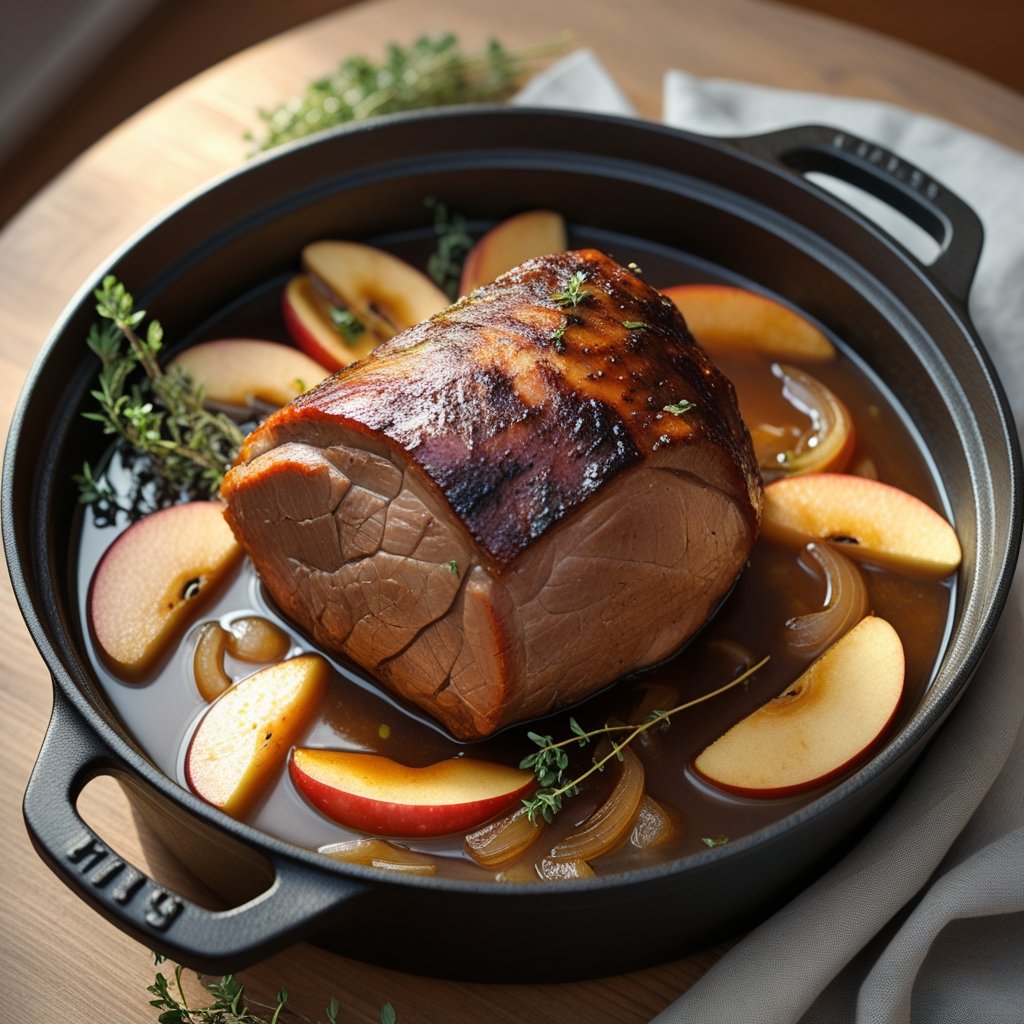
There is something deeply comforting about a slow-cooked meal, especially one infused with the sweetness of apples and the richness of tender pork. This apple cider braised pork shoulder is the ultimate fall comfort food, perfect for gatherings or cozy dinners at home. The apple cider creates a flavorful base that caramelizes beautifully as it cooks, infusing the meat with a slightly tangy and sweet aroma, and each bite melts in your mouth, combining savory depth with a hint of fruitiness.
This guide covers the apple cider braised pork shoulder recipe in full depth, from the exact ingredients and the step-by-step braising method to variations, what to serve with it, and how to use the leftovers. The total time is three hours and forty minutes, with only twenty minutes of hands-on prep, and it serves six people. Most of that time is the oven doing the work while you get on with your evening, which makes this one of the easiest impressive dinners you can cook for a holiday table or a cold weekend night.
For more pork ideas for the holiday table, see our Easy Christmas Pork Recipes for a Festive Holiday Table.
The full original recipe this guide is based on is the Apple Cider Braised Pork Shoulder Recipe, with the same ingredients, times, and method used below.
Why Apple Cider Braised Pork Shoulder Is the Ultimate Fall Dinner
Fall cooking is about patience and warmth, and braised pork shoulder is built for both. A pork shoulder is a hard-working cut, full of connective tissue that turns silky and tender when it cooks low and slow, and three hours in a covered pot at 325 degrees Fahrenheit is exactly what it needs. The apple cider in the braising liquid does two jobs at once. It keeps the meat moist through the long cook, and it caramelizes as it reduces, giving the sauce a sweet, tangy depth that plain broth never reaches.
This is also a practical dinner. The prep takes twenty minutes, the ingredients are ordinary, and one pot feeds six people. While the pork braises, the oven is busy and your hands are free, so you can make the sides, set the table, or simply relax. When the lid comes off for the last twenty minutes, the sauce thickens and the top of the pork picks up color, and the kitchen fills with the smell of apples, thyme, and roasted pork. That is the smell of a fall dinner done right.
It fits the season in another way too. Apple cider searches climb every fall as people look for ways to use the season’s apples, and spiked apple cider is one of the rising drinks of the season. This recipe takes that same cider flavor and puts it into a proper main course, so the dish feels seasonal without being a novelty. Serve it for family dinners or festive gatherings, and it is always a crowd-pleaser.
What Makes This Braised Pork Shoulder So Tender
The secret is patience. Slow cooking lets the flavors blend and the pork become irresistibly tender, and there is no shortcut that does the same job. A pork shoulder needs time for its connective tissue to break down into gelatin, and that gelatin is what makes the meat feel juicy and fall apart under a fork. Three hours at 325 degrees Fahrenheit gives it that time, and the covered pot keeps the moisture in while it works.
The second secret is the sear. Before the pork ever meets the cider, it is seasoned with salt and pepper and seared in a hot Dutch oven until it is golden on all sides. That browning builds flavor through the Maillard reaction, and the browned bits left in the pot dissolve into the braising liquid when the cider and broth go in, so none of that flavor is wasted. Skipping the sear saves ten minutes and costs you the deep, savory base that makes the sauce taste like more than just cider.
The third secret is the liquid itself. Two cups of apple cider and one cup of chicken broth, with a spoonful of Dijon mustard and a spoonful of apple cider vinegar, give the sauce sweetness, savoriness, and a little tang all at once. The apples sliced into the pot soften as they cook and add their own sweetness, while thyme and a bay leaf bring a quiet herbal note that keeps the dish from tasting like dessert. Use real apple cider, not cider vinegar, because the two are completely different ingredients and only real cider gives you the sweet, fruity base this dish needs.
Ingredients You Need for Apple Cider Braised Pork Shoulder
Everything in this dish comes from an ordinary grocery list, and the amounts are generous enough to feed six people well. You need three to four pounds of pork shoulder, trimmed, two cups of apple cider, one cup of chicken broth, two tablespoons of olive oil, one onion sliced, three garlic cloves minced, two apples sliced, two sprigs of fresh thyme, one bay leaf, one teaspoon of salt, half a teaspoon of black pepper, one tablespoon of Dijon mustard, and one tablespoon of apple cider vinegar.
Start with the pork shoulder, because it decides the whole dish. Pick a piece between three and four pounds, trimmed of excess fat but not stripped bare, since a little fat keeps the meat moist through the long braise. Pat it dry with paper towels before you season it, because a dry surface browns properly while a wet one steams. Season it evenly with the salt and black pepper so every side is covered.
The apple cider is the star of the sauce, so use real apple cider, not cider vinegar and not apple juice if you can help it. Real cider has the cloudy, spiced, slightly tart character that caramelizes into a rich sauce, while apple juice is too sweet and one-note. The chicken broth rounds out the liquid so the sauce tastes savory as well as sweet, and the Dijon mustard and apple cider vinegar add the tang that keeps the sweetness in balance. For the apples, use a firm variety that holds its shape in the pot, sliced thick enough to soften without dissolving completely. The onion and garlic build the savory base, and the thyme and bay leaf add the herbal note that makes the dish taste like a proper Sunday roast.
Equipment You Will Need
You do not need special equipment for this dish, but one piece matters more than the rest. A large Dutch oven or heavy pot is the heart of the recipe, because it goes from the stovetop to the oven and holds heat evenly through the three-hour braise. A heavy pot with a tight lid keeps the moisture in, and that moisture is what makes the pork tender instead of dry.
You will also need a sharp knife for trimming and slicing, a cutting board, measuring cups and spoons, a wooden spoon for stirring the onions and scraping up the browned bits, tongs for turning the pork while it sears, aluminum foil if your lid needs extra sealing, and a serving platter for the finished pork. That is the whole list. Nothing fancy, nothing you do not already have in an ordinary kitchen, and that is one more reason this dish is such a reliable choice for a busy holiday or a cold weekend.
How to Make Apple Cider Braised Pork Shoulder: Step-by-Step Guide
Follow these steps in order, and the dish practically makes itself. The total time is three hours and forty minutes, with twenty minutes of prep and three hours and twenty minutes of cooking, and it serves six people at about 410 calories per serving.
- Preheat the oven to 325 degrees Fahrenheit. Pat the pork dry with paper towels. Season with salt and pepper evenly. A dry surface is the key to a good sear, so take the time to pat the pork properly and season every side, including the ends.
- Heat oil in the Dutch oven. Sear the pork until golden on all sides. Use the olive oil over medium-high heat and let the pot get properly hot before the pork goes in. Turn the pork with tongs so each side gets the same golden color, and do not move it around too much while it sears. A good sear takes a few minutes per side, and the color you build here is flavor you will taste in the sauce.
- Remove the pork and set aside. Put it on a plate while you build the sauce in the same pot, so all the browned bits stay where they belong.
- Add onions and garlic, and saute until soft. Stir in the apples and cook for two minutes. The onions and garlic soften in the same oil and the pork drippings, and the apples start to release their sweetness. Two minutes is enough. You want the apples softened, not dissolved.
- Add cider, broth, mustard, and vinegar. Scrape the browned bits from the bottom. This is where the sauce is born. The liquid lifts the caramelized bits off the pot and dissolves them into the sauce, so scrape firmly with a wooden spoon and get everything up.
- Return the pork to the pot. Add thyme and bay leaf. Nestle the pork back into the liquid, tuck the thyme sprigs and the bay leaf around it, and make sure the pork is sitting in the sauce rather than on top of it.
- Cover with a lid or foil. Transfer to the oven and braise for three hours. The lid keeps the moisture in and the heat even, and the long, gentle braise is what turns a tough cut into tender meat. Resist the urge to peek too often, since every lift of the lid lets out heat and steam.
- Remove the lid for the last twenty minutes. This lets the sauce reduce and thicken, and lets the top of the pork pick up a little color. The sauce should look glossy and slightly syrupy by the end, not thin and watery.
- Check tenderness. The pork should shred easily. Push a fork into the thickest part and twist gently. If the meat pulls apart with almost no resistance, it is done. If it still fights the fork, give it another twenty to thirty minutes in the oven.
- Discard the bay leaf and thyme sprigs. Serve warm with your favorite sides. The bay leaf and thyme have given everything they have to the sauce, and they should not end up on anyone’s plate.
The Secret to a Perfect Sear and Braise
A perfect braise starts before the liquid ever goes in. The sear is the step most people rush, and it is the step that decides how deep the flavor gets. Heat the oil until it shimmers, lay the pork in the pot, and leave it alone until the underside is properly golden. Turn it with tongs, not a fork, so you do not pierce the meat and let the juices out. Every side needs the same treatment, including the ends, because the browned surface is where the savory depth comes from.
The braise itself needs the opposite of attention. Once the pot is covered and in the oven at 325 degrees Fahrenheit, leave it alone. The low, steady heat and the trapped steam do the work, breaking down the connective tissue slowly and letting the cider sauce soak into the meat. Lifting the lid to check lets out the steam that keeps the pork moist, so trust the three hours and check only near the end. When the lid comes off for the last twenty minutes, the sauce reduces and the flavors concentrate, and that is when the dish goes from good to memorable.
For more slow-cooked comfort food, see our Easy Winter Comfort Food Recipes.
How to Tell When the Pork Is Done
The test for braised pork shoulder is simple, and it has nothing to do with a thermometer. Push a fork into the thickest part of the meat and twist gently. If the pork shreds easily, with almost no resistance, it is done. The meat should pull apart into tender strands, and the strands should be moist, not dry. If the fork meets resistance or the meat feels firm and springy, it needs more time, so put the lid back on and give it another twenty to thirty minutes.
The three-hour braise at 325 degrees Fahrenheit is the right starting point for a three to four pound shoulder, but every piece of meat is a little different. A thicker shoulder, a pot that runs cool, or an oven that is slightly off can all add time. The fork test is the truth, not the clock. When the pork shreds easily, take it out. When it does not, keep braising. There is almost no risk in giving a shoulder more time, since the covered pot and the braising liquid protect it from drying out, while taking it out too early is the one mistake that leaves the meat tough.
Easy Variations to Try
This dish is easy to make your own, and small changes keep the same slow-braised character. Try different apple varieties in the pot. A tart apple like Granny Smith holds its shape and adds brightness, while a sweeter apple like Honeycrisp or Fuji melts a little more and makes the sauce rounder. Mixing one tart and one sweet apple gives you both effects at once, and either way the apples should be sliced thick so they soften without disappearing.
Swap the herbs to change the mood of the dish. Rosemary works in place of thyme and gives the sauce a woodier, more pine-like note, while sage adds an earthy warmth that suits the holiday table. Add a couple of carrots, cut into thick chunks, to the pot with the onions, and they cook in the cider sauce and come out sweet and tender. A splash of cider before serving brightens the whole dish, and the recipe itself suggests this as a finishing touch.
For a different way to serve the same pork, shred the leftovers for sandwiches or tacos. The shredded meat, piled into a soft roll with a spoonful of the sauce, or tucked into warm tortillas with a little slaw, turns one dinner into a second meal that tastes nothing like leftovers. For more pork dishes in the same spirit, see our Easy Winter Pork Recipes.
Make-Ahead Tips for a Stress-Free Dinner
Braised pork shoulder is one of the best make-ahead main courses you can cook, because time only improves it. The pork tastes even better the next day, once the sauce has had a night to settle into the meat. Cook it fully the day before, let it cool in its sauce, and keep the whole pot covered in the fridge. On the day itself, reheat it gently on the stovetop or in a low oven, adding a splash of cider or broth if the sauce has thickened too much in the fridge.
If you are planning a holiday meal, this is the main course that frees up your oven. While the turkey or the sides need the oven at high heat, the pork shoulder is already done and waiting, and it only needs gentle reheating. That is a real advantage on Thanksgiving, when oven space is the scarcest resource in the kitchen. For a full holiday plan, see our Easy Thanksgiving Dinner Recipes.
What to Serve With Apple Cider Braised Pork Shoulder
The recipe itself suggests three perfect partners, and they cover everything the dish needs. Creamy mashed potatoes are the first choice, because smooth and buttery mashed potatoes absorb the apple-cider gravy perfectly, balancing the rich flavors of the pork. The sauce is too good to leave on the plate, and mashed potatoes make sure none of it goes to waste. See our Easy Mashed Potatoes for Thanksgiving for a version that fits this table.
Roasted Brussels sprouts are the second partner, and their nutty, caramelized edges pair beautifully with the tangy-sweet sauce. The slight bitterness of the sprouts cuts through the richness of the pork, and roasting them until the edges crisp gives the plate a contrast in texture as well as flavor. Buttery egg noodles are the third option, light and comforting, and they make an ideal base for the tender, shredded pork and its luscious sauce. Any of the three works, and a green vegetable on the side rounds out the plate.
For a heartier holiday spread, add a pot of beans or a cranberry side to the table. Our Easy Baked Beans for the Holidays sit happily next to the pork, and our Easy Cranberry Relish for the Holidays adds a tart, bright note that balances the sweet cider sauce.
How to Store and Reheat Leftovers
Store leftovers in an airtight container in the fridge, keeping the pork in its sauce so it stays moist. Cooked pork keeps well in the fridge for three to four days, and the sauce actually helps it stay juicy when you reheat it. For longer storage, freeze the shredded pork with some of its sauce in a freezer-safe container for up to two to three months, and thaw it in the fridge overnight before reheating.
Reheat gently, either on the stovetop over low heat or in a low oven, with a splash of cider or chicken broth to loosen the sauce. Avoid blasting it in the microwave at full power, since high heat dries out the meat and the sauce can separate. Low and slow is the rule for reheating, just as it was for cooking. Let the pork rest for a few minutes before slicing, as the recipe advises, so the juices settle back into the meat and every slice stays moist.
A serving of this dish has about 410 calories, which covers six generous servings from a three to four pound shoulder. It is a hearty main course, and the calories come mostly from the pork itself, with the cider sauce adding sweetness rather than fat. Served with mashed potatoes and a green vegetable, it makes a complete, satisfying fall dinner.
Frequently Asked Questions
- Can I use apple juice instead of apple cider? You can, but the result will be different. Real apple cider has a cloudy, slightly tart character that caramelizes into a rich sauce, while apple juice is sweeter and one-note. Use real apple cider, not cider vinegar, since the two are completely different ingredients. If apple cider is hard to find, look for unfiltered apple juice as the closest substitute.
- How do I know when the pork shoulder is done? The pork should shred easily. Push a fork into the thickest part and twist gently. If the meat pulls apart with almost no resistance, it is done. If it still fights the fork, give it another twenty to thirty minutes in the oven. The three-hour braise is a starting point, and the fork test is the real answer.
- Can I make this dish ahead of time? Yes, and it tastes even better the next day. Cook it fully, let it cool in its sauce, and keep the whole pot covered in the fridge. Reheat it gently on the stovetop or in a low oven, adding a splash of cider or broth if the sauce has thickened too much. This makes it a great choice for a holiday meal, since it frees up oven space on the day itself.
- What should I serve with apple cider braised pork shoulder? Creamy mashed potatoes, roasted Brussels sprouts, and buttery egg noodles are the three pairings the recipe suggests. Mashed potatoes absorb the sauce, Brussels sprouts add a nutty contrast, and egg noodles make a light, comforting base for the shredded pork.
- Can I cook this in a slow cooker instead of the oven? The recipe is written for a Dutch oven in the oven at 325 degrees Fahrenheit, and that method gives you the best control over the sauce. If you do use a slow cooker, sear the pork first in a separate pan, then transfer everything to the slow cooker and cook on low until the pork shreds easily. Keep the lid on and let the slow, gentle heat do the same work the oven does.
- What can I do with the leftovers? Shred the leftovers for sandwiches or tacos, which is the tip the recipe itself gives. The shredded pork, piled into a soft roll with a spoonful of sauce or tucked into warm tortillas with slaw, turns one dinner into a second meal. Leftovers keep for three to four days in the fridge in an airtight container.
Final Thoughts
The apple cider braised pork shoulder is a cozy, flavorful meal for any season, but it shines brightest in fall. Simple to prepare yet full of depth, it transforms humble ingredients into something extraordinary. A pork shoulder, a couple of cups of cider, and three patient hours in the oven are all it takes, and the result is meat that falls apart under a fork and a sauce that tastes like the season itself.
Serve it for family dinners or festive gatherings, and it is always a crowd-pleaser. Pair it with mashed potatoes, Brussels sprouts, or egg noodles, save the leftovers for sandwiches the next day, and enjoy the kind of slow-cooked comfort food that makes a cold evening feel warm. If you try this recipe once, you will want it again, and now you know how to make apple cider braised pork shoulder at home easily. Enjoy every bite.