

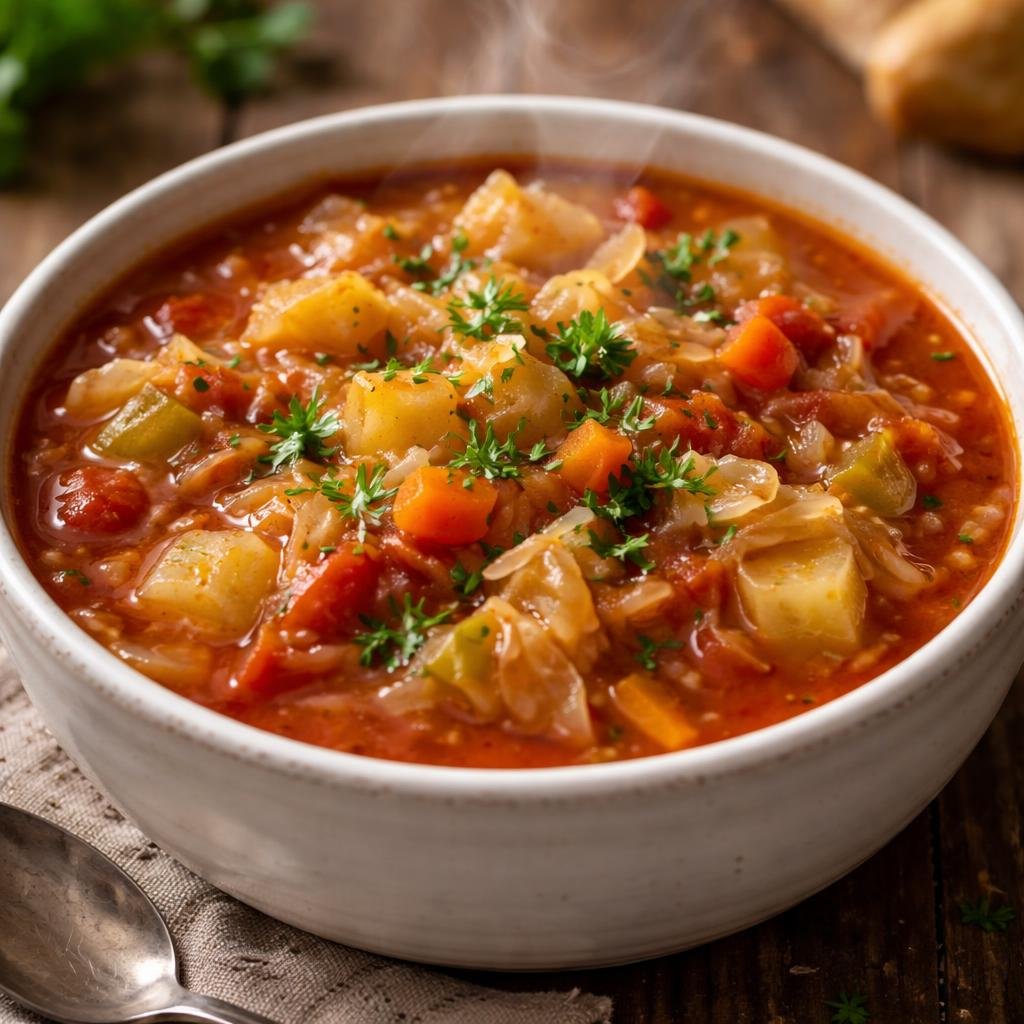
Cabbage soup is the kind of recipe that proves simple food can be the most comforting food on the table. It is warm, light, and full of vegetables, and it comes together in one pot in under an hour. This guide covers the Paula Deen cabbage soup recipe in full depth, from the exact ingredients and the thirteen-step method to variations, what to serve with it, and how to store it for easy winter meals.
If your winter menu needs a soup that is healthy without feeling plain, this is it. Cabbage soup is gentle after days of rich holiday food, it feeds a family of six for very little money, and it tastes even better the next day. It is also one of the easiest soups to make your own, because the base welcomes almost any vegetable you have in the fridge.
For more cozy winter bowls, see our Easy Christmas Soup Recipes for a Cozy Holiday Night.
Why Cabbage Soup Belongs on Your Winter Table
Winter cooking is usually heavy: roasts, casseroles, creamy sauces, and rich desserts. Cabbage soup offers the opposite. It is light, bright, and full of fresh vegetables, and it gives your table a break without giving up on flavor. After a week of holiday eating, a bowl of this soup feels like a reset, and that is exactly why it is the lightest soup in our Christmas soup collection.
It also solves a very practical winter problem: what to cook on a busy weeknight when you want something warm and homemade but you do not have hours to spare. This soup needs fifteen minutes of prep and thirty-five minutes of cooking, and most of that cooking time is hands-off simmering. You can chop the vegetables, start the pot, and let it do its work while you set the table or help with homework.
Cabbage soup is also wonderfully affordable. A head of cabbage, a few carrots, an onion, and a potato cost very little, and the whole pot serves six people at about 180 calories a serving. It is the kind of recipe that stretches a grocery budget without anyone at the table feeling like they are eating budget food.
For more Paula Deen winter cooking, see our Easy Paula Deen Winter Recipes for Cozy Nights.
What Makes Paula Deen Cabbage Soup Special
Paula Deen is known for rich, comforting Southern food, and this soup carries that same warmth in a lighter form. The secret is not a fancy ingredient. It is patience. Let the vegetables cook slowly, and the cabbage, carrots, and onions release their natural sweetness. Season in layers, adding a little salt at different stages, and the broth tastes balanced and rich instead of flat.
A small splash of tomato juice or crushed tomatoes is the other quiet trick in this recipe. It gives the broth color and a gentle acidity that keeps the soup from tasting one-note. The tomato does not turn it into tomato soup. It simply brightens everything else in the pot.
Cabbage itself is the star here, and it deserves more credit than it usually gets. It is affordable, it keeps well in the fridge for weeks, and it turns sweet and tender when it simmers. In this soup it shrinks down and melts into the broth, so every spoonful has a little cabbage, a little potato, and a little green bean. Nothing about it feels like diet food. It feels like a hug in a bowl, which is exactly how the original recipe describes it.
Paula Deen Cabbage Soup Recipe at a Glance
Before you start, here is the whole recipe in one place. This is the recipe as published on Recipes Walay, and every number below comes from that original post.
- Servings: 6 servings
- Prep time: 15 minutes
- Cook time: 35 minutes
- Total time: 50 minutes
- Course: Soup / Main Dish
- Cuisine: Southern American
- Calories: About 180 kcal per serving
Each serving has about 6 grams of protein, 28 grams of carbohydrates, 5 grams of fiber, 5 grams of fat, and 520 milligrams of sodium. That makes cabbage soup a light, wholesome meal that fits well into a balanced winter menu, especially when it is served with a piece of warm cornbread or a simple salad.
The full recipe with all thirteen steps is on the original post: Paula Deen Cabbage Soup Recipe.
Ingredients You Need
This recipe uses simple ingredients. You probably have most of them already, and the rest are easy to find at any grocery store.
- 1 small head green cabbage, chopped
- 1 tablespoon olive oil
- 1 medium onion, diced
- 2 carrots, sliced
- 2 celery stalks, chopped
- 3 garlic cloves, minced
- 4 cups chicken broth
- 2 cups tomato juice or crushed tomatoes
- 1 medium potato, diced
- 1 teaspoon salt
- 1/2 teaspoon black pepper
- 1/2 teaspoon paprika
- 1/2 teaspoon dried thyme
- 1 bay leaf
- 1 cup green beans, chopped
- 1 tablespoon fresh parsley, chopped
Optional toppings: fresh parsley, cracked black pepper, and a squeeze of lemon.
The chicken broth is the backbone of this soup, so use a good one. The vegetables cook in it for twenty-five minutes, which means the flavor of the broth becomes the flavor of the whole dish. A low-sodium broth is a good choice because it lets you control the salt yourself, and you can always add more at the end after tasting.
Green cabbage is the right choice for this recipe. It is firmer and sweeter than red cabbage, and it holds its shape just enough while it simmers so the soup still has texture. A small head is plenty, because cabbage looks like a lot when it is chopped and then shrinks down dramatically as it cooks. Do not worry when the pot looks overfull at first. That is normal.
The tomato juice or crushed tomatoes are worth a note too. Either one works, and the choice is yours. Tomato juice gives a smoother, lighter broth, while crushed tomatoes add a little more body and texture. If you only have one of them in the pantry, use it. The soup will still be wonderful.
Equipment You Will Need
You do not need fancy tools for this recipe. A large soup pot or a Dutch oven is the most important piece, because it needs to hold all the vegetables and six cups of liquid comfortably.
- Large soup pot or Dutch oven
- Cutting board
- Sharp knife
- Wooden spoon
- Ladle
- Measuring cups
- Measuring spoons
A sharp knife matters more than it might seem, because the vegetables should be cut to a similar size so they cook evenly. If the potato pieces are much bigger than the carrot slices, the carrots will be soft while the potatoes are still hard. Take the extra minute to cut everything evenly. It pays off in every spoonful.
How to Make Paula Deen Cabbage Soup Step by Step
Follow these thirteen steps exactly as written in the original recipe, and you will get a warm, flavorful cabbage soup every time.
Step 1: Prepare the Vegetables
Start by washing all the vegetables well. Chop the cabbage into bite-size pieces. Dice the onion and the potato. Slice the carrots and celery evenly. Keeping the vegetables a similar size helps them cook evenly, and fresh vegetables make this soup taste bright and homemade.
Step 2: Heat the Oil
Place a large soup pot on medium heat. Add the olive oil and allow it to warm gently. Once the oil shimmers slightly, it is ready. Warm oil helps soften the vegetables and build the base flavor for this cabbage soup.
Step 3: Cook the Onion and Garlic
Add the diced onion to the pot. Cook for about three minutes while stirring often. When the onions turn soft, add the garlic and cook for one more minute. The smell will become sweet and fragrant. Do not let the garlic brown, because browned garlic turns bitter and that bitterness will follow the whole pot.
Step 4: Add Carrots and Celery
Stir in the carrots and celery. Cook them for about four minutes, stirring occasionally so they cook evenly. These vegetables create a deep, rich flavor for the soup broth, and this short head start means they will be perfectly tender by the time the soup is done.
Step 5: Add the Cabbage
Now add the chopped cabbage to the pot. Stir gently to combine it with the vegetables. Cabbage will look like a lot at first. Do not worry. It shrinks as it cooks, and within a few minutes it will settle into the pot.
Step 6: Pour in the Broth
Carefully pour in the chicken broth and the tomato juice. Stir everything together well. The broth should cover most of the vegetables. This liquid forms the heart of the Paula Deen cabbage soup recipe, so give it a good stir to make sure nothing is stuck to the bottom of the pot.
Step 7: Add the Potato and Green Beans
Add the diced potato and the chopped green beans. These ingredients make the soup filling and comforting. They also give a nice texture to each spoonful, because the potato turns soft and starchy while the green beans stay just a little bit firm.
Step 8: Season the Soup
Now add the salt, black pepper, paprika, thyme, and the bay leaf. Stir well so the spices spread through the broth. Proper seasoning makes the soup warm and flavorful. This is the first layer of seasoning. You will taste and adjust again at the end.
Step 9: Bring to a Gentle Boil
Increase the heat slightly and bring the soup to a gentle boil. Once it begins bubbling, reduce the heat to low. This keeps the vegetables tender and prevents overcooking. A hard, rolling boil would break the vegetables apart and cloud the broth.
Step 10: Simmer Slowly
Let the soup simmer for about twenty-five minutes. Stir occasionally while it cooks. The vegetables will soften and the flavors will blend beautifully. This is the step where patience pays off. A gentle simmer always makes soup better, and rushing it is the one mistake that can flatten the flavor.
Step 11: Taste and Adjust
After simmering, taste the soup carefully. Add a little more salt or pepper if needed. Everyone’s taste is different, and adjusting the seasoning at the end makes the soup perfect for your table. A squeeze of lemon at this stage can also brighten the whole pot if it tastes a little flat.
Step 12: Finish with Fresh Parsley
Remove the bay leaf. Stir in the fresh chopped parsley just before serving. It adds color and a light, fresh flavor that lifts the whole bowl. Do not skip this step, because the parsley is what makes the soup look and taste finished rather than just cooked.
Step 13: Serve Warm
Ladle the soup into bowls. Add extra parsley or cracked black pepper if you like. Serve warm and enjoy this comforting homemade cabbage soup. A slice of warm cornbread on the side turns it from a light lunch into a full, satisfying dinner.
My Secret to the Perfect Cabbage Soup
The original recipe shares a few secrets that are worth repeating, because they are the difference between a good cabbage soup and a great one.
First, let the vegetables cook slowly. Slow cooking brings out the natural sweetness in cabbage, carrots, and onions, and the flavors blend together beautifully. If you rush the simmer, the vegetables will be cooked but the broth will taste thin.
Second, season in layers. Add a little salt at different stages while cooking. This makes the soup taste balanced and rich, because each layer of flavor is seasoned as it is built. A single big pinch of salt at the end can never do the same job.
Third, never rush soup. A gentle simmer always makes it better. The twenty-five minutes in this recipe are not wasted time. They are the time when cabbage turns sweet, the potato releases a little starch into the broth, and the thyme and bay leaf quietly do their work.
Finally, cut the vegetables evenly. It sounds small, but it is the reason some bowls of soup have mushy carrots and hard potatoes while others are perfect in every spoonful. Even pieces cook evenly, and evenly cooked vegetables make the whole pot taste better.
Variations to Make It Your Own
One of the best things about cabbage soup is how flexible it is. The base recipe is a starting point, and these variations from the original recipe all work well.
Vegetarian version: Use vegetable broth instead of chicken broth. The vegetables still create a rich and delicious flavor, and the soup becomes fully vegetarian without losing any of its warmth.
Add protein: Add cooked ground turkey for extra protein, or try cooked ground beef or shredded chicken. Meat makes the soup more filling and adds extra protein, which turns a light soup into a full dinner. Add the cooked meat with the broth so it has time to warm through and share its flavor.
Add gentle heat: A pinch of chili flakes adds gentle heat without changing the character of the soup. Start with a small pinch and add more after tasting, because chili flakes get stronger as the soup simmers.
Swap the potato: Replace the potato with sweet potato for a sweeter taste. The sweet potato adds a warm, golden color and a gentle sweetness that pairs beautifully with the tomato in the broth.
Add more vegetables: Add zucchini or bell peppers for extra vegetables. Both cook quickly, so add them with the green beans rather than at the start, or they will turn too soft.
Brighten it: A squeeze of lemon brightens the soup flavor. Add it at the end, just before serving, so the fresh citrus flavor stays bright instead of cooking away.
What to Serve with Cabbage Soup
Cabbage soup is wonderful alone, but it pairs beautifully with other simple dishes. The original recipe suggests warm cornbread, buttery dinner rolls, grilled cheese sandwiches, a simple garden salad, and roasted chicken, and each one works for a different kind of meal.
Warm cornbread is the classic Southern pairing, and it is the one to choose when the soup is dinner. The cornbread soaks up the broth and turns a light soup into a filling meal. Buttery dinner rolls do the same job with a softer, lighter touch, which is nice when the soup is part of a bigger holiday spread.
A grilled cheese sandwich turns cabbage soup into a cozy lunch, the kind of meal that feels like a snow day even on an ordinary Tuesday. A simple garden salad keeps the meal light and fresh, which is perfect when the soup is the main event and you want something crisp on the side. Roasted chicken makes the meal heartier, and it is a good choice when you are feeding a crowd and want the soup to stretch further.
For another light winter soup, try our Easy Tomato Soup for Winter Nights, and for a richer bowl, our Easy Broccoli Cheddar Soup for Winter Nights.
Storage and Reheating Tips
Cabbage soup is one of the best soups to make ahead, because it actually improves with a night in the fridge. The flavors blend together overnight while the soup rests, and the spices and vegetables fully combine, creating a richer and deeper taste. That is why so many cooks say this soup tastes better the next day.
Store the soup in an airtight container in the refrigerator. It stays fresh for up to four days. Reheat it gently on the stove over medium heat, and add a little broth if the soup has become too thick, because the potato and cabbage absorb liquid as they sit.
You can also freeze cabbage soup for up to two months. Let it cool completely first, then store it in freezer containers with a little room at the top for expansion. Thaw it in the fridge overnight and reheat it gently on the stove. The vegetables will be a little softer after freezing, but the flavor will still be wonderful.
If you are cooking for one or two people, freeze the soup in single-serving containers. That way you always have a warm, homemade lunch ready in the freezer, and you only reheat what you need.
Make-Ahead and Meal Prep
This soup is made for meal prep. It makes a large pot, it keeps well, and it reheats beautifully, which is exactly what a busy week needs.
Make a full pot on Sunday, and you have lunches for the first half of the week. Pack it in individual containers with a small bag of crackers or a roll, and lunch is done. Because the soup is light, it also works well as a starter for a bigger winter dinner: make it the day before, keep it in the fridge, and reheat it while the main dish is in the oven.
Cabbage soup is also a good choice for sharing. Because it makes a large pot, it is great for taking to friends or neighbors, especially in winter when everyone appreciates a warm meal. Pack it in a large container with a note about reheating it gently on the stove, and it travels well.
Occasions for Cabbage Soup
This soup works for many occasions. It is perfect for weeknight family dinners, cozy winter meals, healthy meal prep, light lunches, and comfort food evenings. It fits a quiet night at home just as well as it fits a holiday table that needs one light dish among many rich ones.
On a Christmas or Thanksgiving table, cabbage soup works best as a light starter or a next-day lunch made from whatever is left in the fridge. After a big holiday meal, a bowl of this soup is exactly what everyone wants: warm, gentle, and easy on the stomach.
Frequently Asked Questions
Can I make Paula Deen cabbage soup vegetarian?
Yes, you can easily make this soup vegetarian. Simply replace the chicken broth with vegetable broth. The vegetables still create a rich and delicious flavor, and the soup stays just as comforting.
How long does cabbage soup last in the refrigerator?
Cabbage soup usually stays fresh for about four days in the refrigerator. Store it in a sealed container and reheat it gently before serving. Add a little broth if it has thickened.
Can I freeze cabbage soup?
Yes, cabbage soup freezes very well. Allow the soup to cool completely before freezing. Store it in freezer containers and freeze it for up to two months. Thaw it in the fridge overnight and reheat it gently on the stove.
Can I add meat to this cabbage soup recipe?
Absolutely. Many people add cooked ground beef, ground turkey, or shredded chicken. Meat makes the soup more filling and adds extra protein. Add the cooked meat with the broth so it warms through and shares its flavor with the soup.
Why does cabbage soup taste better the next day?
The flavors blend together overnight while the soup rests in the refrigerator. This allows the spices and vegetables to fully combine, creating a richer and deeper taste. If you can, make it a day ahead and reheat it gently before serving.
Final Thoughts
This Paula Deen cabbage soup recipe is simple, warm, and comforting. It uses fresh vegetables and everyday pantry ingredients, and anyone can learn how to make it at home. The recipe is flexible and easy to customize, whether you want it vegetarian, heartier with meat, or a little spicy with chili flakes.
Try it once, and it may become a regular meal in your kitchen. A bowl of homemade soup always brings comfort and happiness, and this one does it with ingredients that cost very little and a method that asks for almost nothing except a little patience. For a warm, nutty side dish to serve with it on a holiday table, see our Easy Wild Rice for the Holidays.