

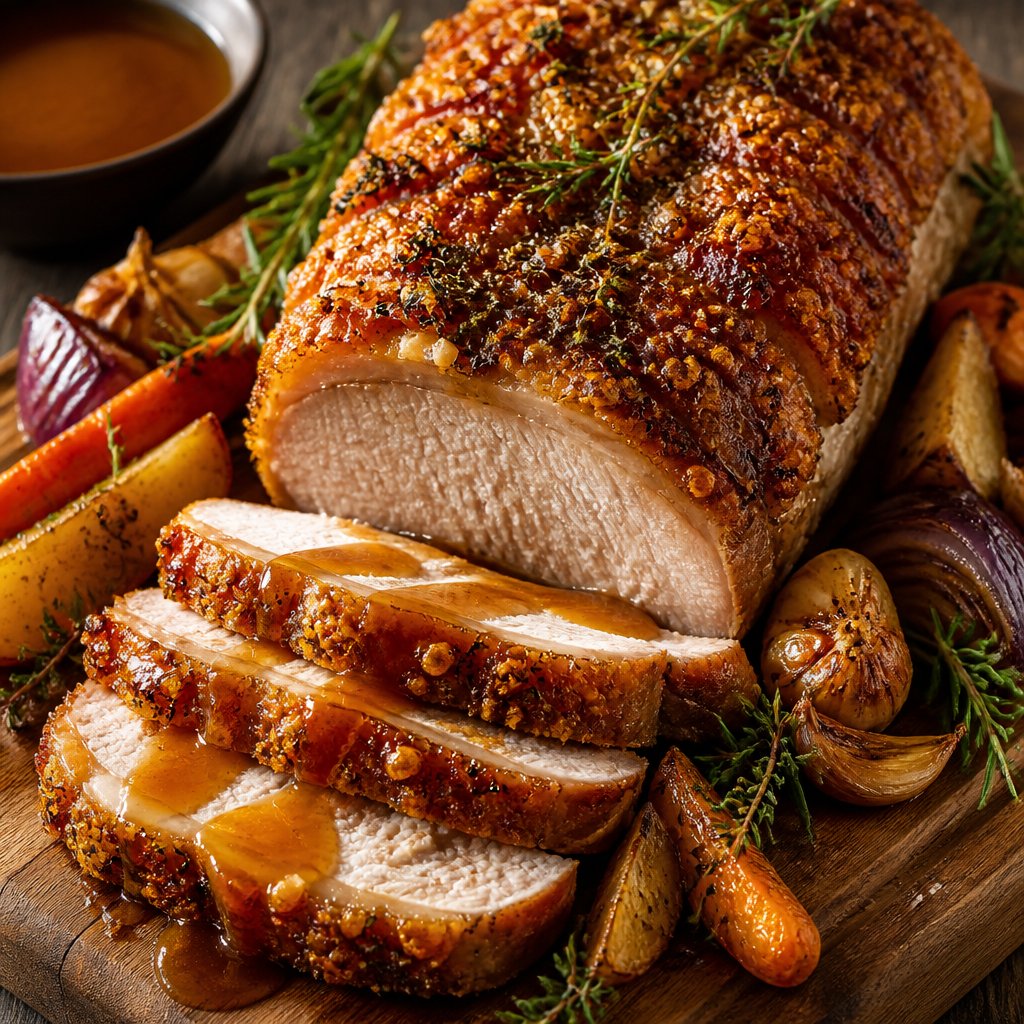
A golden, crackling crust outside and a juicy, tender center inside. That is what a good roast pork loin tastes like, and this Gordon Ramsay version gets it right with almost no effort. A three-pound pork loin is rubbed with olive oil, garlic, fresh rosemary and thyme, then roasted on a bed of onion, carrot and celery with a cup of chicken stock keeping the pan moist. The result is a Christmas main that looks like a celebration and cooks like a weeknight roast. This guide covers the Gordon Ramsay roast pork loin recipe in full depth, from the exact ingredients and the twelve-step method to variations, what to serve with it, and how to store the leftovers.
If you have ever needed a Christmas dinner main that feeds a crowd without keeping you at the stove all afternoon, this is the one. The prep takes about fifteen minutes, the roast takes about one hour and fifteen minutes, and the whole dish is ready in about ninety minutes. It serves six people at about 420 calories each, and it uses only twelve simple ingredients. Follow the steps below and you will get a golden roast with a juicy center that slices beautifully at the table.
For more pork dishes for the holiday table, see our Easy Christmas Pork Recipes for a Festive Holiday Table.
The full original recipe this guide is based on is the Gordon Ramsay Roast Pork Loin Recipe, with the same ingredients, times, and method used below.
Why Roast Pork Loin Belongs on the Christmas Table
Christmas dinner asks a lot of the cook. There is a table to fill, guests to welcome, and a main dish that needs to feel special without keeping you in the kitchen all day. Roast pork loin fits that moment perfectly. It is a whole roast, so it looks generous and festive when it comes to the table, but it only needs fifteen minutes of hands-on work before the oven takes over. While it roasts, you are free to finish the side dishes, set the table, and welcome your guests.
It also solves the most common problem with Christmas cooking: timing. A turkey can take all day and a ham can dry out if you look away. A three-pound pork loin roasts in about one hour and fifteen minutes, and a meat thermometer tells you exactly when it is done. There is no guessing and no carving drama. You rest it for fifteen minutes, slice it into thick pieces, and serve it with the roasted vegetables and pan juices from the same pan.
Roast pork loin also suits every taste at the table. The outside turns golden and crisp, the inside stays juicy and tender, and the garlic and herb rub gives every slice a warm, savory flavor. It works for a Christmas dinner, a Sunday family roast, a Thanksgiving table, a birthday gathering, or a weekend dinner with friends when you want something that feels special. Make it once and it may become the roast your family asks for every holiday, though there are rarely many leftovers with this one.
There is something else that makes this dish special: it tastes expensive and looks impressive, but it is one of the most forgiving roasts you can cook. The vegetables and chicken stock in the pan keep the oven moist, the baste halfway through keeps the surface from drying, and the rest at the end keeps the juices inside. That is exactly the feeling Christmas dinner is meant to have: generous, relaxed, and full of flavor.
What Makes This Roast Pork Loin So Good
The first thing you notice about this roast pork loin is the contrast. The outside turns golden brown and slightly crisp in the oven, while the inside stays juicy and tender. Then comes the flavor: garlic, fresh rosemary and thyme rubbed into the meat, with sweet roasted onion, carrot and celery underneath and savory pan juices to spoon over each slice. The contrast between the crisp crust and the soft, juicy center is what makes people reach for a second slice.
The flavor is rich without being heavy. The olive oil and herb rub seasons the meat all the way through, while the chicken stock in the pan steams gently around the roast and keeps it moist. The vegetables underneath do double duty: they flavor the meat from below and they come out of the oven soft, sweet and ready to serve as a side dish. A spoonful of pan juices over each slice ties the whole plate together.
The recipe is also forgiving, which matters when you are cooking on a busy Christmas day. The steps are simple, the ingredients are few, and the meat thermometer does the hard work of telling you when the roast is done. Even if your pork loin is a little larger or smaller than three pounds, the thermometer keeps you safe: cook to 145°F and the roast is done, whatever the clock says. That is the mark of a good holiday recipe: it works even when the kitchen is crowded and the cook is in a hurry.
Is Pork Loin the Same as Pork Tenderloin?
This is a fair question, because the two cuts sound alike and sit near each other in the shop. The answer is no: pork loin and pork tenderloin are different cuts, and it helps to know the difference before you cook. A pork loin is a large, wide roast, usually sold in pieces of two to four pounds, with a fat cap on one side that crisps up beautifully in the oven. A pork tenderloin is a long, narrow muscle, usually about one pound, with almost no fat, and it cooks much faster.
Because of that size difference, the two cuts need different cooking times. This recipe roasts a three-pound pork loin for about one hour and fifteen minutes at 375°F. A pork tenderloin of one pound would be badly overcooked in that time, so if you ever swap the cut, watch the thermometer closely and expect a much shorter roast. The original recipe says the same thing: yes, you can use pork tenderloin instead, but the cooking times will be different, so monitor the temperature carefully.
If you want a tenderloin recipe that is already written for that cut, our Easy Pork Tenderloin for Winter Nights cooks the smaller cut the right way. For this Christmas roast, stick with the loin: it feeds six people, it slices into thick, generous pieces, and it is the cut that gives you the golden crust this recipe is known for.
Ingredients You Will Need
This recipe serves six people, and the ingredients below are exactly the ones in the original Gordon Ramsay Roast Pork Loin Recipe. They are all pantry and fridge staples, which is why this is such a good Christmas main.
For the Pork:
- 3 pounds pork loin
- 2 tablespoons olive oil
- 2 teaspoons sea salt
- 1 teaspoon black pepper
- 4 garlic cloves, minced
- 1 tablespoon fresh rosemary, chopped
- 1 tablespoon fresh thyme, chopped
For Extra Flavor:
- 1 onion, sliced
- 1 carrot, chopped
- 1 celery stalk, chopped
- 1 cup chicken stock
- 1 tablespoon butter
A few notes on the ingredients will help you get the best result. Use fresh herbs for the best flavor, as the original recipe advises, because fresh rosemary and thyme give a stronger, brighter aroma than dried. If you only have dried herbs, they still work very well, but use them a little more sparingly, since dried herbs are more concentrated. Use a pork loin with the fat cap left on: that fat crisps in the oven and keeps the meat juicy underneath, so do not trim it off before roasting.
The vegetables are not decoration. The onion, carrot and celery sit under the roast, flavor the meat from below, catch the drippings, and come out soft and sweet. The cup of chicken stock keeps the roasting environment moist, and the tablespoon of butter adds richness to the pan juices. Do not skip the stock: a dry pan makes a dry roast, and the stock is what gives you the savory juices to spoon over each slice at the table.
Equipment You Will Need
You do not need any special equipment for roast pork loin. The original recipe uses a roasting pan, a knife, a cutting board, and a meat thermometer, and that is all it takes.
- Roasting pan, for the pork and vegetables
- Sharp knife, for trimming and slicing the roast
- Cutting board, for prep and for carving
- Mixing bowl, for the herb seasoning
- Meat thermometer, for checking the safe internal temperature of 145°F
- Measuring spoons, for the oil, salt, pepper and herbs
- Aluminum foil, for resting the roast loosely covered
- Basting brush, for spooning pan juices over the pork (a spoon works too)
- Tongs, for turning and lifting the roast
The meat thermometer is the one tool you should not skip. It is the safest and easiest way to know when the pork is perfectly cooked, and it is the difference between a juicy roast and a dry one. A roasting pan with a rack is helpful but not required: the bed of vegetables lifts the pork off the bottom of the pan and does the same job, while flavoring the meat at the same time.
How to Make Gordon Ramsay Roast Pork Loin
Follow these twelve steps in order. They follow the original recipe exactly, with the ten steps of the original method broken out so each action is clear.
Step 1: Bring the pork to room temperature. Remove the pork loin from the refrigerator about 30 minutes before cooking. Pat it dry using paper towels. Dry meat helps create a beautiful golden crust during roasting, and meat that starts at room temperature cooks more evenly than meat straight from the fridge.
Step 2: Preheat the oven. Set your oven to 375°F (190°C) and let it heat fully while you season the pork. A hot oven from the start is what gives the outside its golden color.
Step 3: Make the herb seasoning. In a small bowl, mix the olive oil, minced garlic, chopped rosemary, chopped thyme, sea salt, and black pepper. Stir everything well. This mixture will give the pork amazing flavor and aroma.
Step 4: Season the pork. Rub the herb mixture all over the pork loin. Make sure every side is covered. Massage the seasoning gently into the meat for the best results, including the ends and the fat cap.
Step 5: Prepare the vegetables. Place the sliced onion, chopped carrot, and chopped celery in the roasting pan. Spread them evenly across the bottom. These vegetables add flavor to the meat and create a tasty base for the roast to sit on.
Step 6: Place the pork in the pan. Set the seasoned pork loin on top of the vegetables. Pour the cup of chicken stock into the pan around the vegetables. This keeps the roasting environment moist and flavorful while the pork cooks.
Step 7: Roast the pork. Place the pan in the preheated oven and roast the pork for about 1 hour and 15 minutes. The outside will turn golden brown while the inside cooks through gently.
Step 8: Baste during cooking. Halfway through roasting, spoon some of the pan juices over the pork. This keeps the surface moist and adds even more flavor to every bite. If you have a basting brush, use it; a spoon works just as well.
Step 9: Check for doneness. Use a meat thermometer to check the temperature in the thickest part of the roast. The safe internal temperature is 145°F (63°C). This is the safest and easiest way to know when the pork is perfectly cooked, so trust the thermometer, not the clock.
Step 10: Rest the meat. Remove the pork from the oven. Cover it loosely with foil and let it rest for 15 minutes. This step keeps the meat juicy and tender, because the juices settle back into the meat instead of running out onto the board. Do not skip the resting time.
Step 11: Slice the pork. Place the rested roast on a cutting board and slice it into thick pieces with a sharp knife. Thick slices hold their juices better than thin ones and look generous on the plate.
Step 12: Serve with the vegetables and pan juices. Arrange the slices on a platter with the roasted vegetables from the pan, and spoon the warm pan juices over the top. Serve immediately while everything is hot.
Tips for Perfect Roast Pork Loin Every Time
Eight tips from the original recipe will help you get this roast right on the first try.
Let the pork reach room temperature before cooking. Thirty minutes on the counter helps the roast cook evenly, so the outside does not overcook while the center is still catching up. This is the original recipe’s own secret, and it makes a real difference.
Use fresh herbs for better flavor. Fresh rosemary and thyme give a brighter, stronger aroma than dried. If you must use dried herbs, they still work very well, but the fresh ones are worth buying for a Christmas roast.
Do not skip the resting time. Fifteen minutes under loose foil is what keeps the juices inside the meat. Slice too soon and the juices run out onto the board; wait the full fifteen minutes and every slice stays tender and flavorful.
Always use a meat thermometer. It is the only reliable way to know the roast is done. Pull the pork at 145°F and it will be juicy; cook it much past that and it will start to dry out.
Season generously. Good seasoning makes a huge difference, as the original recipe says. Rub the herb mixture over every side, including the ends, and do not be shy with the salt: a three-pound roast needs the full two teaspoons.
Baste halfway through. Spooning the pan juices over the pork keeps the surface moist and builds flavor on the crust. One baste in the middle of the roast is enough.
Save the pan juices for gravy. The juices in the pan, with the roasted vegetables and the chicken stock, make a wonderful quick gravy. Strain them, warm them in a small pan, and serve alongside the sliced pork.
Do not rush the cooking process. A gentle roast at 375°F, a thermometer check, and a proper rest will always beat a hot oven and a hurried carve. The roast rewards patience with a juicy center and a golden crust.
Variations to Try
The original recipe lists several variations, and each one keeps the same easy method while changing the flavor.
Add apples to the roasting pan for sweetness. A couple of sliced apples tucked in with the onion, carrot and celery turn sweet and soft in the oven, and their flavor is wonderful with pork. This is the easiest way to give the roast a festive, fruity note.
Use sage instead of thyme for a different taste. Sage has a warm, earthy flavor that suits pork beautifully, especially at Christmas. Swap it in one-for-one for the thyme and keep everything else the same.
Try a honey glaze for a sweet finish. Brush a little honey over the roast in the last fifteen minutes of cooking. It caramelizes into a sticky, golden coating that looks beautiful on the table and tastes wonderful with the savory herbs.
Use dried herbs if fresh ones are not available. Fresh herbs give stronger flavor, but dried rosemary and thyme still work very well. The roast will still be juicy and full of flavor.
Add a little extra garlic for a bolder flavor. Two more minced cloves in the herb rub will not overpower the roast, and garlic lovers will notice the difference in the best way.
Make a quick gravy from the pan juices. Strain the juices, skim off any excess fat, warm them in a small saucepan, and whisk in a teaspoon of cornstarch mixed with cold water if you want them thicker. It takes five minutes and turns the roast into a full Sunday dinner.
What to Serve with Roast Pork Loin
The original recipe lists ten sides that work beautifully with this roast, and the best plate mixes something creamy, something green, and something sweet. Garlic mashed potatoes are the classic partner: creamy potatoes balance the savory roast perfectly, and they soak up the pan juices wonderfully. Roasted carrots and roasted sweet potatoes add sweetness and color, and green beans or buttered peas add a fresh, green contrast.
For a full Christmas table, serve it next to our Easy Beef Short Ribs for Christmas Dinner if you are feeding a crowd that wants a second main, and our Easy Apple Cider Braised Pork Shoulder for Dinner for another slow-cooked pork dish that cooks the same easy way. Dinner rolls are perfect for mopping up the pan juices, and a garden salad or creamy coleslaw adds a cool, crisp bite beside the warm roast.
Apple sauce is the traditional partner for pork, and it belongs on this table: its sweetness cuts through the richness of the roast. Yorkshire pudding is another wonderful choice if you want the meal to feel like a proper British Sunday roast, which suits this Gordon Ramsay recipe perfectly. For more pork ideas for the season, our Easy Winter Pork Recipes has more dishes that cook the same easy way, and our Easy Braised Brisket for the Holidays is another slow, generous roast for a holiday crowd.
Make-Ahead and Storage
The original recipe gives clear make-ahead guidance: you can season the pork several hours before cooking. Rub the herb mixture over the loin, cover it, and keep it in the refrigerator until you are ready to roast. Let it sit at room temperature for thirty minutes before it goes into the oven, just as the recipe says, so it cooks evenly.
For leftovers, the recipe says to store them in an airtight container and refrigerate for up to 4 days. Reheat in the oven at 325°F, and add a little broth while reheating so the slices stay moist. Avoid overheating, because that is what dries pork out. Slice the pork before storing it if you plan to reheat single portions, since thinner pieces warm through faster and more evenly.
The recipe also gives freezing guidance: freeze the cooked pork for up to 3 months, and slice it before freezing for easier portions. Thaw frozen pork overnight in the refrigerator, then reheat it gently in the oven at 325°F with a splash of broth. The roasted vegetables freeze well too, though they will be softer after thawing than they were on the day.
Nutrition at a Glance
The recipe card on the original recipe gives the nutrition table per serving, for 6 servings: 420 kcal, protein 42g, fat 24g, saturated fat 7g, carbohydrates 4g, fiber 1g, sugar 2g, and sodium 620mg. That is a generous, protein-rich main course portion, and it fits a Christmas dinner when the roast is the centerpiece of the table.
The ingredients explain the numbers. A three-pound pork loin is lean for a roast, with most of the calories coming from the meat itself and the olive oil in the rub. The vegetables and chicken stock add almost nothing to the calorie count, and the carbohydrates stay low at 4g because there is no sugar or flour in the dish. The protein is high at 42g per serving, which is why one thick slice feels satisfying even before the side dishes arrive.
One roast serves six people, the total time is ninety minutes, and each serving is about 420 calories. That makes this pork loin easy to plan around: one roast, one pan, and a main course that feeds the whole table without a second round of cooking. If you are feeding more than six, buy a larger loin and rely on the thermometer, adding roasting time until the thickest part reads 145°F.
Frequently Asked Questions
Can I make this recipe without fresh herbs?
Yes, you can use dried herbs instead. Fresh herbs provide stronger flavor, but dried rosemary and thyme still work very well in this recipe. Use a little less than the recipe calls for, since dried herbs are more concentrated than fresh ones.
How do I keep pork loin from becoming dry?
Use a meat thermometer and avoid overcooking. Pull the roast when the thickest part reads 145°F, and let the pork rest for fifteen minutes after roasting. These two simple steps help keep the meat juicy and tender, and they matter more than anything else in the recipe.
Can I prepare the pork ahead of time?
Yes. You can season the pork several hours before cooking. Rub the herb mixture over the loin, keep it covered in the refrigerator until you are ready to roast it, and let it sit at room temperature for thirty minutes before it goes into the oven.
What temperature should pork loin reach?
The safe internal temperature is 145°F or 63°C. Always check with a meat thermometer for accurate results and food safety. Check the thickest part of the roast, away from any bone or fat.
Can I use pork tenderloin instead of pork loin?
Yes, but cooking times will be different. Pork tenderloin is smaller and cooks much faster, so monitor the temperature carefully. A one-pound tenderloin will need far less than the one hour and fifteen minutes this loin roast takes.
Can I make gravy from the pan juices?
Yes, and the original recipe recommends saving them for exactly that. Strain the pan juices, skim off any excess fat, and warm them in a small saucepan. If you want a thicker gravy, whisk a teaspoon of cornstarch mixed with cold water into the warm juices and simmer for a minute.
Final Thoughts
Gordon Ramsay roast pork loin is the kind of Christmas main that earns its place on the table without asking much of the cook. Fifteen minutes of prep, one hour and fifteen minutes in the oven, and one pan to wash. The outside turns golden and crisp, the inside stays juicy and tender, and the garlic and herb rub with the roasted vegetables gives every slice a warm, savory flavor. Rest it for fifteen minutes, slice it thick, and spoon the pan juices over the top.
For more ideas for the holiday table, see our Easy Steak Diane for Christmas Dinner and our Easy Christmas Eve Dessert Recipes for a Sweet Holiday Night. Both are full of dishes that cook the same easy way, and both will help your Christmas dinner feel generous without keeping you in the kitchen all day.