

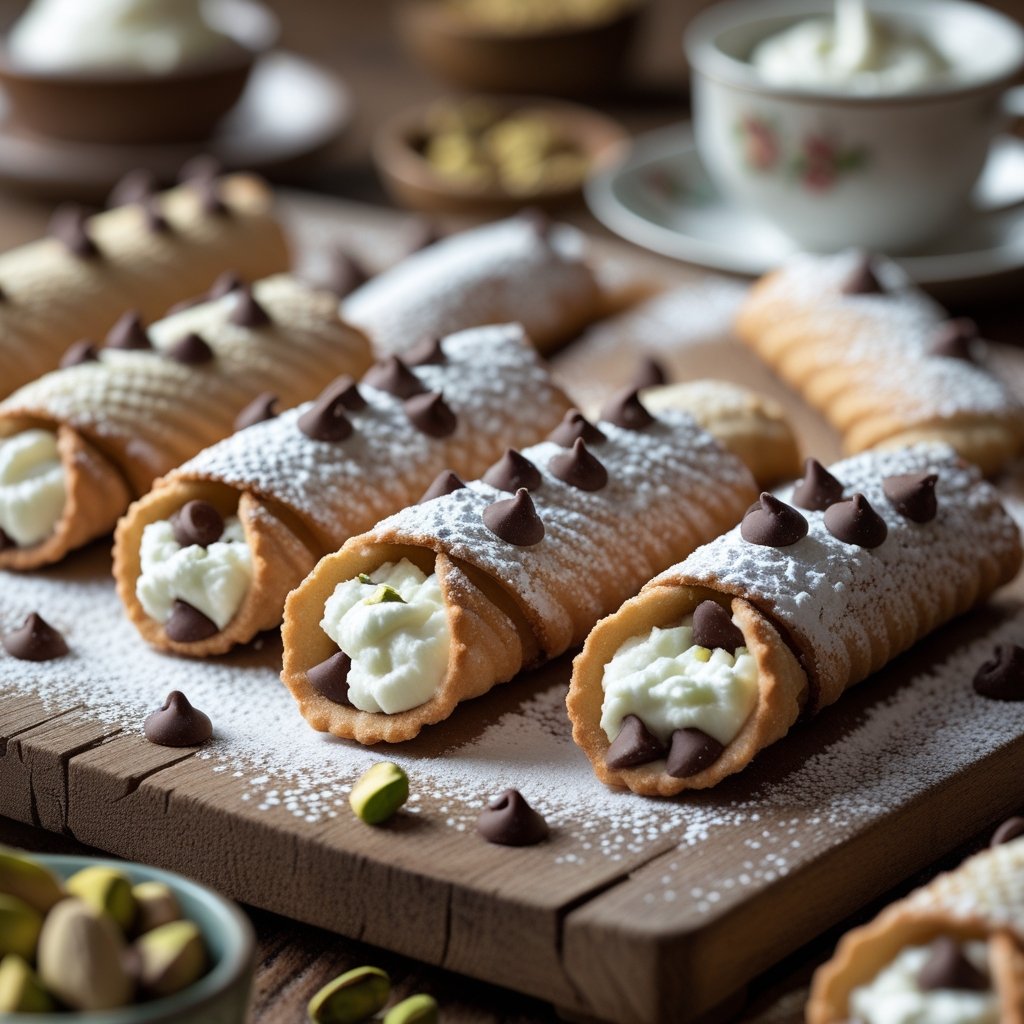
Soft, chewy, and full of creamy ricotta flavor. That is what cannoli cookies taste like. A tender cookie with slightly crisp golden edges, sweet ricotta in every bite, and the crunch of pistachios with the richness of mini chocolate chips. This guide covers the cannoli cookies recipe in full depth, from the exact ingredients and the twelve-step method to variations, what to serve with them, and how to store them for a busy holiday week.
If you love traditional cannoli but not the deep frying and the pastry shells, this is the cookie for you. There is no frying, no piping, and no special equipment. The dough comes together in one bowl in about fifteen minutes, the cookies bake in ten to twelve minutes, and the whole batch is ready in about twenty-seven minutes. It makes twenty-four cookies at about 160 calories each. Follow the steps below and you will get soft, bakery-style cookies that taste like the classic Italian dessert in an easy, handheld form.
For more holiday baking for cold nights, see our Easy Winter Cookie Recipes for Cozy Holiday Baking.
The full original recipe this guide is based on is the Cannoli Cookies Recipe, with the same ingredients, times, and method used below.
Why Cannoli Cookies Belong on the Christmas Table
Christmas baking is at its best when it feels both special and simple, and cannoli cookies do both. They carry the flavor of a classic Italian dessert that many families already associate with celebration, but they bake like an everyday cookie. A tray of these cookies looks elegant on a Christmas dessert table, dusted with powdered sugar, and they disappear faster than almost anything else you bake.
They also solve the most common problem with holiday baking: time. Between the main meal, the side dishes, and the guests arriving, nobody has hours to spend on dessert. These cookies need one bowl, one baking sheet, and about fifteen minutes of prep work. The dough can chill for twenty minutes while you do something else, and the cookies bake in ten to twelve minutes. You can bake them in the morning and serve them at dinner, or bake them the day before and store them in an airtight container, where they stay soft for days.
Cannoli cookies also suit every taste at the table. Kids love the chocolate chips and the soft, chewy bite. Adults love the creamy ricotta flavor, the hint of cinnamon, and the way the cookies taste with a strong cup of coffee. They work for a Christmas dessert table, a holiday cookie box, a school party, or a quiet evening with a mug of espresso. Bake a double batch and you will have enough for the party and a few left over for yourself.
There is something else that makes these cookies special: they are a conversation starter. Most guests have tasted cannoli, but few have tasted it as a cookie. The moment they recognize the flavor, the tray becomes a talking point. That is the kind of baking memory people carry with them, and it is why cannoli cookies belong on every Christmas table.
What Makes These Cannoli Cookies So Good
The first thing you notice about a cannoli cookie is the texture. The edges are lightly golden and just firm enough to hold the cookie together, while the center stays soft and chewy for hours after baking. The ricotta keeps the crumb moist in a way that butter alone cannot, so the cookies stay tender even the next day. Then come the extras: mini chocolate chips that melt slightly while the cookie is warm, and chopped pistachios that add a gentle crunch.
The flavor is sweet, creamy, and warmly spiced. Ricotta brings a mild, milky sweetness that is very different from the sharp tang of cream cheese. Cinnamon adds warmth, almond extract adds a soft, nutty note, and vanilla ties everything together. The chocolate chips add richness, and the pistachios add a savory edge that keeps the cookie from tasting too sweet. It is the same balance of flavors as a real cannoli, without any of the work.
The recipe is also forgiving, which matters when you are baking during a busy holiday week. The dough is soft but not sticky, so it is easy to scoop. The cookies bake quickly and evenly, and even if your cookies are not all exactly the same size, they still taste wonderful. That is the mark of a good holiday recipe: it works even when the kitchen is crowded and the cook is in a hurry.
The Ricotta Difference, Explained
Ricotta is the ingredient that makes these cookies taste like cannoli instead of like an ordinary sugar cookie, and it is worth understanding before you bake. Ricotta is a soft, mild Italian cheese made from whey, and it has a creamy texture and a gentle sweetness. In the dough, it adds moisture and tenderness, which is why cannoli cookies stay soft for days while other cookies dry out.
Always use full-fat ricotta for this recipe. The original recipe is clear about this, and it matters. Low-fat ricotta holds more water and less fat, which can make the dough too wet and the cookies too soft to hold their shape. Full-fat ricotta gives the cookies their creamy texture and their rich flavor. Buy a good-quality ricotta, and if the container has liquid sitting on top, stir it back in or drain off a spoonful before measuring.
One more detail: ricotta varies from brand to brand. Some are smooth and creamy, and some are grainy. Either one works in this recipe, because the ricotta is beaten into the butter and sugar until smooth. If your ricotta is very grainy, beat it for an extra minute with the butter and sugar so the dough turns smooth before you add the dry ingredients. The finished cookie should taste creamy, not gritty, and a little extra beating is all it takes.
Ingredients You Will Need
This recipe makes twenty-four cookies. The ingredients below are exactly the ones in the original Cannoli Cookies Recipe, and they are all pantry staples except for the ricotta, which is worth a special trip to the store.
- 2 cups all-purpose flour
- 1/2 teaspoon baking powder
- 1/4 teaspoon salt
- 1/2 teaspoon ground cinnamon
- 1/2 cup unsalted butter, softened
- 1/2 cup ricotta cheese, full-fat
- 3/4 cup granulated sugar
- 1 large egg
- 1 teaspoon vanilla extract
- 1/2 teaspoon almond extract
- 1/2 cup mini chocolate chips
- 1/4 cup chopped pistachios, optional
- Powdered sugar, for dusting
A few notes on the ingredients will help you get the best result. Use butter that is truly softened, which means it gives easily when you press it with a finger but is not melted or greasy. Cold butter will not cream properly with the sugar, and melted butter will make the dough spread too much in the oven. Take the butter and the ricotta out of the fridge about thirty minutes before you start, so both are at room temperature.
Use mini chocolate chips, not regular ones. Mini chips spread more evenly through the dough, so every bite has a little chocolate, and they are less likely to sink to the bottom of the cookie. If you only have regular chocolate chips, chop them roughly before adding them. The pistachios are listed as optional, but they add the classic cannoli crunch and the pale green color that makes the cookies look festive, so use them if you can.
Measure the flour correctly. Spoon the flour into the measuring cup and level it off with a knife, instead of scooping directly from the bag, which packs the flour down and can add a quarter cup or more by accident. Too much flour makes dry, crumbly cookies. The baking powder should be fresh: if it has been open for more than six months, test it by dropping half a teaspoon into hot water. If it fizzes, it is still good.
Equipment You Will Need
You do not need any special equipment for this recipe. Everything on the list below is standard kitchen gear, and you probably already own all of it.
- Mixing bowls, one large and one medium
- Electric mixer or hand whisk
- Measuring cups and spoons
- Rubber spatula
- Baking sheet
- Parchment paper
- Wire cooling rack
- Small scoop or spoon
The electric mixer does the heavy work of creaming the butter and sugar, but a sturdy hand whisk and a little patience will do the same job if you do not own one. Parchment paper is worth using: it stops the cookies from sticking, it makes cleanup easy, and it helps the bottoms bake evenly without browning too fast. A wire cooling rack matters more than it seems, because cookies left on a hot baking sheet keep baking from the heat underneath and can turn dry. Move them to the rack as soon as they are firm enough to lift.
A small cookie scoop, if you have one, helps make all twenty-four cookies the same size so they bake evenly. A tablespoon measure works just as well. The rubber spatula is for folding in the chocolate chips and pistachios gently, without overmixing the dough.
How to Make Cannoli Cookies
This is the full twelve-step method, using the same ingredients, oven temperature, and baking time as the original recipe. Read through the steps once before you start, so the whole bake flows without stopping.
Step 1: Preheat the oven. Heat the oven to 350 degrees Fahrenheit, which is 175 degrees Celsius. A fully heated oven is important, because cookies baked in an oven that is still warming up will spread and bake unevenly.
Step 2: Line the baking sheet. Line a baking sheet with parchment paper and set it aside. If you are baking in two batches, line a second sheet now so the second batch is ready to go.
Step 3: Whisk the dry ingredients. In a medium bowl, whisk together the flour, baking powder, salt, and cinnamon until they are evenly combined. Whisking spreads the baking powder through the flour so the cookies rise evenly, with no bitter pockets of leavener.
Step 4: Beat the butter and sugar. In a large bowl, beat the softened butter and the granulated sugar with an electric mixer on medium speed until the mixture is light, fluffy, and pale in color. This takes about two to three minutes. Proper creaming traps air in the dough, which is what gives the cookies their soft, tender texture.
Step 5: Add the ricotta, egg, and extracts. Add the ricotta cheese, the egg, the vanilla extract, and the almond extract to the butter mixture. Beat until the mixture is smooth and creamy. Scrape down the sides of the bowl with a spatula so nothing is left unmixed. If your ricotta is grainy, beat for an extra minute until the batter looks smooth.
Step 6: Combine the wet and dry mixtures. Add the dry mixture to the wet mixture a little at a time, mixing on low speed just until the flour disappears. Do not overmix. Overmixed dough makes tough cookies, because it develops too much gluten in the flour. Stop as soon as you cannot see any dry flour.
Step 7: Fold in the chocolate chips and pistachios. Add the mini chocolate chips and the chopped pistachios and fold them in gently with a rubber spatula until they are spread evenly through the dough. The dough should be soft, smooth, and easy to scoop.
Step 8: Chill the dough. Cover the bowl and chill the dough in the fridge for twenty minutes. This step is recommended in the original recipe, and it matters: chilled dough spreads less in the oven, so the cookies stay thick and soft instead of flattening into discs, and the flavors have time to blend.
Step 9: Scoop the cookies. Scoop the chilled dough onto the lined baking sheet, using about a tablespoon and a half per cookie, leaving about two inches between them so they have room to spread. Keeping the scoops equal means all twenty-four cookies bake in the same time.
Step 10: Bake until golden. Bake for ten to twelve minutes, until the edges turn golden and the centers look set but still soft. Do not overbake. The cookies will look slightly underdone in the very center when you take them out, and that is exactly right. They firm up as they cool, and overbaking is the fastest way to turn them dry.
Step 11: Cool on a rack. Let the cookies sit on the baking sheet for five minutes, then move them carefully to a wire cooling rack. Cool them completely before dusting or serving, or at least until they are firm enough to hold.
Step 12: Dust with powdered sugar and serve. Once the cookies are cool, dust them lightly with powdered sugar using a small sieve. The white dusting against the golden cookie is the classic cannoli look, and it makes the tray look like it came from an Italian bakery. Serve right away, or store as described below.
Recipe Tips for Perfect Cannoli Cookies
A few small habits separate good cannoli cookies from great ones. The first is the ricotta. Always use full-fat ricotta, and always bring it to room temperature before you start. Cold ricotta does not blend smoothly into the butter, and low-fat ricotta makes the dough too wet. If you remember only one tip from this guide, make it this one.
The second is the chill. Do not skip the twenty-minute chill, even when you are in a hurry. Chilled dough spreads less, bakes thicker, and tastes better, because the flour has time to absorb the moisture from the ricotta. If your kitchen is warm, chill the dough for thirty minutes instead.
The third is the bake time. Every oven runs a little hot or a little cool, so start checking at ten minutes. The cookies are done when the edges are golden and the centers are set. If you wait until the centers look fully firm in the oven, they will be overbaked by the time they cool. Trust the ten to twelve minute window from the recipe, and remember that the cookies keep baking for a few minutes on the hot pan after they come out.
Use mini chocolate chips for the best flavor balance, and do not skip the salt or the cinnamon. A quarter teaspoon of salt may seem small, but salt is what makes the ricotta flavor stand out instead of tasting flat and sweet. And for an authentic cannoli flavor, add a teaspoon of finely grated orange zest to the dough with the vanilla, which the original recipe recommends as a finishing touch.
Variations to Try
Once you have baked the classic version, the recipe is easy to adapt. Here are variations that keep the same dough and baking time, so nothing else in the recipe needs to change.
Orange zest cannoli cookies: add one teaspoon of finely grated orange zest to the dough with the vanilla and almond extracts. Orange and ricotta are the classic cannoli pairing, and the zest adds a bright, fresh note that cuts through the richness of the cheese.
Chocolate-dipped cannoli cookies: melt six ounces of dark or semi-sweet chocolate and dip half of each cooled cookie into it. Place the dipped cookies on parchment paper and let the chocolate set for thirty minutes. The dark chocolate shell adds richness and makes the cookies look like a bakery gift box.
Pistachio-crusted cannoli cookies: roll the scooped dough balls in finely chopped pistachios before baking, so the outside of each cookie is coated in green crunch. This is the prettiest version for a Christmas dessert table.
Cranberry cannoli cookies: replace the mini chocolate chips with half a cup of dried cranberries, chopped if they are large. The tart cranberries balance the sweet ricotta, and the red color makes the cookies look festive for Christmas.
Gluten-free version: replace the all-purpose flour with the same amount of a gluten-free flour blend that contains xanthan gum. The dough may feel slightly softer, so chill it for thirty minutes before scooping, and check the cookies at ten minutes as usual.
For more holiday cookie ideas in the same spirit, see our Easy Christmas Cookies to Bake This Holiday Season.
How to Store and Freeze Them
These cookies store well, which is why they are such a good holiday bake. Once they are completely cool, place them in an airtight container with parchment paper between the layers. At room temperature they stay soft and fresh for three to four days, thanks to the moisture from the ricotta. Keep the container away from heat and sunlight, and do not stack the cookies while they are still warm.
For longer storage, the fridge is a good option. In an airtight container in the fridge, the cookies keep for up to one week. Let them come to room temperature for about fifteen minutes before serving, so the cookie softens again and tastes its best. Dust them with powdered sugar after they come out of the fridge, not before, so the sugar stays white and pretty instead of melting into the cookie.
The cookies freeze beautifully, and this is the smartest way to handle holiday baking. Freeze the baked cookies in a single layer on a baking sheet for one hour, then transfer them to a freezer bag or container with parchment between the layers. They keep for up to two months. Thaw them at room temperature for about thirty minutes before serving, then dust with powdered sugar.
You can also freeze the unbaked dough. Scoop the dough onto a baking sheet, freeze the scoops solid, then store them in a freezer bag. When you want fresh cookies, place the frozen dough scoops on a lined baking sheet and bake at 350 degrees Fahrenheit for twelve to fourteen minutes, adding two extra minutes to the usual time. Fresh-baked cookies with almost no notice is the best holiday trick there is.
What to Serve With Cannoli Cookies
These cookies are creamy and sweet, so the best pairings are drinks and desserts that balance them rather than compete with them. The original recipe suggests three pairings, and each one works for a different moment of the day.
Espresso or cappuccino is the most Italian pairing. A strong cup of coffee balances the sweetness of the ricotta perfectly, and the bitter coffee against the sweet cookie is the classic Italian cafe combination. Serve the cookies with espresso after a holiday dinner, the way an Italian family would.
Vanilla gelato is the most indulgent pairing. Serve a warm cookie beside a scoop of vanilla gelato, and the cold cream against the warm, spiced cookie is a dessert in itself. This is the pairing for a Christmas dinner table, when the cookies are the final course and everyone is still sitting around talking.
Fresh berries are the lightest pairing. Raspberries or strawberries add freshness and color to the dessert plate, and their tartness cuts through the richness of the ricotta. This is the pairing for a dessert table, where the bright red berries make the plate look festive and the cookies taste even better by contrast.
For a fuller dessert table, add a fruit plate or a bowl of mixed berries beside the cookies. And if you are building a holiday dessert spread, see our 12 Best Holiday Dessert Recipes for more ideas that sit well next to these cookies.
Cannoli Cookies for Parties and Gifts
A batch of twenty-four cookies is perfect for a gathering, but the recipe doubles easily for a party. Double every ingredient, including the ricotta and the chocolate chips, and bake in batches, letting the baking sheet cool between batches so the second round spreads the same as the first. For a dessert table, bake the cookies a little smaller, using one tablespoon of dough each, which gives about forty mini cookies that are easy to pick up and eat while standing.
For gifts, these cookies are a natural choice. The powdered sugar dusting and the golden edges look beautiful in a box, and they travel well because the cookies are sturdy once they are cool. Line a gift box or tin with parchment paper, place the cookies in a single layer, and add a second layer with parchment between them. Tie the box with ribbon and add a small card with the baking date. The cookies keep for three to four days at room temperature, so bake them the day before you give them away.
For a cookie swap, make the chocolate-dipped variation, which looks the most festive and photographs beautifully. Pack the cookies carefully, because the chocolate can chip if the cookies rub together. And if you are planning a full holiday baking weekend, see our Easy Winter Dessert Recipes for more recipes that store and gift just as well.
Frequently Asked Questions
Why are my cannoli cookies flat?
The most common reason is dough that was too warm when it went into the oven. Chill the dough for the full twenty minutes the recipe recommends, and make sure the oven is fully heated to 350 degrees Fahrenheit before the cookies go in. Also check that the butter was softened, not melted. Melted butter makes cookies spread flat. If your baking sheet is still hot from a previous batch, let it cool before loading the next one.
Can I use low-fat ricotta in cannoli cookies?
You can, but the result will not be as good. Low-fat ricotta holds more water, which can make the dough too wet and the cookies too soft to hold their shape. Full-fat ricotta gives the cookies their creamy texture and rich flavor, which is why the original recipe recommends it. If you must use low-fat ricotta, drain off any liquid on top first and expect a slightly softer cookie.
Can I make the dough ahead of time?
Yes. The dough can be made and kept in the fridge, wrapped tightly in plastic wrap, for up to two days. Let it sit at room temperature for about fifteen minutes before scooping, so it is soft enough to work with. You can also scoop the dough and freeze the unbaked scoops for up to two months, then bake them straight from frozen with two extra minutes of baking time.
Can I freeze cannoli cookies?
Yes, both baked and unbaked. Baked cookies keep in the freezer for up to two months in an airtight container with parchment between the layers. Thaw them at room temperature for about thirty minutes, then dust with powdered sugar. Unbaked dough scoops freeze for the same length of time and bake from frozen at 350 degrees Fahrenheit in twelve to fourteen minutes.
Are cannoli cookies gluten-free?
Not as written, because the dough uses all-purpose flour. To make them gluten-free, replace the flour with the same amount of a gluten-free flour blend that contains xanthan gum, and chill the dough for thirty minutes before scooping. Check the ricotta and chocolate chip labels too, because some brands are processed in facilities that handle wheat. The rest of the ingredients are naturally gluten-free.
Can I use a different cheese instead of ricotta?
Mascarpone is the closest substitute, and it makes a richer, creamier cookie. Use the same amount, half a cup, and expect a slightly denser result. Cream cheese also works, but it adds a tang that changes the flavor away from classic cannoli. Cottage cheese is not a good substitute, because it is too wet and grainy even after beating. Ricotta is the best choice for the authentic taste.
Final Thoughts
Cannoli cookies are the kind of recipe that earns a permanent place in a Christmas baking list. They are easy enough to bake on a busy weeknight, pretty enough for a dessert table, and delicious enough that people ask for the recipe. The ingredients are simple, the method is forgiving, and the result tastes like the classic Italian dessert without any of the fuss.
Bake a batch this week and see for yourself. Serve them warm with espresso, pack them into a gift box, or save a few for yourself with a cup of cappuccino. And when you are ready for your next holiday bake, try our Easy Martha Stewart Lemon Cookies for the Holidays, our Easy Penn Station Cookies for the Holidays, our Easy Winter Lemon Recipes for Cozy Family Dinners, or our Easy Winter Cheesecake Recipes for Cozy Holiday Desserts. Happy baking, and happy holidays from Recipes Walay.