

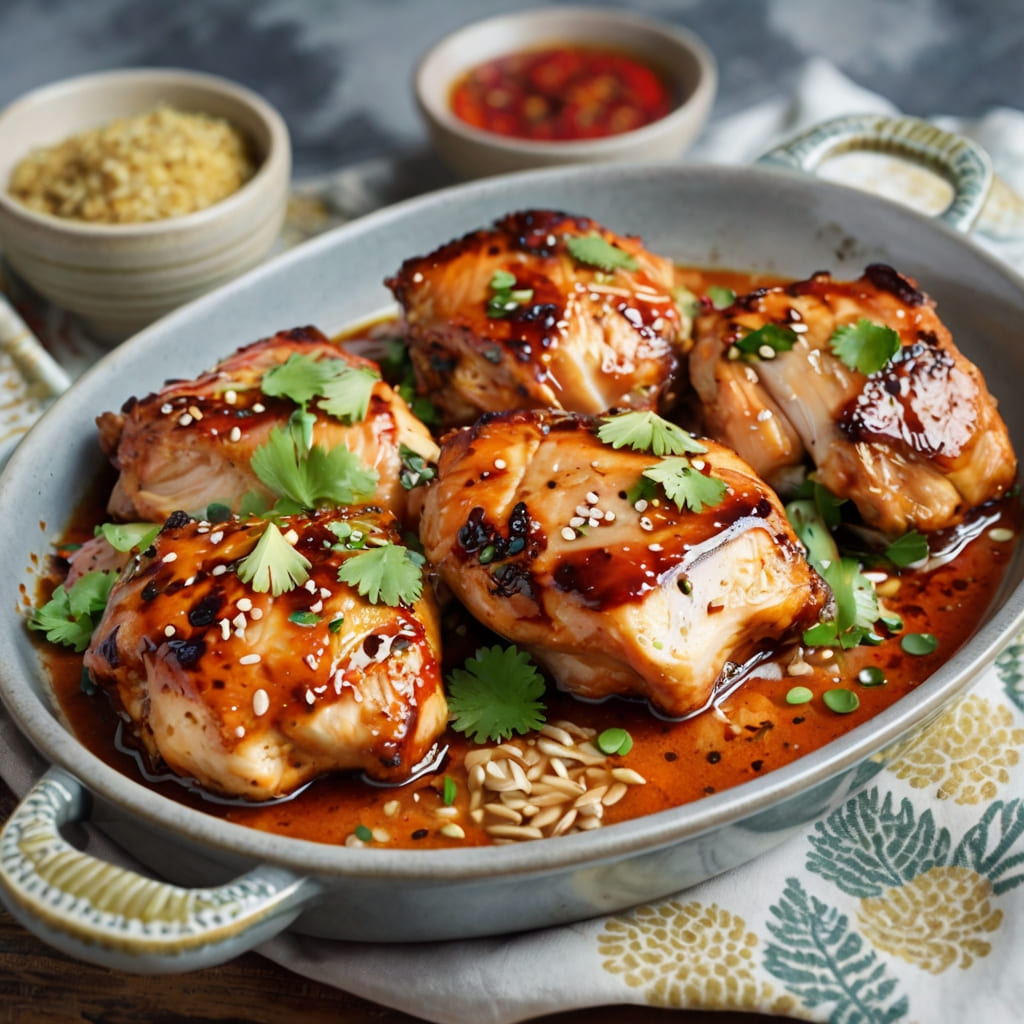
Looking for bold and savory flavors? These gochujang miso chicken thighs are the perfect blend of heat, umami, and sweetness. The rich miso adds depth, while gochujang delivers a spicy kick, and honey rounds the whole thing out so the heat never overwhelms the flavor. Each bite is juicy, flavorful, and unforgettable. This guide covers the gochujang miso chicken thighs recipe in full depth, from the exact ingredients and the twelve-step method to variations, what to serve with it, and how to store the leftovers.
The best part is how simple it is. Fifteen minutes of prep, thirty-five minutes in the oven, and dinner is ready in fifty minutes. It serves four at about 320 calories a serving, and it uses only eleven simple ingredients. The dish is ideal for weeknight dinners and impressive enough for guests, and it works beautifully with rice, noodles, or even fresh salads. Follow the steps below and you will have a reliable favorite that brings bold Asian-inspired flavors to your table with minimal effort.
For more swicy Korean-inspired meals in the same style, see our Gochujang Recipes for Dinner: Easy Swicy Korean-Inspired Meals.
The full original recipe this guide is based on is the Gochujang Miso Chicken Thighs Recipe, with the same ingredients, times, and method used below.
Why Gochujang Miso Chicken Thighs Belong on Your Weeknight Table
Weeknight dinners have a hard job: they need to be fast, they need to use ingredients you can actually find, and they still need to taste like something special. These chicken thighs do all three. The marinade is five minutes of whisking, the oven does the rest, and the result tastes like a dish from a good Korean restaurant rather than a rushed weeknight meal.
The original cook first discovered this combination of miso and gochujang during a food tour, and the flavors amazed instantly. Since then, the dish has been recreated many times at home, and that is the best recommendation a weeknight recipe can have: it was not chosen for a photo, it was chosen because it kept getting made again. It is your gateway to bold Asian-inspired flavors at home, with minimal preparation and maximum taste.
There is a practical reason this dish belongs on the weeknight table too. Chicken thighs are forgiving in a way chicken breasts are not: the skin and the bone keep the meat juicy through thirty-five minutes in a hot oven, and the marinade protects the surface so it caramelizes instead of drying out. If dinner runs late by ten minutes, the thighs are still juicy. That forgiveness is exactly what a busy evening needs.
What Makes These Chicken Thighs So Good
The first thing you notice about these chicken thighs is the balance. Gochujang is a Korean fermented chili paste — spicy, a little sweet, and deeply savory all at once. White miso is a fermented soybean paste that brings a mellow, salty umami depth. Together they make a marinade that is spicy without being harsh and savory without being flat, and the honey, rice vinegar, and sesame oil fill in the rest: honey adds sweetness that rounds off the heat, rice vinegar adds a bright note that keeps the dish from feeling heavy, and sesame oil adds a warm, nutty aroma.
The flavor is built from only eleven ingredients, and every one of them earns its place. Three tablespoons of gochujang paste carry the heat. Two tablespoons of white miso paste carry the depth. Two tablespoons of soy sauce add salt and more umami. One tablespoon of rice vinegar brightens the marinade. One tablespoon of sesame oil adds richness. Two tablespoons of honey balance the spice. Three minced garlic cloves and one teaspoon of grated ginger bring the fresh, aromatic bite that makes the whole dish smell amazing in the oven. Nothing is fussy, nothing is hard to find in a supermarket with an Asian aisle, and the whole marinade comes together in one bowl.
The texture is the other half of the dish. Skin-on, bone-in thighs roast into something special: the skin turns crisp and caramelized where the marinade catches the heat, while the meat underneath stays juicy. The garnish finishes it — a tablespoon of sesame seeds and two chopped green onions, scattered over the hot thighs, add crunch, color, and a fresh onion bite that cuts through the richness.
How the Gochujang-Miso Marinade Works
This is the technique that makes the whole recipe work, so it is worth understanding before you start. The marinade is built in two stages. First, the gochujang, miso, soy sauce, and rice vinegar are whisked together. These are the thick, pasty ingredients, and mixing them first makes sure the miso dissolves evenly instead of sitting in lumps. Then the sesame oil, honey, garlic, and ginger go in, and the whole thing is whisked again until it becomes smooth.
That smoothness matters. A smooth marinade coats the thighs evenly, so every piece gets the same balance of heat, sweetness, and umami. A lumpy marinade leaves some bites too salty and others too plain. The chicken is patted dry first, then coated evenly with the marinade, so the paste clings to the skin instead of sliding off in the heat.
Then the oven does the work. At 400°F, the thighs bake for thirty-five minutes until cooked. The heat does two things at once: it cooks the meat through, and it caramelizes the sugars in the honey and the gochujang on the surface, which is what gives the thighs their sticky, glossy finish. The marinade is not just a flavor — it becomes the glaze.
Ingredients You Will Need
This recipe serves four, and the ingredients below are exactly the ones in the original Gochujang Miso Chicken Thighs Recipe. They are all easy to find, and the whole marinade comes together in one bowl.
- 8 chicken thighs, skin-on, bone-in
- 3 tablespoons gochujang paste
- 2 tablespoons white miso paste
- 2 tablespoons soy sauce
- 1 tablespoon rice vinegar
- 1 tablespoon sesame oil
- 2 tablespoons honey
- 3 garlic cloves, minced
- 1 teaspoon ginger, grated
- 1 tablespoon sesame seeds
- 2 green onions, chopped
A few notes on the ingredients will help you get the best result. Use skin-on, bone-in thighs, not boneless: the skin is what turns crisp and caramelized in the oven, and the bone keeps the meat juicy. Use white miso paste, which is milder and sweeter than darker miso, so it adds depth without overpowering the gochujang. The gochujang is the heart of the dish — three tablespoons gives a clear spicy kick balanced by the honey, and the heat level is moderate, not punishing. Mince the garlic finely and grate the ginger fresh, so both spread evenly through the marinade instead of sitting in lumps. The sesame seeds and green onions are the garnish, not the marinade, so keep them aside until the thighs come out of the oven.
Equipment You Will Need
You do not need any special equipment for gochujang miso chicken thighs. The original recipe uses a baking tray, a whisk, and a few kitchen basics, and that is all it takes.
- Mixing bowls, for the marinade
- Measuring spoons, for the gochujang, miso, and sauces
- Measuring cups, for any larger amounts
- Whisk, for making the marinade smooth
- Knife, for mincing the garlic and chopping the green onions
- Cutting board, for the garlic, ginger, and green onions
- Baking tray, for roasting the thighs
- Oven, preheated to 400°F
- Tongs, for moving the hot thighs
- Foil or parchment paper, for lining the tray
A few notes on the equipment will help. Lining the tray with foil or parchment paper matters more here than in most recipes: the honey and gochujang in the marinade caramelize in the oven and can stick hard to a bare tray, so the lining makes cleanup easy and keeps the glaze on the chicken instead of on the pan. A whisk matters too, because the marinade needs to be genuinely smooth — a spoon will leave lumps of miso, and a whisk breaks them down. Tongs are worth having because the thighs are hot and glazed when they come out, and tongs let you move them without tearing the crisp skin.
How to Make Gochujang Miso Chicken Thighs
Follow these twelve steps in order and the thighs will come out juicy, sticky, and full of flavor every time. The steps follow the original recipe exactly, with the marinade whisk and the two garnishes split out so nothing is rushed and nothing is skipped.
Step 1: Preheat the oven to 400°F. A fully heated oven is the first step to a good result. The thighs need that heat from the moment they go in, so the skin starts crisping and the marinade starts caramelizing right away. Give the oven at least ten minutes to reach temperature before the tray goes in.
Step 2: Line the tray with foil or parchment. Lay foil or parchment paper over the baking tray. This keeps the sticky marinade from gluing itself to the tray, and it makes cleanup a matter of lifting the paper away. The honey and gochujang caramelize in the heat, so this step saves real scrubbing later.
Step 3: Mix the gochujang, miso, soy sauce, and vinegar. In a mixing bowl, combine the three tablespoons of gochujang paste, the two tablespoons of white miso paste, the two tablespoons of soy sauce, and the one tablespoon of rice vinegar. Stir them together until the miso starts to dissolve into the other ingredients.
Step 4: Add the sesame oil, honey, garlic, and ginger. Add the one tablespoon of sesame oil, the two tablespoons of honey, the three minced garlic cloves, and the one teaspoon of grated ginger to the bowl. These are the aromatics and the sweeteners, and they go in after the pastes so they distribute evenly through the mixture.
Step 5: Whisk until the marinade becomes smooth. Whisk the whole mixture until it is smooth and glossy, with no lumps of miso or gochujang left. This takes about a minute of steady whisking. A smooth marinade coats the thighs evenly, so every piece gets the same balance of heat, sweetness, and umami.
Step 6: Pat the chicken thighs dry. Use paper towels and pat all eight thighs dry on every side, including under the skin where you can reach. A dry surface helps the marinade cling to the skin instead of sliding off, and it helps the skin crisp in the oven instead of steaming.
Step 7: Coat the thighs with the marinade evenly. Spoon the marinade over the thighs and rub it over every piece, getting it onto the skin and into the folds. Make sure the coating is even — every thigh should be fully covered, with no bare patches and no thick pools of paste in one spot.
Step 8: Place the thighs on the lined tray. Arrange the coated thighs on the lined baking tray, skin side up, with a little space between them. Space matters: if the thighs are crowded, they steam instead of roast, and the skin will not crisp. Keep them in a single layer.
Step 9: Bake for 35 minutes until cooked. Put the tray in the hot oven and bake for thirty-five minutes, until the thighs are cooked through. The marinade will bubble and darken into a sticky glaze, and the skin will turn crisp and caramelized at the edges. Do not open the oven door to check early — let the heat do its work.
Step 10: Check that the chicken is done. The thighs are done when the meat is cooked all the way through and the juices run clear. The surest check is a meat thermometer in the thickest part of a thigh, away from the bone: it should read 165°F. If it reads lower, give the tray a few more minutes and check again.
Step 11: Garnish with sesame seeds. As soon as the thighs come out of the oven, scatter the tablespoon of sesame seeds over them while they are still hot and glossy. The seeds stick to the warm glaze and add a nutty crunch that the soft, juicy meat needs.
Step 12: Garnish with green onions and serve. Scatter the two chopped green onions over the thighs and serve hot. The green onions add color, a fresh bite, and a mild onion note that cuts through the richness of the glaze. Serve the thighs straight from the tray, with the sides below, while the glaze is still warm and sticky.
Tips for Perfect Gochujang Miso Chicken Thighs Every Time
These five tips come from the original recipe, and they are the difference between good thighs and great ones.
First, marinate the chicken overnight for deeper flavor. If you have the time, coat the thighs in the evening and keep them covered in the fridge overnight. The marinade works its way into the meat over those hours, and the flavor is noticeably deeper the next day.
Second, use boneless thighs for faster cooking. If you are in a hurry, boneless, skinless thighs cook faster than the bone-in version in the recipe. The method stays the same — coat, arrange on the tray, and bake — but check for doneness earlier, since boneless thighs cook through sooner.
Third, grill instead of baking for a smoky flavor. The same marinade works on the grill: cook the coated thighs over medium heat, turning once, until cooked through. The grill adds a smoky char that suits the gochujang beautifully, and it is the best version of this dish for a summer evening.
Fourth, add chili flakes for extra spice. If you like more heat, stir a pinch of chili flakes into the marinade. The gochujang already brings a spicy kick, but the flakes add a sharper, brighter heat on top of it. Add a little at a time — you can always add more, but you cannot take it out.
Fifth, serve hot for the best taste. These thighs are at their best straight from the oven, while the glaze is warm and sticky and the skin is crisp. Let them sit too long and the glaze sets and the skin softens, so get them to the table as soon as they are garnished.
Easy Variations to Try
Once you have made the classic version, these variations keep the recipe fresh. Each one changes only a small part of the dish, so the method stays exactly the same.
For a grilled version, cook the coated thighs on the grill instead of in the oven, over medium heat, turning once. The recipe’s own tips recommend this for a smoky flavor, and the char from the grill is a natural match for the caramelized gochujang glaze.
For a spicier version, add chili flakes to the marinade, or serve the thighs with a spoonful of extra gochujang on the side for anyone who wants more heat. The honey in the marinade keeps the base dish balanced, so the extra heat sits on top rather than taking over.
For a boneless version, use boneless, skinless thighs and bake them the same way, checking for doneness earlier since they cook faster. This is the quickest version of the dish, and it is the one to make on a night when dinner needs to be on the table fast.
For a sweeter version, add an extra tablespoon of honey to the marinade. The sweetness rounds off the gochujang’s heat even further and makes the glaze stickier and more caramelized. This version is a good choice if you are serving the dish to children or to anyone who prefers mild heat.
For a noodle-bowl version, slice the cooked thighs and serve them over garlic noodles with the pan juices spooned over the top. The glaze becomes a sauce for the noodles, and the dish turns into a full one-bowl meal.
For more weeknight dinners in the same style, our Easy Winter Stir Fry Recipes for Busy Weeknight Dinners and our Easy Winter Curry Recipes for Cozy Family Dinners are both built for busy evenings.
What to Serve with Gochujang Miso Chicken Thighs
The original recipe suggests ten sides, and they all work because they either soak up the glaze or cool the spice. Steamed rice absorbs the flavorful sauce perfectly and is the simplest partner. Garlic noodles balance the heat with a savory garlic taste. Cucumber salad brings a refreshing crunch that cools the spice. Kimchi complements the dish with a tangy, fermented kick that matches the gochujang’s own fermented depth. Stir-fried vegetables add nutrition and bright colors. Roasted potatoes are a crispy, hearty pairing. Miso soup completes the umami profile beautifully. Pickled radish cleanses the palate between bites. Asian slaw is light, crunchy, and tangy. Sesame green beans bring a nutty, crisp flavor balance.
If you want to keep the meal simple, pick one starchy side and one fresh side: steamed rice and cucumber salad are the classic pair, and they are the ones that let the thighs be the star. For a fuller spread, add kimchi and miso soup, and the table feels like a Korean restaurant.
For more Korean-inspired dishes on the site, our Korean Ground Beef Bowl Recipe and our 8 Best Korean Pork Belly Recipe both use the same bold, savory flavors.
How to Store and Reheat Leftovers
The original recipe gives no fridge or freezer duration and no storage section, so this guide states no duration of its own. Store leftover thighs in an airtight container in the fridge, and eat them soon — the glaze keeps well, but the crisp skin softens once the thighs are cold, so leftovers are best eaten the next day rather than kept for a long time.
Reheat the thighs gently, in the oven rather than the microwave if you can, so the skin has a chance to crisp up again. A moderate oven, with the thighs on a lined tray, warms them through without drying the meat out. Add a spoonful of water or a little extra sauce to the tray if the glaze has thickened in the fridge. Avoid high heat, which dries out the meat and burns the sugary glaze.
Leftover thighs are also good cold-sliced over a salad or in a sandwich the next day, where the softened skin does not matter and the bold marinade flavor carries the dish. Slice them thin, keep the glaze on, and let the flavors do the work.
Nutrition Information
One serving of these gochujang miso chicken thighs has 320 calories. The original recipe gives no nutrition information beyond that calorie count, so this guide states only the 320 calories and says so plainly — no protein, fat, or carbohydrate figures are given in the source recipe, and none are invented here.
What the calories do tell you is that this is a relatively light main course for a dish with this much flavor. The thighs are the main source of calories, and the marinade adds only a small amount from the honey and sesame oil. Served with steamed rice and a fresh salad, the whole plate stays balanced without feeling like diet food.
Frequently Asked Questions
How spicy are gochujang miso chicken thighs?
The heat is moderate, not punishing. Three tablespoons of gochujang paste give a clear spicy kick, but the two tablespoons of honey and the two tablespoons of white miso round it off, so the heat builds gently rather than hitting hard. If you like more heat, the recipe’s own tips suggest adding chili flakes to the marinade. If you prefer it milder, the honey already does that work — serve the dish with steamed rice and cucumber salad, which both cool the spice on the plate.
Can I marinate the chicken overnight?
Yes. The recipe’s own tips recommend marinating the chicken overnight for deeper flavor. Coat the thighs in the marinade, cover the bowl, and keep it in the fridge overnight. The marinade works its way into the meat over those hours, and the flavor is noticeably deeper the next day. Bake the thighs straight from the fridge the next evening, using the same 400°F and thirty-five minutes.
Can I use boneless chicken thighs?
Yes. The recipe’s own tips say to use boneless thighs for faster cooking. The method stays the same — coat, arrange on the tray, and bake — but check for doneness earlier, since boneless thighs cook through sooner than the bone-in thighs in the recipe. Boneless thighs also make the dish easier to slice for noodle bowls and salads.
Can I grill the thighs instead of baking?
Yes. The recipe’s own tips recommend grilling instead of baking for a smoky flavor. Cook the coated thighs over medium heat, turning once, until cooked through. The grill adds a smoky char that suits the gochujang beautifully. Watch the thighs closely on the grill, because the honey in the marinade can burn if the heat is too high — medium heat and a turn halfway through keep the glaze caramelized rather than burnt.
How do I know when the chicken is done?
The thighs bake for thirty-five minutes at 400°F until cooked, and they are done when the meat is cooked all the way through and the juices run clear. The surest check is a meat thermometer in the thickest part of a thigh, away from the bone: it should read 165°F. If it reads lower, give the tray a few more minutes and check again. Do not rely on the color of the glaze alone — the marinade darkens as it caramelizes, so the outside can look done before the inside is.
Can I make this recipe ahead of time?
Yes, in the marinade. Coat the thighs the night before and keep them covered in the fridge overnight — the recipe’s own tips say this gives deeper flavor. The baking itself should be done just before serving, because the thighs are at their best hot from the oven, with the glaze warm and sticky and the skin crisp. If you need to, you can also mix the marinade itself a day ahead and keep it covered in the fridge, then coat the thighs when you are ready to cook.
Final Thoughts
This Gochujang Miso Chicken Thighs Recipe is perfect for food lovers. It blends spicy, sweet, and umami into one delicious dish, and it does it with only eleven ingredients and fifty minutes from start to finish. With easy preparation and versatile sides, it becomes a reliable favorite — the kind of weeknight dinner you make once and then keep making, because it never disappoints.
If you love bold weeknight dinners, our Easy Winter Air Fryer Recipes for Quick Weeknight Dinners and our Easy Winter Ground Beef Recipes for Cozy Weeknight Dinners are both built for the same busy evenings. And if the swicy flavors won you over, our Easy Winter Dumpling Recipes for Cozy Family Dinners will keep the theme going. For now, though, start with these thighs — they are simple, they are bold, and they are exactly what a weeknight dinner should be.