

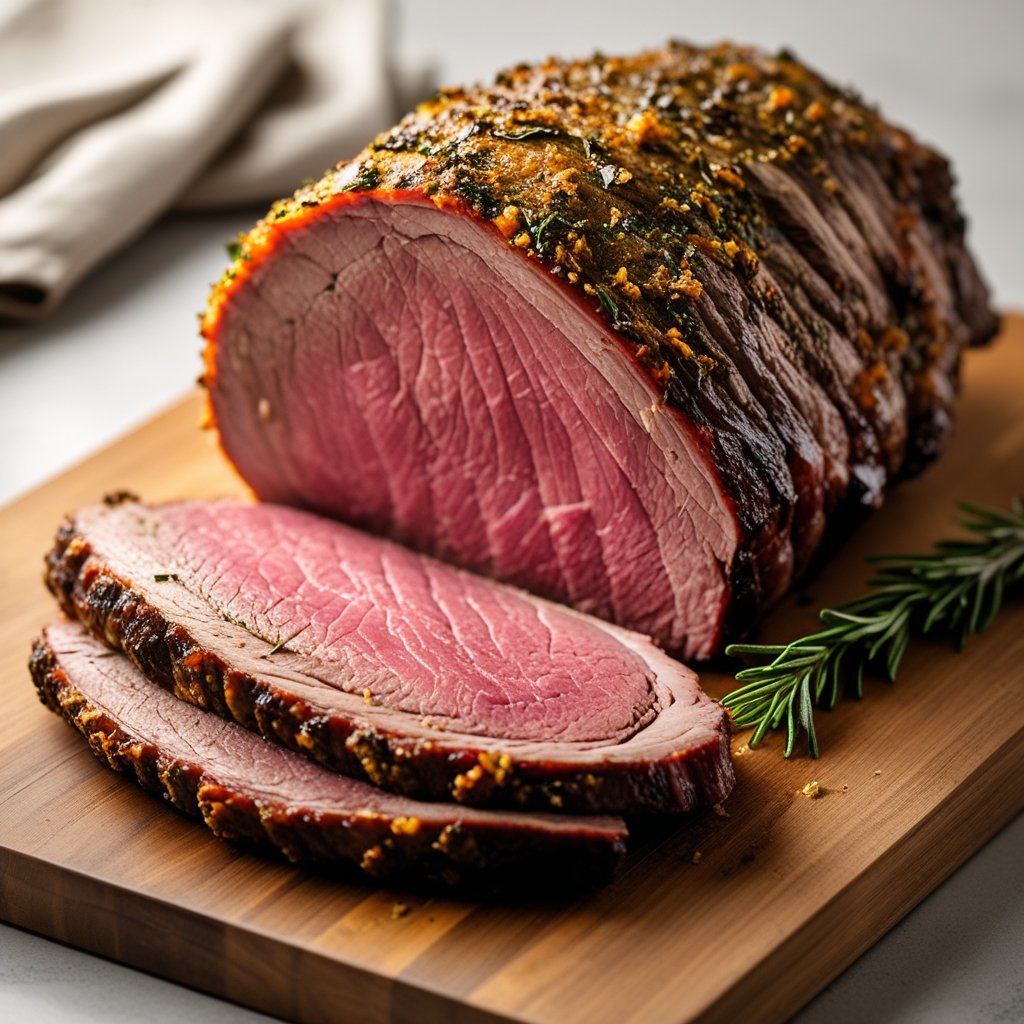
Nothing says celebration like a perfectly cooked Thanksgiving prime rib. This dish is a timeless centerpiece that brings family and friends together, and it is the answer for any host who wants something unforgettable without spending the whole day in the kitchen. A 6–7 lb prime rib roast, a simple garlic-herb rub, and a two-temperature roast are all it takes: twenty minutes at high heat for a rich crust, then a slow roast at 325°F until the center reaches 135°F for medium-rare. This guide covers the Thanksgiving prime rib recipe in full depth, from the exact ingredients and the twelve-step method to variations, what to serve with it, and how to store the leftovers.
If you have ever wanted to serve something beyond turkey at Thanksgiving, this is the roast to choose. The prep takes about fifteen minutes, the roast takes about two hours, and the whole dish is ready in about two hours and fifteen minutes. It serves six at about 450 calories a serving, and it uses only ten simple ingredients. The aroma of slow-roasted beef fills the home, the crust turns rich and savory, and the meat inside stays juicy and tender. Follow the steps below and you will get a show-stopping roast that earns compliments every year.
For more Thanksgiving main-course ideas, see our Easy Thanksgiving Turkey Recipes for the Holiday Table.
The full original recipe this guide is based on is the Thanksgiving Prime Rib Recipe, with the same ingredients, times, and method used below.
Why Thanksgiving Prime Rib Belongs on the Holiday Table
Thanksgiving has a centerpiece problem. Turkey is traditional, but not every family loves it, and not every cook wants to spend the day worrying about a dry bird. Prime rib solves that problem beautifully. It is a cut that forgives the cook: a thick roast with generous marbling stays juicy even if your timing is a few minutes off, and the high-heat start builds a crust that looks impressive the moment it comes to the table. Carve it at the table and it becomes the moment everyone remembers.
Prime rib also suits the way Thanksgiving actually works. The roast needs only fifteen minutes of hands-on prep, then the oven does the work for two hours while you finish the sides. That is a better use of a holiday afternoon than standing over a stove. And because the recipe serves six, it fits the smaller modern gathering just as well as a big family table — if your crowd is bigger, the same method scales to a larger roast, cooked by temperature rather than by the clock.
There is a family story behind this recipe, too. The original cook first met this prime rib at a family gathering, when an aunt served it instead of turkey and amazed everyone at the table. The meat was so tender and flavorful that it instantly became a family favorite, and it has been made every Thanksgiving since, tweaked to perfection. That is the best recommendation a holiday recipe can have: it was not chosen from a magazine, it was chosen by a family that kept asking for it again.
What Makes This Thanksgiving Prime Rib So Good
The first thing you notice about this prime rib is the contrast. The outside carries a rich, savory garlic-herb crust, while the inside stays juicy and tender with a buttery texture. That contrast comes from the two-temperature roast: twenty minutes at 450°F sears the outside and sets the crust, then the gentler 325°F roast cooks the center slowly and evenly without drying it out. It is a simple technique, but it is the difference between a good roast and a great one.
The flavor is built from only ten ingredients, and every one of them earns its place. Olive oil and softened butter carry the rub and help the crust brown. Four cloves of minced garlic give the crust its savory depth. Fresh rosemary and fresh thyme bring the piney, herbal aroma that says holiday roast. Salt and black pepper season the meat all the way through. Onion powder adds a gentle savory background note, and paprika gives the crust its warm color and a whisper of sweetness. Nothing is fussy, nothing is hard to find, and the whole rub comes together in one bowl.
The recipe is also forgiving, which matters on a day when the kitchen is crowded and the timing is tight. The meat thermometer does the deciding, not the clock: you roast until the center reads 135°F for medium-rare, then you rest the roast for twenty minutes tented in foil. That rest is not optional — it lets the juices settle back into the meat instead of running out onto the cutting board. Follow those two rules, thermometer and rest, and the roast takes care of itself.
How the Two-Temperature Roast Works
This is the technique that makes the whole recipe work, so it is worth understanding before you start. The roast goes into a very hot oven first: 450°F for twenty minutes. At that heat, the outside of the roast browns fast, the garlic-herb rub sets into a crust, and the fat cap begins to render. The roast is placed fat side up on the rack, so the melting fat bastes the meat as it cooks.
Then the temperature drops to 325°F for the long, slow part of the roast: one and a half to two hours. At this gentler heat, the center of the roast warms through slowly and evenly, which is what keeps it juicy. A fast roast at high heat all the way through would overcook the outside before the center caught up; a slow roast from the start would never build a proper crust. The two temperatures give you both: a rich crust and a tender, evenly cooked center.
The final step of the technique is the thermometer. The recipe gives one target: 135°F for medium-rare, measured in the center of the roast. Check it near the end of the roasting time, and take the roast out when it hits that number. The roast then rests for twenty minutes tented in foil, and during that rest the temperature rises a few degrees as the heat evens out inside the meat. That is why you pull it at 135°F and not higher. Trust the thermometer, not the clock, because roasts vary in shape and ovens vary in heat.
Ingredients You Will Need
This recipe serves six, and the ingredients below are exactly the ones in the original Thanksgiving Prime Rib Recipe. They are all pantry and fridge staples, which is why this is such a good holiday roast.
- 1 (6–7 lb) prime rib roast
- 2 tbsp olive oil
- 4 cloves garlic, minced
- 1 tbsp salt
- 2 tsp black pepper
- 1 tbsp fresh rosemary, chopped
- 1 tbsp fresh thyme, chopped
- 1 tbsp butter, softened
- 1 tsp onion powder
- 1 tsp paprika
A few notes on the ingredients will help you get the best result. Buy the best roast you can, and ask the butcher for a 6–7 lb prime rib roast — that weight serves six generously, with enough for seconds. Use fresh rosemary and fresh thyme, not dried: fresh herbs give the rub its bright, piney aroma, and dried herbs will not give the same flavor. The butter should be softened, not melted, so it mixes smoothly with the olive oil and garlic into a paste that spreads easily over the roast. Mince the garlic finely so it spreads evenly through the rub instead of sitting in lumps that could burn. The paprika is there for color and a gentle warmth; it will not make the roast spicy.
Equipment You Will Need
You do not need any special equipment for Thanksgiving prime rib. The original recipe uses a roasting pan with a rack, a meat thermometer, a sharp carving knife, and a few kitchen basics, and that is all it takes.
- Roasting pan with rack, for holding the roast fat side up
- Meat thermometer, for checking the 135°F target
- Sharp carving knife, for slicing against the grain
- Cutting board, for carving
- Mixing bowl, for the garlic-herb rub
- Aluminum foil, for tenting the roast while it rests
- Measuring spoons, for the salt, pepper, onion powder, and paprika
- Basting brush, for the rub if you prefer it to your hands
- Oven mitts, for handling the hot pan
- Serving platter, for presenting the roast
A few notes on the equipment will help. The meat thermometer is the one item you should not skip: the recipe’s own tips say to use a thermometer for accurate doneness, and it is the only reliable way to know when the center has reached 135°F. A roasting rack matters too, because it lifts the roast out of its own drippings so the bottom browns instead of steaming, and placing the roast fat side up lets the fat baste the meat as it renders. A sharp carving knife is essential for the final step — the recipe says to carve against the grain for tenderness, and a dull knife will tear the meat instead of slicing it cleanly.
How to Make Thanksgiving Prime Rib
Follow these twelve steps in order and the roast will come out with a rich crust and a juicy, tender center every time. The steps follow the original recipe exactly, with the two rub-mixing steps combined into one, so nothing is rushed and nothing is skipped.
Step 1: Preheat the oven to 450°F. A fully heated oven is the first step to a good crust. If the roast goes into a cold oven, the outside will not sear properly and the crust will never set. Give the oven at least fifteen minutes to reach temperature before the roast goes in.
Step 2: Pat the roast dry completely. Use paper towels and pat every side of the roast until it is dry to the touch. A dry surface browns; a wet surface steams. This step takes a minute and it makes a real difference to the crust, so do not skip it. While the roast is out, let it come toward room temperature — the recipe’s own tips say to always bring the meat to room temperature before roasting.
Step 3: Make the garlic-herb rub. In a mixing bowl, mix the two tablespoons of olive oil, the tablespoon of softened butter, and the four minced garlic cloves. Then add the tablespoon of chopped fresh rosemary, the tablespoon of chopped fresh thyme, the tablespoon of salt, the two teaspoons of black pepper, the teaspoon of onion powder, and the teaspoon of paprika. Stir everything together into a thick, fragrant paste. This is the crust, so mix it well and make sure the herbs and spices are spread evenly through the oil and butter.
Step 4: Rub the mixture all over the prime rib. Spread the paste over every side of the roast with your hands or a basting brush, pressing it gently into the meat. Cover the top, the sides, and the ends. The recipe’s own tips warn not to skip the garlic-herb crust, and this is why: it is where most of the flavor lives.
Step 5: Place the roast fat side up on the rack. Set the roast on the rack in the roasting pan with the fat cap on top. As the roast cooks, the fat renders and bastes the meat below it, keeping it moist and adding flavor. The rack keeps the roast out of the drippings so the bottom can brown.
Step 6: Roast for 20 minutes at high heat. Put the pan in the hot oven and roast for twenty minutes at 450°F. In this time the outside sears, the rub sets into a crust, and the kitchen starts to smell like a holiday. Do not open the oven door during these twenty minutes — let the heat do its work.
Step 7: Reduce the temperature to 325°F. Turn the oven down to 325°F and leave the roast in place. Do not take the roast out while the oven cools down; the temperature drop is part of the method. From here on, the roast cooks low and slow.
Step 8: Continue roasting for 1.5–2 hours. Let the roast cook at 325°F for one and a half to two hours. The exact time depends on the shape of your roast and the heat of your oven, which is why the next step — the thermometer — matters more than the clock. Use this time to finish the sides.
Step 9: Check the internal temperature — 135°F for medium-rare. Insert the meat thermometer into the thickest part of the roast, away from any bone, and read the temperature. The recipe’s target is 135°F for medium-rare. When the thermometer reads 135°F, the roast is done. If it reads lower, give it more time and check again in fifteen minutes.
Step 10: Remove the roast and tent it with foil. Take the roasting pan out of the oven and loosely tent the roast with aluminum foil. Tenting means covering it loosely, not wrapping it tight: a loose tent keeps the heat in while letting a little steam escape, so the crust stays crisp instead of going soft.
Step 11: Let it rest for 20 minutes before slicing. Leave the tented roast alone for twenty minutes. This is the step impatient cooks want to skip, and it is the step that matters most. While the roast rests, the juices that were driven toward the center by the heat settle back through the meat, and the temperature evens out. The recipe’s own tips say plainly that resting helps retain meat juices. Cut too soon and those juices run out onto the cutting board instead of staying in the meat.
Step 12: Slice and serve warm with sides. Move the roast to a cutting board and carve it against the grain with a sharp knife, in slices as thick as you like. Carving against the grain — across the lines of muscle fiber, not along them — keeps each slice tender. Arrange the slices on a serving platter and serve warm with the sides below.
Tips for Perfect Thanksgiving Prime Rib Every Time
These five tips come from the original recipe, and they are the difference between a good roast and a great one.
First, always bring the meat to room temperature. Take the roast out of the fridge well before you start cooking and let it lose its chill. A cold roast goes into a hot oven unevenly: the outside overcooks while the center is still catching up. A room-temperature roast cooks evenly from edge to center.
Second, use a thermometer for accurate doneness. The recipe says it plainly, and it is the single most important tip here. Color and time can mislead you; a thermometer cannot. Insert it into the thickest part of the roast, away from bone, and trust the number: 135°F for medium-rare.
Third, resting helps retain meat juices. Twenty minutes tented in foil is not wasted time — it is when the roast finishes cooking gently and the juices redistribute. Use those twenty minutes to finish the sides, warm the plates, and get everyone to the table.
Fourth, do not skip the garlic-herb crust. The rub is only ten ingredients and five minutes of work, but it is where the roast gets its flavor and its color. A prime rib roasted bare is a missed opportunity. Spread the rub thickly and evenly, and press it into the meat so it stays put.
Fifth, carve against the grain for tenderness. Look at the lines running through the meat and cut across them, not along them. Slices cut against the grain are short-fibered and tender to bite; slices cut with the grain are chewy no matter how perfectly the roast was cooked.
Variations to Try
Once you have roasted the classic version, these variations use the same rub and the same two-temperature method, so they are easy to try.
Smoky paprika prime rib: the rub already contains a teaspoon of paprika, and swapping it for smoked paprika gives the crust a deeper, wood-fired flavor. Keep every other ingredient the same. This is the variation for anyone who loves a hint of smoke with their beef.
Extra-herb prime rib: add a tablespoon of chopped fresh sage to the rub alongside the rosemary and thyme. Sage is a classic holiday herb, and it deepens the savory, festive flavor of the crust without changing the method at all.
Horseradish cream on the side: serve the sliced roast with a simple horseradish cream — prepared horseradish stirred into sour cream with a pinch of salt. The sharp, cool cream cuts through the richness of the beef beautifully, and it takes two minutes to make while the roast rests.
Garlic-butter finish: while the roast rests, melt a little extra butter with a clove of minced garlic and a pinch of rosemary, and brush it over the carved slices just before serving. It adds a glossy finish and one more layer of garlic flavor.
For more prime rib ideas for the Christmas table, our Easy Christmas Prime Rib Recipes for a Show-Stopping Holiday Dinner gathers the best prime rib recipes for a festive holiday dinner.
What to Serve with Thanksgiving Prime Rib
A rich roast needs sides that balance it, and the original recipe suggests three pairings that do exactly that.
Garlic mashed potatoes are the classic pairing. Creamy and buttery potatoes balance the richness of prime rib, and the subtle garlic flavor complements the beef’s savory taste beautifully. Make them with plenty of butter and warm milk, and spoon them next to the sliced roast so they catch the juices. For the full guide, see our Easy Mashed Potatoes for Thanksgiving.
Roasted Brussels sprouts are the fresh contrast. Crispy and caramelized sprouts add texture and freshness to the plate, and their earthy flavor pairs well with the juicy roast. Roast them hot until the edges crisp, with a little olive oil and salt, and they cut through the richness of the beef.
Yorkshire pudding is the traditional partner. Light, airy puddings soak up all the delicious drippings, and this traditional English side completes the Thanksgiving prime rib perfectly. Bake them in a hot, oiled muffin tin while the roast rests, and serve them warm alongside the meat.
Beyond the original three, a green bean casserole and a bright cranberry relish round out the table. Our Easy Green Bean Casserole for Thanksgiving brings a creamy, savory side, and our Easy Cranberry Relish for the Holidays adds the tart, bright note that cuts through a rich roast.
Make-Ahead and Storage
Prime rib is a roast that rewards same-day cooking, and it is worth planning the day around it.
The rub can be made ahead. Mix the garlic-herb paste a day in advance and keep it covered in the fridge. On the day, let it come back to room temperature for a few minutes so it spreads easily, then rub it over the roast as usual. The roast itself should be cooked the day you serve it: the recipe is written for a fresh roast, carved warm after its twenty-minute rest, and that is when it tastes best.
One honest note: the original recipe gives no fridge or freezer duration for leftover prime rib and no reheating instructions, so this guide does not invent any. What the recipe does say is to slice and serve warm. For leftovers, store the sliced meat in an airtight container in the fridge and reheat it gently — low heat, covered, with a splash of broth or a little of the pan drippings to keep it moist — and eat it soon. That is standard roast-keeping, not a time the recipe itself states. Do not reheat prime rib at high heat, or the slices will overcook and dry out.
If you have a lot of leftover prime rib, the best use for it is the next day’s sandwiches: thin slices on a roll with horseradish cream, or chopped into a hash with potatoes. The meat is already cooked and flavored, so it only needs gentle warming.
Nutrition at a Glance
The original recipe lists only one nutrition number, and this guide reports it honestly: each serving has 450 calories. The roast serves six. The recipe does not list protein, fat, carbohydrate, fiber, sugar, or sodium, so this guide does not invent those numbers.
What the 450 calories tell you is that this is a rich holiday main course. The roast is a marbled cut of beef cooked with olive oil and butter, so most of the calories come from the meat itself and its fat, with the rub adding flavor for very few calories. One generous serving with a spoonful of mashed potatoes and a helping of Brussels sprouts is a satisfying holiday plate, and the leaner slices from the center of the roast are lighter than the fattier end cuts. Balance the plate with the vegetables and the cranberry relish, and the meal feels complete without feeling heavy.
Frequently Asked Questions
How long does it take to cook a Thanksgiving prime rib?
The recipe card gives the full picture: 15 minutes of prep, 2 hours of cooking, and 2 hours and 15 minutes in total. In practice, that means 20 minutes at 450°F, then 1.5 to 2 hours at 325°F, then a 20-minute rest before slicing. The exact roasting time depends on the shape of your roast and your oven, so always confirm with a thermometer rather than relying on the clock alone.
What temperature should prime rib be cooked to?
The recipe gives one target: 135°F for medium-rare, measured in the thickest part of the roast. Use a meat thermometer, insert it away from any bone, and take the roast out when it reads 135°F. The temperature rises a few degrees while the roast rests for twenty minutes, which is exactly why you pull it at 135°F and not higher.
Should I bring the prime rib to room temperature before roasting?
Yes. The recipe’s own tips say to always bring the meat to room temperature. Take the roast out of the fridge well before you start, and let it lose its chill. A room-temperature roast cooks more evenly, so the outside does not overcook while the center is still catching up.
Can I make prime rib ahead of time?
The recipe is written for a roast cooked and served the same day, and it gives no make-ahead instructions. You can mix the garlic-herb rub a day ahead and keep it covered in the fridge, but the roast itself should be cooked on the day you serve it, then rested for twenty minutes and carved warm. Prime rib is at its best straight from the rest, not reheated.
How do I keep prime rib from drying out?
Three things, all from the recipe itself: use a thermometer and pull the roast at 135°F, do not skip the garlic-herb crust, and rest the roast for twenty minutes tented in foil before slicing. The rest is the step that matters most — cutting too soon lets the juices run out onto the board. Carving against the grain also keeps each slice tender.
How should I store leftover prime rib?
The recipe gives no fridge or freezer duration and no reheating instructions, so this guide states no time of its own. Store leftover slices in an airtight container in the fridge, and reheat them gently — low heat, covered, with a splash of broth or pan drippings to keep the meat moist. High heat will overcook the slices and dry them out. Eat the leftovers soon, and use them for sandwiches or hash the next day.
Final Thoughts
The Thanksgiving Prime Rib Recipe is pure indulgence and flavor, and it is perfect for anyone who wants something unique beyond turkey. The tender meat, the savory garlic-herb crust, and the heavenly aroma make every bite special, and the method is simple enough for a first-time host: a hot start, a slow roast, a thermometer, and a twenty-minute rest. Pair it with simple sides for a balanced meal, and let the roast be the star of the table.
Celebrate the season with a dish that everyone will remember, and create your own tradition with this perfect Thanksgiving prime rib. For a drink to serve with the roast, our Easy Holiday Drink Recipes for Thanksgiving and Christmas has warm and cold options for the holiday table. And if you are planning the full Christmas menu too, our Easy Christmas Eve Dinner Recipes for a Festive Holiday Night will help you plan the night before.