

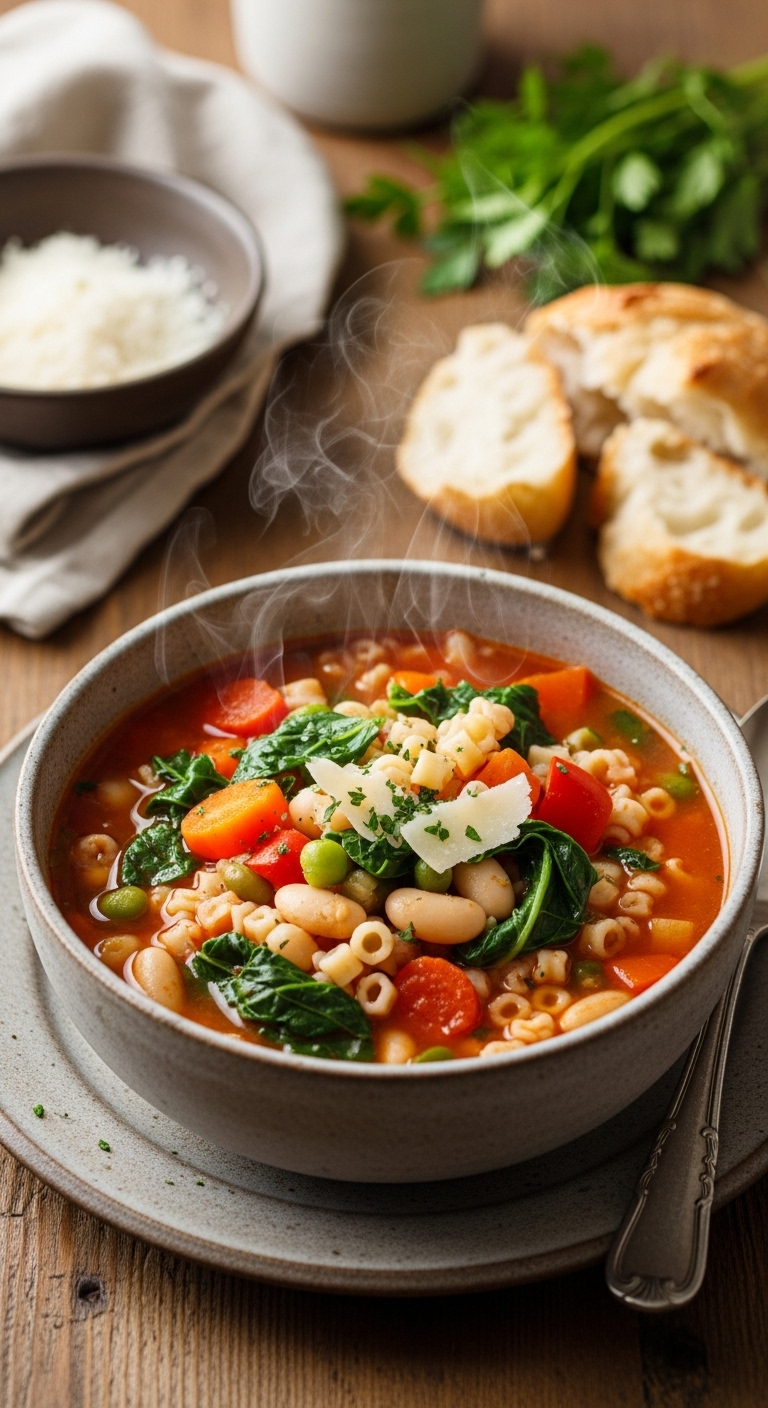
There is something deeply comforting about a pot of minestrone soup simmering on the stove on a cold winter evening. This Ina Garten Winter Minestrone Soup is the version that turns a handful of simple vegetables, beans and pasta into a bowl that feels rustic, nourishing and deeply satisfying. It is inspired by classic Italian countryside cooking: fresh vegetables for balanced flavour and colour, cannellini beans for protein and lasting satisfaction, and small ditalini pasta for body without heaviness. It takes 1 hour and 5 minutes from start to finish, serves 6 people, and fills the kitchen with a warm, cosy aroma while it cooks.
Minestrone soup is one of those recipes that never goes out of style. It is a winter staple because it uses seasonal vegetables, it feeds a whole family from one pot, and it tastes even better the next day — the flavours deepen as it rests, just as the recipe itself promises. Whether you are cooking a quiet weeknight dinner, feeding a crowd at a gathering, or looking for a wholesome bowl after a long cold day, this soup fits. This guide walks you through the full recipe exactly as it appears on Recipes Walay, with every ingredient, every step, smart variations, make-ahead timing, storage advice, and answers to the questions people actually ask before they make it.
If you are planning your winter cooking this year, start here. This minestrone soup is simple, forgiving, and made from ingredients you probably already have in the kitchen. The full recipe is on Recipes Walay at https://recipeswalay.com/ina-garten-winter-minestrone-soup-recipe/
Why You Will Love Ina Garten Winter Minestrone Soup
There are soup recipes that ask for a long shopping list and a whole afternoon. This is not one of them. Ina Garten Winter Minestrone Soup uses 18 everyday ingredients and one large pot, and it delivers the exact flavour people expect from a proper minestrone: hearty, wholesome, gently herbed and full of vegetables in every spoonful.
First, it is genuinely easy. The whole recipe is one pot, one knife and one cutting board. You chop the vegetables, soften them in olive oil, add tomatoes and broth, simmer, then stir in the pasta and the last vegetables. There is no special equipment, no step that needs perfect timing, and no ingredient you have to hunt for. The recipe says it suits beginners and experienced cooks alike, and it means it.
Second, it is a complete meal in a bowl. The cannellini beans add protein, the pasta adds body, and the mix of vegetables — onion, carrots, celery, zucchini, green beans and spinach — makes it filling without feeling heavy. At 320 calories per serving, it is satisfying in the way winter food should be, without leaving you weighed down.
Third, the flavour builds on itself. The vegetables simmer gently for natural sweetness, the tomatoes give a gentle acidity, and the thyme and bay leaf add fragrance without overpowering anything. Slow simmering builds richness without complexity, and the soup honestly gets better as it sits — the recipe notes that leftovers taste even better the next day.
Finally, this is a recipe with a story. It reflects classic Italian countryside traditions, where soup was made from whatever the season gave you, cooked slowly and shared generously. That spirit is still in this bowl: seasonal vegetables, a good broth, and patience. Food like this always brings people together, and that is what this minestrone soup is really about — not just dinner, but the feeling of being home on a winter night.
What Makes This Minestrone Soup So Special
Every family has a vegetable soup, but this one earns its place because of four choices the recipe makes and never changes.
The first is the vegetable base. The recipe starts with onion, carrots and celery — the classic trio — and then layers in zucchini, green beans and fresh spinach. Each vegetable has a clear purpose, and each one is added at the right moment so it keeps its texture. Nothing is thrown in all at once, and nothing is cooked to mush. The result is a soup where you can still taste each vegetable.
The second is the beans and pasta together. Cannellini beans give the soup protein and a creamy, satisfying bite, while the small ditalini pasta gives it body. Together they are what turn a vegetable soup into a meal. The recipe is clear that beans and pasta create the filling texture, and it is right — without them, this would be a light broth; with them, it feeds six people properly.
The third is gentle simmering. The recipe insists on simmering gently, and the reason is simple: a hard boil would break the vegetables down and cloud the broth. A gentle simmer lets the vegetables soften slowly, keeps their sweetness, and lets the herbs do their work. It is a small detail, and it is the difference between a soup that tastes fresh and one that tastes tired.
The fourth is the timing of the pasta. The recipe adds the pasta near the end and cooks it only until tender. That matters, because pasta left simmering in soup keeps absorbing broth and turns soft. By adding it late, the soup stays brothy and the pasta stays pleasantly firm. It is the kind of practical wisdom that makes a recipe reliable every single time.
Put those four choices together and you get minestrone soup that is rustic without being rough, nourishing without being heavy, and simple without being plain. It is the kind of dish that needs no garnish and no apology. If you love winter soups, our roundup of https://recipeswalay.com/easy-winter-soup-recipes/ has more bowls in the same comforting style.
Ingredients You Will Need
This recipe serves 6 people and uses 18 ingredients. One honest note before you start: the recipe lists its ingredients without exact amounts. It is written as a flexible, use-what-you-have soup, in the Italian countryside spirit, so the list below follows the recipe exactly as it is written. Use the amounts that suit your pot and your family, and season to taste as you go.
- Olive oil
- Yellow onion, chopped
- Carrots, diced
- Celery stalks, diced
- Garlic cloves, minced
- Canned diced tomatoes
- Tomato paste
- Vegetable broth
- Cannellini beans, drained
- Small pasta, ditalini
- Zucchini, chopped
- Green beans, cut
- Fresh thyme
- Bay leaf
- Salt
- Black pepper
- Fresh spinach
- Parmesan cheese, optional
A few notes on the ingredients. The yellow onion, carrots and celery form the flavour base, so chop them evenly — the recipe’s own tips say even chopping is what gives uniform cooking. The canned diced tomatoes and tomato paste give the broth its gentle acidity and colour, while the vegetable broth keeps the whole soup light but satisfying. Cannellini beans are the protein of the dish, so drain them well before they go in. Ditalini is the small pasta the recipe calls for, and it is the right size for a soup spoon. Fresh thyme and a single bay leaf are all the herbs you need — they add fragrance without overpowering the vegetables. The Parmesan cheese is optional, but a little grated over the top at serving is the classic finish.
Equipment You Will Need
You do not need anything fancy for this recipe. Seven pieces of equipment cover the whole job.
- Large heavy-bottom soup pot
- Sharp chef’s knife
- Cutting board
- Wooden spoon
- Measuring cups
- Measuring spoons
- Ladle
The large heavy-bottom soup pot is the one tool worth having ready before you start, because even heat is what lets the vegetables soften gently without catching, and a heavy base keeps the simmer steady for the full cooking time. The sharp chef’s knife earns its place too, since even chopping is one of the recipe’s own tips for uniform cooking. Everything else is standard kitchen equipment you already own.
How to Make Ina Garten Winter Minestrone Soup
The recipe takes 1 hour and 5 minutes in total: 20 minutes of prep and 45 minutes of cooking. Here it is, step by step, exactly as the recipe makes it.
Step 1: Heat the Olive Oil in the Pot
Set your large heavy-bottom soup pot over medium heat and add the olive oil. Let it warm until it shimmers slightly. You want the oil hot enough to soften the vegetables, but not smoking — medium heat is right for this soup from start to finish.
Step 2: Add the Onion, Carrots and Celery
Add the chopped yellow onion, diced carrots and diced celery to the pot. These three are the base of the soup, and they go in together. Stir them so they are coated in the oil and spread evenly across the bottom of the pot.
Step 3: Cook Until Softened, Stirring Gently
Cook the vegetables until they have softened, stirring gently as they go. This is the slow, patient part of the recipe: the vegetables should turn tender and sweet, not browned. Give them time, and keep the heat gentle so they soften rather than fry.
Step 4: Add the Garlic and Tomato Paste
Add the minced garlic and cook it briefly — just until it smells fragrant. Then stir in the tomato paste carefully. Cooking the tomato paste for a moment with the garlic takes away its raw edge and deepens the colour and flavour of the whole soup.
Step 5: Add the Diced Tomatoes and Broth
Pour in the canned diced tomatoes and the vegetable broth. Stir everything together, scraping the bottom of the pot as you go so the tomato paste dissolves into the broth. The pot should now look like a proper soup base, with the vegetables floating in a rich, tomato-coloured broth.
Step 6: Add the Beans, Thyme and Bay Leaf
Add the drained cannellini beans, the fresh thyme and the bay leaf. Stir them in gently. The beans are already cooked, so they are here for flavour and texture rather than a long cook, and the herbs will perfume the broth as it simmers.
Step 7: Simmer Gently for Twenty Minutes
Bring the soup to a gentle simmer — small bubbles, not a rolling boil — and let it cook for twenty minutes. This is where the flavours come together. The vegetables finish softening, the beans warm through, and the thyme and bay leaf give the broth its fragrance. Keep the heat low and steady.
Step 8: Add the Pasta and Cook Until Tender
Add the small ditalini pasta and cook until it is tender. This is the step the recipe is most careful about: the pasta goes in near the end, not at the start, so it stays firm and pleasant instead of turning soft and swollen. Stir now and then so the pasta does not stick to the bottom of the pot.
Step 9: Add the Zucchini and Green Beans
Add the chopped zucchini and the cut green beans. These are the last vegetables to go in, and they need only a short cook. Adding them late is what keeps them bright and a little bit firm, so the soup has texture instead of everything tasting the same.
Step 10: Cook Until the Vegetables Soften
Let the soup cook until the zucchini and green beans have softened. They should be tender enough to bite through easily, but still hold their shape and colour. Taste a piece to check — it should be soft, not crunchy and not mushy.
Step 11: Stir in the Spinach Until Wilted
Stir in the fresh spinach and cook just until it wilts into the soup. This takes only a minute or two. The spinach adds a fresh green note and a little extra nourishment right at the end, and wilting it last keeps its colour bright.
Step 12: Season, Remove the Bay Leaf and Serve
Season the soup with salt and black pepper, tasting as you go so the flavour is balanced. Then remove the bay leaf before serving — it has done its work and should not end up in anyone’s bowl. Ladle the soup into warm bowls, add Parmesan cheese on top if you like, and serve it hot.
Tips for Perfect Minestrone Soup Every Time
The recipe gives five tips of its own, and they are the difference between a good minestrone soup and a great one.
First, chop the vegetables evenly for uniform cooking. If the pieces are all roughly the same size, they soften at the same rate, and no one gets a crunchy carrot next to a mushy piece of celery. Take the extra minute with the knife — it pays off in every spoonful.
Second, simmer gently to preserve texture. A hard boil is the enemy of a good minestrone soup. Keep the heat low, let the pot bubble softly, and the vegetables will stay intact and sweet instead of breaking apart.
Third, add the pasta near the end. This is the tip the recipe repeats, and it is the one most people get wrong. Pasta keeps absorbing broth as it sits, so adding it late keeps it tender and keeps the soup brothy. If you are making the soup ahead, this matters even more.
Fourth, adjust the broth for your preferred thickness. Minestrone soup is a forgiving dish — some people like it thick and stew-like, others like it brothy. The recipe says to adjust the broth to the thickness you prefer, so add a little more if you want it lighter, or let it simmer a touch longer if you want it thicker.
Fifth, season gradually for balanced flavour. Salt and pepper go in at the end, a little at a time, tasting as you go. The broth, the tomatoes and the Parmesan all bring their own salt, so seasoning gradually is how you end up with a soup that tastes seasoned, not salty.
Easy Variations to Try
This minestrone soup is a flexible recipe, and the variations below keep it in the same spirit — seasonal vegetables, a good broth, and a gentle simmer.
Try a different bean. Cannellini beans are the recipe’s choice, but kidney beans or chickpeas work in the same way, giving the same protein and creamy texture. Use whichever bean you already have in the cupboard.
Try a different small pasta. Ditalini is the classic choice, but small shells, orzo or elbow macaroni all work, as long as the pasta is small enough to sit comfortably on a soup spoon. Keep the same rule: add it near the end and cook only until tender.
Try extra winter vegetables. A diced potato, a handful of shredded cabbage, or some chopped butternut squash all fit the winter minestrone style. Add the harder vegetables with the carrots and celery so they have time to soften. For another hearty winter bowl in the same style, try our https://recipeswalay.com/easy-cabbage-soup-for-winter/
Try a richer broth. The recipe uses vegetable broth, which keeps the soup light. If you want a deeper flavour, a good chicken broth works too — the soup stays in the same family, just a little richer.
Try adding sausage. For a heartier, meatier version, brown some Italian sausage before the vegetables and stir it back in with the beans. It turns the soup into an even more filling winter dinner, and it pairs beautifully with crusty bread. A meatier winter bowl to compare it with is our https://recipeswalay.com/easy-beef-stew-for-winter-nights/
Try finishing it differently. The recipe suggests Parmesan cheese, and a spoonful of pesto stirred in at the end is another classic minestrone finish. A drizzle of good olive oil over each bowl works too.
Make-Ahead and Timing Tips
Minestrone soup is one of the best soups to make ahead, because the recipe itself says the flavours deepen as it rests and the leftovers taste even better the next day. That makes it a natural choice for a busy week.
You can chop all the vegetables the night before and keep them in covered containers in the fridge, so the cooking itself takes only the simmering time. You can also cook the whole soup a day ahead and reheat it gently — just keep the heat low and stir now and then while it warms.
One timing tip matters more than the rest: if you are making the soup ahead, cook the pasta separately and add it when you reheat, or add it fresh on the day you serve. Pasta left sitting in soup keeps absorbing broth overnight, so holding it back is how the soup stays brothy and the pasta stays firm. The same rule applies if you are doubling the recipe for a crowd — cook the pasta in the soup only for the portion you are serving now.
For the day itself, the soup needs 20 minutes of prep and 45 minutes of cooking, so start it about an hour and a quarter before you want to eat. It holds well on the lowest heat for a little while, so you are not tied to the stove once it is done.
How to Store Leftovers
The recipe itself gives no storage times, so here is the honest position: the single recipe does not state how long to keep the soup in the fridge or the freezer, and this guide does not invent a number for it. What the recipe does say is that the flavours deepen as it rests and that leftovers taste even better the next day — so it is clearly a soup that is meant to be enjoyed again the day after you make it.
In practice, let the soup cool before you put it away, and store it in a covered container. If you plan to keep some for later in the week, keep the pasta separate from the soup when you store it, because pasta left in the soup will keep absorbing broth and turn soft. Reheat gently on the stove over low heat, stirring now and then, and add a splash of broth or water if the soup has thickened while it sat. Taste and adjust the salt after reheating, since flavours settle as the soup rests.
What to Serve With Ina Garten Winter Minestrone Soup
The recipe suggests three sides, and each one earns its place with this soup.
Crusty bread is the first choice, because it soaks up the broth beautifully. A thick slice, torn rather than cut, is the classic way to finish a bowl of minestrone soup. Our https://recipeswalay.com/ina-garten-garlic-bread-recipe/ is a natural partner here — warm, garlicky and made for dipping.
A simple green salad is the second choice, because it adds freshness and crunch next to a warm, soft soup. Keep it simple: mixed leaves, a light dressing, nothing heavy. The contrast is what makes the meal feel complete.
Garlic focaccia is the third choice, because it complements the soup’s herbs so well. Soft, herbed bread with a little olive oil is the kind of side that turns a bowl of soup into a proper dinner.
Beyond the recipe’s own suggestions, this soup sits happily next to a grilled cheese sandwich, a plate of roasted vegetables, or a simple tomato salad. It is a forgiving main course, and almost any simple side works. If you want another tomato-based winter bowl for the same table, try our https://recipeswalay.com/easy-tomato-soup-for-winter-nights/ — and for a creamy contrast, our https://recipeswalay.com/easy-broccoli-cheddar-soup-for-winter-nights/ is a reader favourite.
Frequently Asked Questions
What pasta works best in minestrone soup?
The recipe uses small ditalini pasta, and it is the right choice because the pieces are small enough to sit on a soup spoon and they cook quickly. Small shells, orzo or elbow macaroni work too. Whatever you choose, add it near the end and cook only until tender, because pasta left simmering in soup keeps absorbing broth and turns soft.
Can I make minestrone soup ahead of time?
Yes, and this is one of the best soups for it. The recipe says the flavours deepen as it rests and that leftovers taste even better the next day. Make the soup a day ahead, keep the pasta separate if you can, and reheat it gently on the stove. Add a splash of broth if it has thickened while it sat.
Is this minestrone soup vegetarian?
Yes. The recipe uses vegetable broth and no meat, so the soup is vegetarian as written. The cannellini beans give it protein, and the Parmesan cheese on top is optional. It is a naturally meat-free winter meal that still feels filling.
Why should I add the pasta near the end?
Because pasta keeps absorbing liquid as it cooks and as it sits. If it goes in too early, it turns soft and swollen and it drinks up the broth, leaving you with a thick, starchy pot instead of a soup. The recipe’s own tip is to add the pasta near the end, and it is the single most useful piece of advice in the whole recipe.
Can I freeze minestrone soup?
The recipe gives no freezing guidance, so this guide does not invent a freezing time for it. What is safe to say is that the soup’s flavours improve with resting, and that the pasta is the fragile part — so if you do freeze it, freeze the soup without the pasta and cook fresh pasta when you reheat. That is the practical approach that keeps the texture right.
What should I serve with minestrone soup?
The recipe suggests three sides: crusty bread, a simple green salad, and garlic focaccia. Crusty bread is the classic choice because it soaks up the broth. For a fuller meal, add a grilled cheese sandwich or a plate of roasted vegetables. For more ideas in the same warming style, see our https://recipeswalay.com/easy-ina-garten-winter-recipes-for-cozy-nights/ and our https://recipeswalay.com/easy-potato-soup-for-winter-nights/
Why This Minestrone Soup Belongs on Your Winter Table
Minestrone soup is the dish that makes a winter table feel generous. It is the one thing that feeds six people from a single pot, the one thing that tastes better the next day, and the one thing that uses the vegetables you already have instead of asking for a special shopping trip. This Ina Garten version is special because it is honest: real vegetables, real beans, a gentle simmer, and herbs that perfume rather than overpower. Nothing fancy, nothing fussy, just comfort food done properly.
It also fits the way winter cooking actually works. It is ready in 1 hour and 5 minutes. It feeds 6 people from a single pot. It can be made ahead and reheated gently. It goes with everything else on the table, from crusty bread to a green salad, and it can stand alone as a weeknight dinner when the holidays are over. That is a rare combination, and it is why this recipe is worth keeping.
If you are planning a winter dinner or a Christmas table, put this minestrone soup on it. It is simple, it is wholesome, and it is the dish people remember.
Final Thoughts
This Ina Garten Winter Minestrone Soup Recipe is simple, comforting and full of flavour. It is perfect for any cold night of the week, and it is at its best on a winter table surrounded by family. Once you try it, it will become a family favourite. The recipe’s own final word says it best: serve it warm and enjoy every spoon.
Make it once, and you will know the recipe by heart. Make it twice, and it will be the soup your family asks for every winter.