

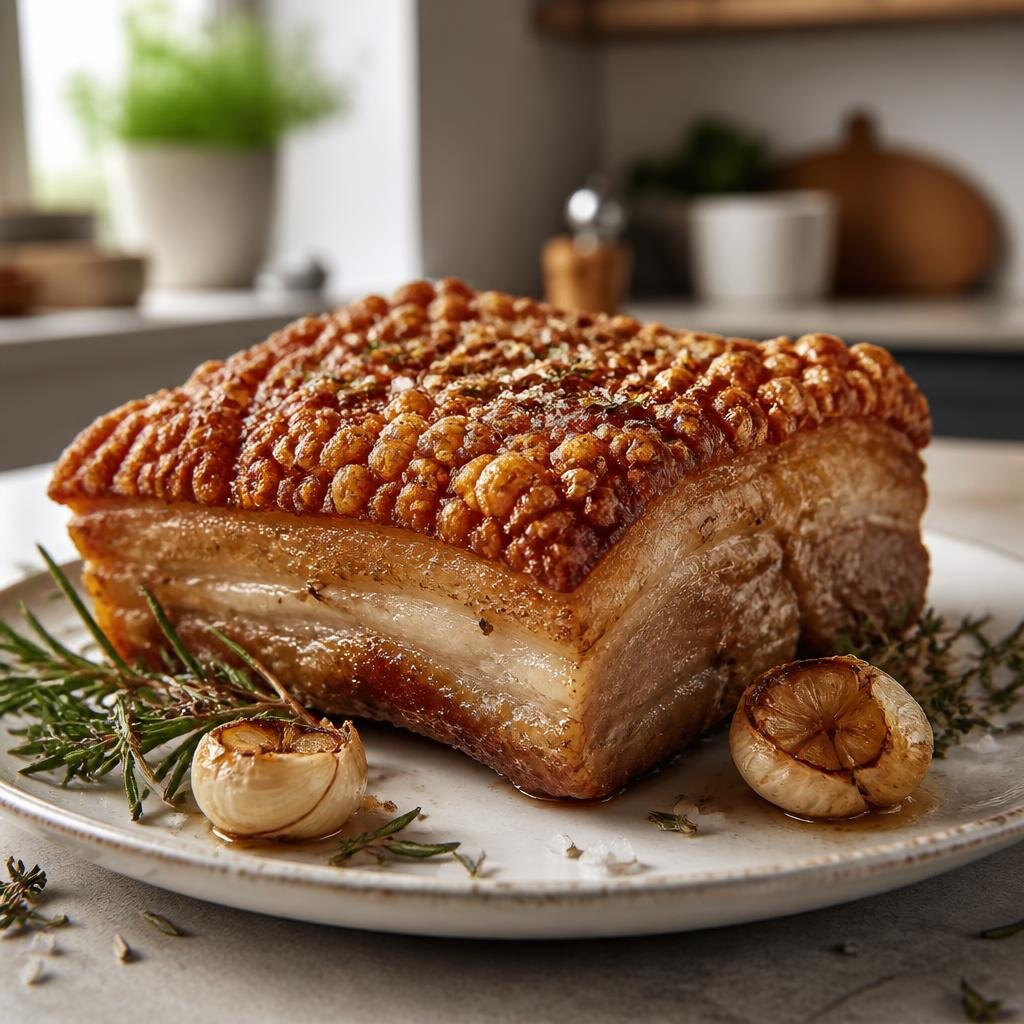
There are Christmas dinner mains that ask for your attention all day, and then there is pork belly, which does most of its work slowly in the oven while you get on with everything else. Gordon Ramsay Pork Belly is a British main course of slow-roasted pork belly with shatteringly crisp crackling, juicy meat, garlic, rosemary, thyme and a splash of apple cider vinegar. It tastes like something from a restaurant, it costs very little effort, and it is exactly the kind of main course that makes a Christmas table feel special without keeping the cook in the kitchen.
Pork belly is one of those cuts that sounds rich and intimidating on paper and makes perfect sense on the plate. Slow heat melts the fat into the meat until it is soft and juicy, and then a blast of high heat turns the skin into golden, bubbly crackling. The recipe takes 20 minutes of prep and 2 hours 30 minutes in the oven, it serves 6 people, and the method is simple enough for a first-timer: dry the skin, season it well, roast it low, finish it hot, and rest it before slicing. This guide walks you through the full recipe exactly as it appears on Recipes Walay, with every ingredient, every step, expert tips, variations, serving ideas and answers to the questions people actually ask before they make it.
The full recipe is on Recipes Walay at https://recipeswalay.com/gordon-ramsay-pork-belly-recipe/
Why You Will Love Gordon Ramsay Pork Belly
Some recipes earn their place through speed, and some through flavor. This one manages both in its own way, which is why it is such a useful dish to have in your collection. It takes just 20 minutes of hands-on prep, the oven does the rest over 2 hours 30 minutes, and it feeds 6 people generously, so it is easy to fit into a busy Christmas schedule or a relaxed family dinner. Most of that cooking time is completely hands-off, which means you can cook the rest of the meal, set the table, or simply relax while the pork belly takes care of itself.
First, the contrast is what makes it unforgettable. The crackling shatters when you cut into it, and underneath it the meat is soft, juicy and full of flavor. That contrast between crisp skin and melting meat is the whole point of pork belly, and it is what makes guests reach for a second slice before they have finished the first. The seasoning is simple but effective: sea salt, black pepper, smoked paprika and garlic powder rubbed into the skin, with garlic, onion, rosemary and thyme roasting underneath in chicken broth. It is a flavor combination that feels warm, savory and festive all at once.
Second, the method is almost embarrassingly easy. There is no searing, no brining and no fussy technique. You pat the skin dry, score it, rub in the seasoning, build a flavor base in the roasting tray, and put the whole thing in the oven. The slow roast does the hard work, and the final blast of high heat does the magic. For a Christmas dinner, where the oven is already busy and the cook is already stretched, a main course that asks for so little hands-on time is worth its weight in gold.
Third, it is a genuine crowd-pleaser that looks as good as it tastes. A whole roast pork belly, golden and crackling, carried to the table and sliced in front of everyone, is a centerpiece. It feeds 6 from a single 2-pound piece, it scales easily if you buy a larger piece for a bigger crowd, and it pairs with almost every classic holiday side. Whether it is Christmas Day, a Sunday family dinner or a dinner party, this is the dish that makes the meal feel like an occasion.
What Is Pork Belly?
Pork belly is the cut of pork from the belly of the pig, the same cut that bacon comes from, and it is prized for exactly the qualities that make it perfect for roasting: a generous layer of fat under the skin, and meat that turns meltingly tender with slow cooking. When it is roasted low and slow, the fat renders into the meat and keeps it juicy. When the heat is turned up at the end, the skin dries out and puffs into crisp crackling. That two-stage method, slow then hot, is the heart of this recipe, and it is the reason pork belly rewards patience.
Gordon Ramsay’s version follows this classic pattern with his usual confidence. There are no complicated steps and no hard-to-find ingredients, just good ingredients treated properly: a 2-pound piece of pork belly, coarse sea salt rubbed deep into scored skin, smoked paprika and garlic powder for warmth, and fresh rosemary and thyme roasting underneath in chicken broth. The recipe is British in cuisine, a main course by definition, and it has become a favorite for special gatherings precisely because it feels luxurious while asking so little of the cook. The crackling is not decoration here, it is the dish, and that is what makes it stand out from every other roast on the Christmas table.
It is worth saying plainly what pork belly is not. It is not a quick weeknight roast, because the slow 2-hour roast is essential to the tenderness. It is not a lean cut, because the fat is doing real work here, keeping the meat moist and carrying flavor. And it is not a dish you can rush: the time in the oven is doing the work of turning a tough, fatty cut into something soft and juicy. Give it that time, and the dish rewards you. If you are looking for more ideas for the cut, the Christmas pork roundup on Recipes Walay at https://recipeswalay.com/easy-christmas-pork-recipes-for-a-festive-holiday-table/ gathers the site’s pork dishes for the holiday table in one place.
The secret the recipe shares is simple and worth remembering: dry skin makes crispy crackling. Everything in the method points back to that one idea. Patting the skin dry, scoring it, rubbing salt into the cuts, resting the seasoned pork uncovered, and roasting it uncovered all serve the same purpose, which is to drive moisture out of the skin so it can crisp. Understand that, and every step of the recipe makes sense.
Ingredients You Need for Gordon Ramsay Pork Belly (with Quantities)
One of the best things about this recipe is how short the shopping list is. Twelve ingredients, all easy to find, and every one of them earns its place. Here is the full list, with the exact quantities from the recipe on Recipes Walay:
- 2 pounds pork belly
- 2 tablespoons olive oil
- 2 teaspoons sea salt
- 1 teaspoon black pepper
- 1 teaspoon smoked paprika
- 1 teaspoon garlic powder
- 4 garlic cloves, crushed
- 1 onion, sliced
- 2 sprigs fresh rosemary
- 2 sprigs fresh thyme
- 1 cup chicken broth
- 1 tablespoon apple cider vinegar
A few notes on the ingredients will help you get the best result. First, buy a piece of pork belly with the skin on, and ask the butcher for a piece with even thickness if you can. The skin is essential: without it there is no crackling, and the crackling is half the dish. A piece around 2 pounds feeds 6 people generously, and if you are cooking for a larger crowd, buy a bigger piece and give it a little more time in the oven rather than crowding two pieces into one tray.
Second, use coarse sea salt and do not be shy with it. The recipe calls for 2 teaspoons, and the salt is doing two jobs at once: it seasons the meat, and it draws moisture out of the skin, which is what makes the crackling crisp. Fine table salt dissolves too quickly and does not give the same texture, so sea salt is the right choice here. Rub it deep into every score mark in the skin, because the salt can only dry the skin where it touches it.
Third, use fresh rosemary and thyme, not dried. The recipe lists 2 sprigs of each, and they go into the roasting tray under the pork, where they perfume the chicken broth and the meat as it roasts. Fresh herbs give a stronger, cleaner aroma than dried ones, and the recipe is clear that fresh is the better choice. The same applies to the garlic: 4 cloves, crushed, go under the pork with the onion, and their flavor rises into the meat during the long slow roast.
Finally, use a good chicken broth and a proper apple cider vinegar. The broth goes into the tray around the vegetables, and it keeps the pork moist during roasting while catching the drippings. The vinegar adds a bright note that cuts through the richness of the pork. You do not need an expensive bottle of either, but use a broth you would happily taste on its own. The recipe also notes that apple juice can replace the chicken broth if you prefer a slightly sweeter base, which is a useful swap if you already have apple juice in the house.
Equipment You Need
You do not need any special equipment for this recipe, and that is part of its charm. Everything on this list is standard kitchen equipment:
- Sharp knife
- Roasting tray
- Aluminum foil
- Small bowl
- Spoon
- Paper towels
- Meat thermometer
- Cutting board
- Mixing bowl
- Oven
The sharp knife matters more than it might seem, because scoring the skin is one of the most important steps in the whole recipe, and a blunt knife will tear the skin instead of cutting clean lines. The roasting tray should be large enough to hold the pork belly with the onion, herbs and broth around it, without crowding. The paper towels are there for the single most important job in the recipe, drying the skin, so have plenty of them ready. The meat thermometer is useful for checking that the pork is cooked through, and the small bowl and spoon are for mixing the seasoning. The aluminum foil is there in case the crackling needs a little protection, though the recipe roasts the pork uncovered throughout.
How to Make Gordon Ramsay Pork Belly Step by Step
The recipe card gives a total time of 2 hours 50 minutes: 20 minutes of prep and 2 hours 30 minutes of cooking. The steps below follow the recipe on Recipes Walay exactly, broken into twelve clear stages so you can follow them one at a time without losing your place.
1. Pat the Pork Belly Dry with Paper Towels
Start with 2 pounds of pork belly and pat it completely dry using paper towels. Dry skin is the foundation of crispy crackling, so take your time over this step and press the towels firmly over the skin until it feels dry to the touch. Pay attention to the edges and corners, where moisture hides. If the skin is wet when it goes into the oven, it will steam instead of crisping, and no amount of high heat at the end will fully rescue it. Drying the skin now is the single most important thing you will do in this recipe.
2. Score the Skin Carefully with a Sharp Knife
Score the skin carefully with a sharp knife, cutting clean parallel lines across the skin. Do not cut into the meat deeply: the scores should go through the skin and the fat just beneath it, but not down into the meat itself. The scoring does two jobs at once. It lets the salt reach into the skin and draw out moisture, and it gives the crackling somewhere to split and puff as it crisps, which is what makes it shatter so satisfyingly when you cut into it. Keep the lines evenly spaced and take your time, because neat scoring makes for neat crackling.
3. Mix the Seasoning and Rub It into the Pork
Mix 2 teaspoons of sea salt, 1 teaspoon of black pepper, 1 teaspoon of smoked paprika and 1 teaspoon of garlic powder in a small bowl. Rub the seasoning all over the pork belly, and make sure the salt gets into every skin cut. Use your fingers to work the salt deep into the score lines, because the salt can only dry the skin where it touches it. The smoked paprika gives the skin a warm color and a gentle smoky note, and the garlic powder adds a savory depth that complements the fresh garlic roasting underneath. Do not forget the sides and the underside of the pork either: the meat needs seasoning too, even though the skin gets the most attention.
4. Build the Flavor Base in the Roasting Tray
Place 1 sliced onion, 2 sprigs of fresh rosemary, 2 sprigs of fresh thyme and 4 crushed garlic cloves into the roasting tray. Pour 1 cup of chicken broth around the vegetables. This keeps the pork moist during roasting, and the vegetables and herbs perfume the meat from below while the broth catches the drippings. Spread the onion and herbs out so the pork sits on top of them rather than directly on the tray, which lifts the meat slightly and lets the hot air circulate underneath it. The tablespoon of apple cider vinegar goes in with the seasoning, adding brightness that cuts through the richness of the pork as it roasts.
5. Rest the Seasoned Pork Uncovered for 15 Minutes
Place the seasoned pork belly on top of the onions and herbs, skin side up, and leave it uncovered for 15 minutes. This small step helps dry the skin even more, because the air in the kitchen draws the last of the surface moisture away while the salt does its work. Do not cover the pork during this rest, and do not be tempted to skip it. Fifteen minutes is not a long time, and it is time the skin uses well. While you wait, you can preheat the oven and tidy the kitchen, so nothing is wasted.
6. Preheat the Oven to 300°F
Preheat the oven to 300 degrees Fahrenheit. The slow roast starts at this gentle temperature, which is what makes the meat soft and juicy instead of tough. Do not skip the preheating: the pork should go into a properly heated oven so the slow roast starts straight away at the right temperature, rather than warming up slowly in a cold oven. While the oven heats, the pork is finishing its 15-minute uncovered rest, so the timing works out neatly.
7. Slow Roast the Pork Belly for About 2 Hours
Roast the pork belly slowly at 300°F for about 2 hours. Slow cooking is what makes the meat soft, juicy and full of rich flavor, as the fat renders gently into the meat and the herbs and garlic work their way through it. Keep the pork uncovered throughout this stage: covering it would trap steam and soften the skin, which is the opposite of what you want. The meat should be giving and tender when you press it, and the kitchen will smell wonderful long before the two hours are up. Resist opening the oven door more than you need to, because every opening drops the temperature.
8. Raise the Oven Temperature to 450°F
Increase the oven temperature to 450 degrees Fahrenheit. This is the turning point of the recipe, the moment the slow roast becomes the crackling stage. The pork is already tender from its two hours at low heat, and now it needs high heat to finish the skin. Give the oven a few minutes to reach the higher temperature before you count the crackling time, so the skin gets the full blast of heat it needs. The pork stays in the same tray, on the same bed of vegetables, for this stage.
9. Crisp the Crackling for 20 to 30 Minutes
Roast for another 20 to 30 minutes at 450°F. Watch carefully until the skin becomes golden, bubbly and crispy. This is the stage that needs your attention: crackling goes from perfect to burnt quickly at this temperature, so stay nearby and check it every few minutes. You will hear it crackle and see the skin puff and blister along the score lines. When it is golden all over and crisp to the touch, it is done. If some parts are crisping faster than others, you can turn the tray around, but do not cover the pork, because covering it would soften the crackling you have worked so hard to create.
10. Rest the Pork Belly for 10 Minutes
Remove the pork belly from the oven carefully and let it rest for 10 minutes before slicing. Resting keeps the juices inside the meat beautifully, and cutting into it straight from the oven would let those juices run out onto the board instead of staying in the meat. The crackling will stay crisp during this short rest, and the meat will firm up just enough to slice cleanly. Use this time to warm the plates and finish the side dishes, so everything is ready when the pork is.
11. Slice the Pork Belly into Thick Slices
Cut the pork belly into thick slices using a sharp knife. Thick slices hold the crackling and the meat together in each piece, which is what you want: every slice should have its own piece of crisp skin on top and juicy meat underneath. Press down firmly and cut in one smooth motion rather than sawing, because sawing shatters the crackling into crumbs. You should hear the crunch as the knife goes through the skin, and that sound is the sign that you have done it right.
12. Serve Hot with Your Chosen Sides
Serve the pork belly hot, with roasted vegetables, mashed potatoes or a fresh salad for a complete meal. The recipe suggests these three as a starting point, and they all work for the same reason: they give the rich pork something to sit beside, whether it is soft mashed potato, sweet roasted vegetables, or a crisp salad that cuts through the richness. Spoon a little of the pan juices over the slices if you like, and bring the dish to the table while the crackling is still at its best.
Expert Tips for Perfect Pork Belly
The recipe on Recipes Walay gives ten expert tips, and they are all worth following, because pork belly is a forgiving cut once you understand what it needs.
First, dry the pork skin overnight for extra crispy crackling. If you have the time, season the pork the night before and leave it uncovered in the fridge overnight. The cold, dry air of the fridge draws moisture out of the skin far more effectively than a 15-minute rest on the counter, and the difference in the crackling is real. This is the single best upgrade you can make to this recipe, and it costs nothing but a little planning.
Second, use coarse sea salt for better texture. Coarse salt draws moisture out of the skin more slowly and evenly than fine salt, and it gives the crackling a better bite. Rub it deep into the score lines and do not be shy about it.
Third, add a honey glaze during the final roasting stage if you like a touch of sweetness. Brush it on lightly when you raise the heat, and watch it closely, because honey browns quickly at 450°F. A thin glaze is enough: it should shine on the crackling, not pool on it.
Fourth, try chili flakes for a spicy flavor. A pinch scattered over the skin with the seasoning gives the crackling a gentle warmth that works well with the smoked paprika. Add them to the seasoning mix rather than on top at the end, so they cook into the skin.
Fifth, apple juice can replace the chicken broth. If you prefer a slightly sweeter base, pour apple juice into the tray instead of broth. It gives the pan juices a fruity note that suits the pork, and it is a useful swap if you already have apple juice in the house.
Sixth, avoid covering the pork during roasting. Covering it traps steam, and steam is the enemy of crackling. The pork roasts uncovered from start to finish, through both the slow roast and the high-heat finish.
Seventh, always rest the meat before slicing. Ten minutes is the timing the recipe gives, and it is enough for the juices to settle back into the meat. Cutting too soon lets the juices run out, and the meat will be drier for it.
Eighth, use fresh herbs for a stronger aroma. Dried rosemary and thyme cannot match the fragrance of fresh sprigs roasting in the tray, and the recipe is clear that fresh is the better choice.
Ninth, pair the pork with creamy mashed potatoes for comfort food. The soft potatoes balance the crunchy skin perfectly, and they soak up the pan juices beautifully.
Tenth, lemon zest adds fresh brightness. A little zest over the finished slices, or in the seasoning mix, lifts the richness of the pork and gives the dish a clean finish. It is a small addition that makes a noticeable difference.
Variations to Try
Once you have made the classic version, there are several easy variations that keep the same method and change the flavor. The honey glaze variation is the most popular: brush a thin layer of honey over the skin when you raise the oven temperature, and let it caramelize into the crackling. It adds a gentle sweetness that suits a Christmas table, and it looks beautiful too. Watch it closely, because honey can burn quickly at 450°F, and a thin coat is better than a thick one.
The spicy variation uses chili flakes in the seasoning mix, which gives the crackling a warm heat that builds slowly rather than hitting all at once. A pinch is enough to start with, and you can add more next time if you like the heat. The flakes cook into the skin during the long roast, so the spice is in the crackling itself rather than sitting on top of it.
The apple variation swaps the chicken broth for apple juice, which gives the pan juices a fruity sweetness that works well with pork. Apple is a classic partner for pork, and the juice in the tray means the flavor reaches the meat from below while the skin crisps above. You can also add a few apple slices to the tray with the onion if you like, though the recipe as written keeps the base simple.
The herb variation changes the herbs in the tray. Rosemary and thyme are the recipe’s choice, and they are the right one for a classic roast, but sage is a natural partner for pork too, and a few sage leaves in the tray give the dish a different, slightly earthier note. Keep the quantities the same and change only the herb, so the method stays exactly as written.
The lemon variation adds lemon zest to the seasoning mix and a squeeze of lemon over the finished slices. It is a small change, but it brightens the whole dish, and it is a good choice if you are serving the pork with rich sides and want something to cut through the richness. For a winter-night main with a similar slow-cooked richness, the beef bourguignon guide on Recipes Walay at https://recipeswalay.com/easy-ina-garten-beef-bourguignon-for-winter-nights/ follows the same low-and-slow idea with a different cut of meat.
What to Serve with Pork Belly
The recipe on Recipes Walay suggests roasted vegetables, mashed potatoes or a fresh salad, and those three cover the main approaches: something soft, something sweet, and something fresh. A creamy mashed potato works beautifully with crispy pork belly. The soft potatoes balance the crunchy skin perfectly, and they soak up the pan juices, which is half the pleasure of the dish. The mashed potato guide on Recipes Walay at https://recipeswalay.com/easy-mashed-potatoes-for-thanksgiving/ gives a simple, reliable version that fits this plate.
Roasted carrots and green beans also taste wonderful. Their sweetness pairs nicely with the savory pork flavor, and their color brightens the plate. The green bean casserole guide at https://recipeswalay.com/easy-paula-deen-green-bean-casserole-for-thanksgiving/ is a richer take on the same idea, and it is a natural fit for a Christmas table where the sides are meant to be generous.
You can also serve a fresh coleslaw beside the meat. The cool crunch refreshes every bite, and the sharpness of the slaw cuts through the richness of the pork. It is a good choice if the rest of the meal is already heavy and you want one fresh, crisp element on the plate.
Another favorite side is garlic butter rice. It soaks up the flavorful juices perfectly, and it is a simple, comforting base that lets the pork be the star. For a richer plate, the creamy mac and cheese guide at https://recipeswalay.com/easy-joanna-gaines-creamy-mac-and-cheese-for-the-holidays/ gives a side that is indulgent in its own right, and it is a favorite with children at a family Christmas dinner. Whatever you choose, serve the pork hot and let the sides be the supporting act, because the crackling is what everyone will remember.
Make-Ahead and Storage
One of the practical strengths of this dish is that it can be prepared ahead of time. The recipe’s own answer to the make-ahead question is yes: you can prepare the pork belly earlier in the day and reheat it in the oven before serving. That makes it a useful choice for a Christmas dinner, where the morning is always busier than planned. Season the pork and build the flavor base in the morning, then roast it when you are ready, or roast it earlier and reheat it gently in the oven. The best results come from roasting it fresh and serving it hot, but the recipe is honest that an earlier start works.
For leftovers, the recipe gives clear guidance. Store them in an airtight container and keep them refrigerated for up to 4 days. Reheat in the oven, not the microwave, if you want the skin to stay crisp: the oven’s dry heat revives the crackling, while the microwave softens it. Add a little broth while reheating the meat, which keeps it moist. Freeze sliced pork belly for up to 2 months, and thaw it overnight in the fridge before reheating. The recipe also notes that you should avoid microwaving the crackling, because the microwave turns crisp skin soft and chewy, and that is a waste of good crackling.
For a Christmas dinner, the best plan is simple: season the pork the night before and leave it uncovered in the fridge, which dries the skin and improves the crackling. Roast it on Christmas Day, rest it for 10 minutes, and serve it hot. That takes the pressure off the day itself and still gives you a main course that tastes like you spent hours on it, because in a sense you did, but the oven did the work.
Nutrition and Calories
The recipe gives a full nutrition breakdown for this dish, and it is honest about what this dish is: rich, satisfying comfort food, best enjoyed as part of a balanced plate rather than on its own. Each serving contains 520 calories, and the recipe serves 6 people. The full figures per serving are: protein 28 grams, fat 40 grams, saturated fat 14 grams, carbohydrates 6 grams, fiber 1 gram, sodium 780 milligrams, and sugar 2 grams.
What those numbers tell you is straightforward. This is a protein-rich dish with a high fat content, which is exactly what you would expect from pork belly: the fat is what keeps the meat juicy and gives the crackling its richness. The carbohydrate figure is low, at 6 grams per serving, because the dish itself contains no starch: the carbohydrates on the plate come from the sides you choose. The sodium figure, 780 milligrams, reflects the salt rubbed into the skin, and it is a reminder that the sides should be seasoned with a light hand.
If you want a lighter plate, the simplest change is in the sides rather than the pork itself. Serve the pork with roasted vegetables and a fresh salad instead of mashed potatoes and mac and cheese, and the plate balances out. The pork is the indulgent part of the meal, and it is meant to be: for a Christmas dinner, the classic version is the right choice, and the rest of the plate can carry the lighter dishes.
Occasions to Serve Pork Belly
This is a dish that fits more occasions than most main courses, and the recipe on Recipes Walay shows its range. For Christmas gatherings, it is a natural fit: it is elegant enough for the occasion, it feeds 6 from a single piece, and the slow roast means the cook is free while it cooks. It is one of the few Christmas mains that actually gets easier when you are cooking for a crowd, because the method scales without any extra effort. If you want another Christmas main for comparison, the roast pork loin guide at https://recipeswalay.com/easy-gordon-ramsay-roast-pork-loin-for-christmas/ follows a similar festive idea with a leaner cut.
For a Sunday family dinner, it is a reliable crowd-pleaser. The crispy crackling and juicy meat feel special without being fussy, the dish looks beautiful in its roasting tray, and it is the kind of main course that gets people talking. Serve it family-style, sliced on a board, and let people help themselves.
For a dinner party, it travels well as a talking point: the crackling, the slow roast, the Gordon Ramsay name. It is a dish that impresses guests without requiring the cook to perform. And for a holiday meal where you want a change from the usual turkey, the roast turkey guide at https://recipeswalay.com/easy-martha-stewart-roast-turkey-for-thanksgiving/ and the prime rib guide at https://recipeswalay.com/easy-thanksgiving-prime-rib-for-the-holidays/ are the classics, while pork belly is the choice for a cook who wants something different and memorable. The chicken marbella guide at https://recipeswalay.com/easy-ina-garten-chicken-marbella-for-christmas/ is another make-ahead Christmas main in the same spirit.
For a cozy winter night, it is a proper comfort dish: rich, warm, and filling, the kind of meal that makes a cold evening feel generous. And for a birthday dinner or a Father’s Day celebration, it is a worthy centerpiece, because it feels like a treat rather than an everyday meal. The recipe lists all of these occasions itself, and it is right: the crispy pork always impresses guests beautifully.
FAQs about Gordon Ramsay Pork Belly
1. How do I get crispy crackling on pork belly?
Dry skin is extremely important for crispy crackling. Pat the skin completely dry before seasoning, score it cleanly, rub coarse sea salt deep into the cuts, and rest the seasoned pork uncovered for 15 minutes. Roast it uncovered throughout, and finish with 20 to 30 minutes at 450°F. High heat during the final roasting stage creates the crunchy golden skin, but it only works if the skin is dry when it goes in. For the very best result, season the pork the night before and leave it uncovered in the fridge overnight.
2. Can I make Gordon Ramsay pork belly ahead of time?
Yes, you can prepare the pork belly earlier in the day. Season it and build the flavor base in the tray in the morning, then roast it when you are ready, or roast it earlier and reheat it in the oven before serving. Reheating in the oven keeps the crackling crisp, while the microwave would soften it. If you are planning a Christmas dinner, the best approach is to season the pork the night before, leave it uncovered in the fridge overnight, and roast it fresh on the day.
3. How deep should I score the skin?
Score through the skin and the fat just beneath it, but do not cut deeply into the meat. The scores should be clean, evenly spaced lines that let the salt reach into the skin and give the crackling somewhere to split and puff as it crisps. A sharp knife is essential here: a blunt knife tears the skin instead of cutting it, and torn skin does not crisp evenly. If you do cut a little too deep in one place, it is not a disaster, but the meat underneath will dry out slightly in that spot, so take your time and keep the cuts shallow.
4. Why do I need to rest the pork belly before slicing?
Resting keeps the juices inside the meat. When pork comes out of a hot oven, the juices are moving and loose, and cutting into it straight away lets them run out onto the board. Ten minutes of rest lets the juices settle back into the meat, so each slice stays moist. The crackling stays crisp during this short rest, and the meat firms up just enough to slice cleanly. It is a short wait, and it makes a real difference to the finished dish.
5. Can I use a different liquid instead of chicken broth?
Yes. The recipe itself suggests apple juice as a replacement for the chicken broth, and it gives the pan juices a slightly sweeter, fruitier note that suits pork well. You could also use vegetable broth, though chicken broth is the recipe’s choice and gives the richest base. Whatever liquid you use, pour it around the vegetables in the tray rather than over the pork, because the skin needs to stay dry to crisp.
6. What should I serve with pork belly?
The recipe on Recipes Walay suggests roasted vegetables, mashed potatoes, or a fresh salad. Creamy mashed potatoes are the classic choice, because they balance the crunchy skin and soak up the pan juices. Roasted carrots and green beans add sweetness and color, and a fresh coleslaw gives a cool crunch that refreshes every bite. Garlic butter rice is another favorite, because it soaks up the flavorful juices. Choose one soft side, one vegetable, and let the pork be the star of the plate.
Final Thoughts
Gordon Ramsay Pork Belly is a true holiday treasure, and this guide has walked through the full recipe exactly as it appears on Recipes Walay: 12 ingredients, 20 minutes of prep, 2 hours 30 minutes in the oven, an overnight option for the crispiest crackling, and 6 generous servings of juicy meat under golden, shattering skin. The technique is simple, the ingredients are easy to find, and the result is a main course that works at a Christmas dinner, a Sunday family meal, a dinner party, or an ordinary winter weekend.
The habits that make it work are worth remembering: dry the skin thoroughly, score it cleanly, rub the salt deep into the cuts, roast it low and slow, finish it hot, and rest it before slicing. Get those right, and you will have pork belly that is juicy, golden and full of flavor, every single time. Whether it is for Christmas Day or a simple family dinner, this dish never disappoints, and your family will love it as much as the recipe promises. Happy cooking!