

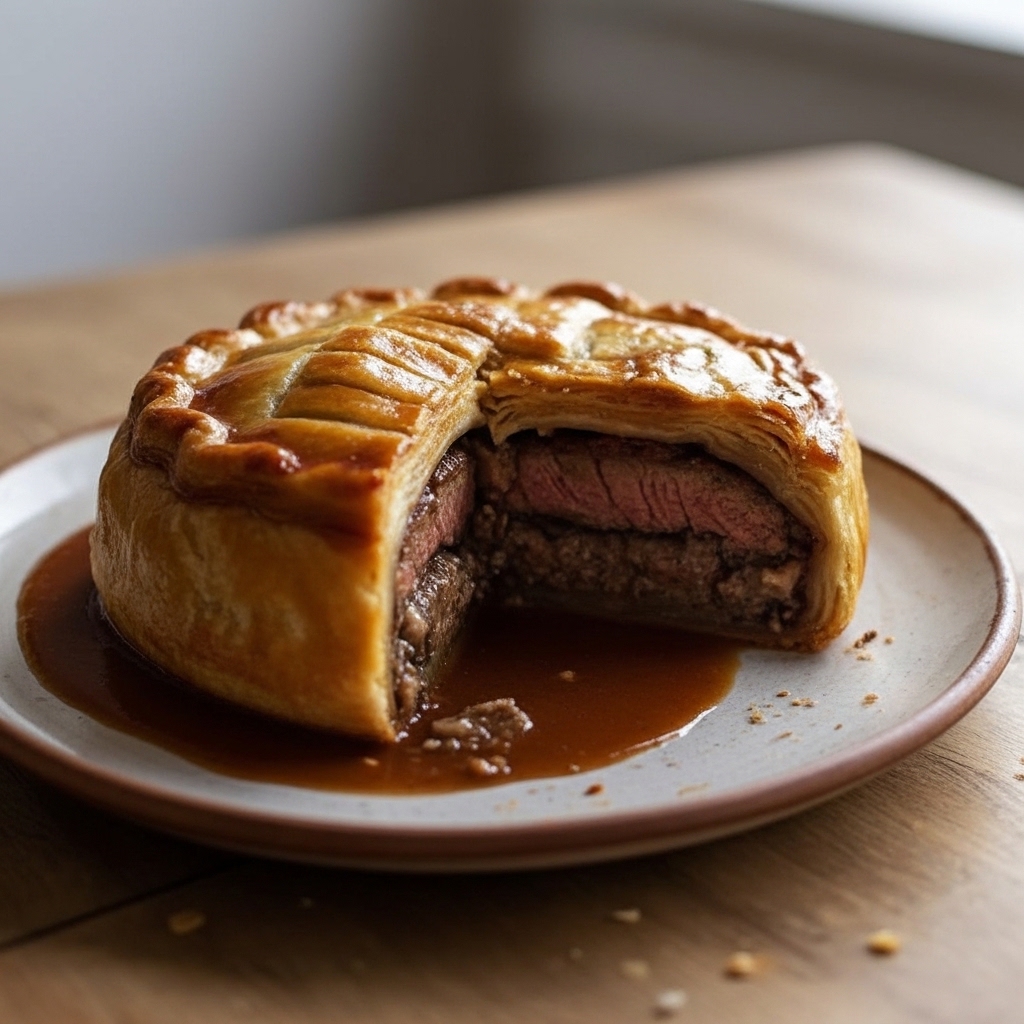
There is a particular kind of comfort that only a steak pie can deliver. The pastry comes out of the oven golden and flaky, the filling underneath is rich and glossy, and when you cut into it the steam rises with the smell of slow-cooked beef, thyme and Worcestershire sauce. This Gordon Ramsay Steak Pie is that kind of cooking: honest, hearty and deeply satisfying. It takes 2 hours and 35 minutes from start to finish, it serves 6 people, and it turns 14 simple ingredients into a classic British main course that tastes like it came from a proper pub kitchen, made entirely at home.
Steak pie is one of the great traditional British dishes, and Gordon Ramsay’s version keeps it straightforward and approachable. There is no fussy technique here, just good habits done well: brown the beef properly in batches, build the gravy slowly, chill the filling before the pastry goes on, and bake until the top is golden. The result is beef so tender it falls apart under a fork, a gravy that is thick and glossy enough to coat a spoon, and a puff pastry lid that shatters beautifully when you cut into it. Whether you are planning a Christmas dinner main course, a winter family gathering, or a slow Sunday supper, this guide walks you through the full recipe exactly as it appears on Recipes Walay, with every ingredient, every step, expert tips, variations, serving ideas, and answers to the questions people actually ask before they make it.
The full recipe is on Recipes Walay at https://recipeswalay.com/gordon-ramsay-steak-pie-recipe/
Why You Will Love Gordon Ramsay Steak Pie
There are winter dinners, and then there are winter dinners that make the whole evening feel like an occasion. This steak pie is the second kind. It uses 14 ingredients and one heavy pot plus a pie dish, and it delivers the exact flavour people expect from a proper British steak pie: rich, savoury, beefy and gently herbal, with a buttery pastry lid that turns the whole dish into something special.
First, it is genuinely impressive with very little active work. The total time is 2 hours and 35 minutes, but most of that is hands-off simmering and baking: 25 minutes of prep, 40 minutes of gentle simmering for the filling, and the rest in the oven. You brown the beef, build the gravy, let it simmer, and then the oven does the rest while you relax. That rhythm makes it perfect for entertaining, because the cook is free when the guests arrive.
Second, it is a one-dish meal that feeds a crowd properly. The recipe serves 6 people generously, and it is a complete main course in itself, so it is ideal for a Christmas dinner table, a holiday gathering, or a family dinner where you want something special without cooking a dozen side dishes. Pair it with mashed potatoes, steamed green beans or roasted root vegetables, and dinner is done.
Third, the technique is forgiving and the ingredients are familiar. Beef chuck, onion, carrots, garlic, beef stock and puff pastry are all easy to find, and the recipe explains each step clearly, so even a first-time pie maker can cook it with confidence. If you have ever wanted to make a classic British pie at home, this is the one to start with.
What Is Steak Pie?
Steak pie is a traditional British dish, and its name says exactly what it is: beef steak, slowly cooked in a rich gravy, baked under a pastry lid until golden. At its heart it is a braise and a bake in one dish. The beef is browned, then simmered gently in beef stock with onion, carrot, garlic, Worcestershire sauce and thyme until it is meltingly tender. The filling goes into a pie dish, a sheet of puff pastry is rolled over the top, sealed and brushed with beaten egg, and the whole pie bakes until the pastry is puffed and golden and the gravy bubbles underneath.
Gordon Ramsay’s version follows that classic pattern closely. Beef chuck is cut into cubes and browned in olive oil, then the vegetables and flour build the base of the gravy, and the beef stock, Worcestershire sauce and fresh thyme give it depth. The filling simmers for forty minutes, which is long enough for the beef to turn tender and the gravy to thicken, and then the pie is assembled and baked. The result is a dish that tastes both rustic and refined: hearty enough for a cold winter night, elegant enough for a Christmas dinner table.
What makes steak pie different from an ordinary beef stew is the pastry. The puff pastry lid seals in the moisture while the pie bakes, so the filling stays rich and the steam keeps the beef tender, and then the pastry itself becomes the best part of the dish: crisp, buttery and golden. It is slow food in the best sense: simple ingredients, patient cooking, and a result that tastes far greater than the sum of its parts.
Ingredients You Need for Gordon Ramsay Steak Pie (with Quantities)
The recipe uses 14 ingredients, and every one of them earns its place. Here they are, exactly as listed on Recipes Walay, with quantities:
Filling:
- 900 g beef chuck, cubed
- 2 tablespoons olive oil
- 1 large onion, chopped
- 2 carrots, diced
- 2 cloves garlic, minced
- 2 tablespoons flour
- 2 cups beef stock
- 1 tablespoon Worcestershire sauce
- 1 teaspoon fresh thyme
- Salt to taste
- Black pepper to taste
Pastry:
- 500 g puff pastry
- 1 egg, beaten
A few notes on choosing them well. Beef chuck is the right cut here: it is well marbled, it becomes tender through slow simmering, and it holds its shape in cubes instead of falling apart. Ask the butcher for chuck cut into cubes, or buy a whole piece and cut it yourself, keeping the pieces generous so they stay juicy. The beef stock should be good quality too, since it forms the whole of the gravy. Fresh thyme is listed, and it is worth using fresh here, because its flavour is brighter than dried and it suits the beef beautifully.
For the pastry, the recipe uses 500 g of puff pastry, and ready-made puff pastry works perfectly for this dish. Keep it cold until you are ready to roll it, because cold pastry puffs better in a hot oven. The beaten egg is for brushing the top, and it is what gives the pie its golden shine, so do not skip it. The Worcestershire sauce is a small amount, just one tablespoon, but it adds a deep savoury note that makes the gravy taste richer than stock alone ever could.
Equipment You Need
You do not need any special equipment for this pie, and everything on the list is standard kitchen gear. A large heavy pot is where the filling is made: it needs to be heavy enough to hold a steady heat while you brown the beef and simmer the gravy, and a Dutch oven or a large casserole works perfectly. A wooden spoon is for stirring the filling without scraping the pot, and a sharp knife and a cutting board are for cubing the beef and chopping the onion and carrots.
A rolling pin is for rolling out the puff pastry, and a pie dish is what the filling is baked in, so choose one that is deep enough to hold the filling with room for the pastry on top. A pastry brush is for brushing the beaten egg over the pastry, which is what makes it golden, and the oven does the final baking. That is the whole list: large heavy pot, wooden spoon, sharp knife, cutting board, rolling pin, pie dish, pastry brush and oven. Eight items, all of which most kitchens already have.
One practical tip before you start: have the pie dish ready and the pastry out of the fridge just before you need it, because the filling needs to be chilled before the pastry goes on, and you do not want to be hunting for a dish while the filling cools. A deep pie dish, about 9 inches across, suits this amount of filling well.
How to Make Gordon Ramsay Steak Pie Step by Step
The recipe card gives 17 steps, grouped here into 12 clear stages so each one is easy to follow. The total time is 2 hours and 35 minutes: 25 minutes of prep, 2 hours and 10 minutes of cooking, and the pie serves 6 people at about 520 calories per serving.
1. Preheat the Oven to 200°C
Start by preheating the oven to 200°C, which is 392°F. A properly preheated oven matters here twice: first for the final bake, when the pastry needs strong, even heat to puff and turn golden, and second because the filling is assembled while the oven is already hot. Do this first, before you touch the beef, so the oven is ready when the pie is. While it heats, gather your ingredients and equipment so everything is within reach.
2. Heat the Oil in a Heavy Pot
Put the large heavy pot over medium-high heat and add the 2 tablespoons of olive oil. Let the oil heat until it shimmers but does not smoke. A heavy pot holds its heat well, which is exactly what you need for browning beef, because the temperature stays steady when the cold meat goes in. If the oil is not hot enough, the beef will steam instead of searing, and you will lose the deep brown colour that gives the gravy its flavour.
3. Brown the Beef in Batches
Add the 900 g of cubed beef chuck to the hot oil, in batches, and brown it deeply on all sides. Do not crowd the pot: the cubes need space so they sear instead of steaming, and the recipe’s own tip is to brown the meat deeply for flavour. This is the most important flavour step in the whole dish, because the browned surfaces are what make the gravy taste rich and beefy. Take your time here and let each batch develop a proper dark crust before you move it. A crowded pan drops the temperature and the beef releases water instead of browning, so patience now pays off in the finished pie.
4. Remove the Beef and Set It Aside
Once a batch is browned, lift it out of the pot and set it aside on a plate while you brown the next batch. Do not worry if the beef is not cooked through at this stage; it will finish cooking during the long simmer and the bake. What matters now is the colour on the outside. Keep the browned beef together, with any juices that collect on the plate, because those juices go back into the pot with the beef later.
5. Sauté the Onion and Carrots Gently
With the beef out of the pot, add the chopped onion and diced carrots to the same pot and sauté them gently in the remaining oil and beef drippings. Cook them slowly until they soften and start to pick up colour from the browned bits left in the pot. Those browned bits, the fond, are pure flavour, and the vegetables will loosen them as they cook. Stir occasionally and do not rush this stage; soft, sweet vegetables make a better gravy than hard, raw ones.
6. Add the Garlic and Cook Briefly
Add the 2 cloves of minced garlic and cook briefly, just until it smells fragrant. Garlic burns quickly, so keep the heat gentle and stir it through the vegetables for well under a minute. The garlic should smell warm and savoury, not sharp or bitter. If it starts to colour, move straight to the next step, because burnt garlic will spoil the whole gravy.
7. Stir in the Flour Carefully
Sprinkle the 2 tablespoons of flour over the vegetables and stir it in carefully, coating everything evenly. The flour is what thickens the gravy, so it needs to be mixed through properly with no dry pockets left. Cook the flour for a moment with the vegetables, stirring all the time, so it loses its raw taste and starts to form the base of the sauce. This is the same idea as the start of a roux, and it is what turns the stock into a glossy, spoon-coating gravy later.
8. Pour in the Beef Stock Slowly
Pour in the 2 cups of beef stock slowly, stirring all the time so the flour blends smoothly into the liquid without lumps. Adding the stock slowly while stirring is the key to a smooth gravy, because it gives the flour time to absorb the liquid evenly. Scrape the bottom of the pot as you stir, lifting up any browned bits that are still stuck there, because they will dissolve into the gravy and deepen its flavour and colour.
9. Add the Worcestershire Sauce and Thyme
Add the 1 tablespoon of Worcestershire sauce and the 1 teaspoon of fresh thyme to the pot and stir them through the gravy. The Worcestershire sauce adds a deep, savoury, slightly tangy note that makes the beef flavour taste richer, and the thyme adds a gentle herbal warmth that suits beef perfectly. At this point the gravy should be starting to look and smell like the finished dish, dark and savoury with the thyme coming through.
10. Return the Beef and Simmer for Forty Minutes
Return the browned beef, with any juices from the plate, to the pot and bring the gravy to a gentle simmer. Then lower the heat and simmer for forty minutes, stirring occasionally. The recipe’s tip is to simmer gently and never boil, because a hard boil toughens the beef while a gentle simmer lets it turn tender. During these forty minutes the beef softens, the vegetables melt into the gravy, and the flavours come together. Keep the lid off or slightly ajar so the gravy can reduce and thicken a little, and check the heat so the pot stays at a lazy bubble rather than a rolling boil.
11. Season, Fill the Pie Dish and Top with Pastry
Season the filling well with salt and black pepper, tasting as you go, and remember the gravy will concentrate a little more in the oven, so season generously but not heavily. Then transfer the filling into the pie dish, and here the recipe’s tip matters: chill the filling before adding the pastry, because a hot filling will melt the pastry before it can puff. Once the filling is cool enough, roll the 500 g of puff pastry over the top, seal the edges tightly against the rim of the dish so the steam stays in, and brush the whole top with the beaten egg. The egg wash is what gives the pie its golden shine, so brush it evenly right to the edges. Vent the pastry slightly for steam, as the recipe advises, with a small slit or two in the centre, so the steam can escape without lifting the lid.
12. Bake Until Golden Brown
Put the pie into the preheated 200°C oven and bake until the pastry is puffed and golden brown and the filling is bubbling underneath. The exact time depends on your oven and on how cold the filling was, so watch the pastry rather than the clock: you want a deep golden colour, a crisp-looking surface, and steam escaping from the vents. When the pastry looks golden all over and the edges are sealed and crisp, the pie is ready. Take it out of the oven and let it rest for a few minutes before cutting, so the filling settles and the pastry stays crisp when you slice it. Serve it hot, straight from the dish, for the best result.
Expert Tips for Perfect Steak Pie
The recipe card on Recipes Walay gives 5 tips, and each one is worth following exactly. First, use chuck for best tenderness. Beef chuck is well marbled and becomes meltingly tender through slow simmering, while leaner cuts dry out over the same cooking time. Second, brown the meat deeply for flavour. The dark crust on the beef is where most of the pie’s rich taste comes from, so take your time and do not crowd the pan.
Third, simmer gently and never boil. A gentle simmer lets the beef turn tender and the gravy thicken slowly, while a hard boil toughens the meat and can make the gravy cloudy. Fourth, chill the filling before adding the pastry. Hot filling melts puff pastry on contact, and cold filling lets the pastry puff properly in the oven. Fifth, vent the pastry slightly for steam. A small slit or two in the lid lets steam escape, so the pastry stays crisp instead of going soggy from trapped moisture.
Beyond those five, two more habits help. Season the filling at the end, not the start, because the gravy reduces and concentrates as it simmers and bakes, and salt added too early can end up too strong. And let the pie rest for a few minutes after baking before you cut into it; the filling settles, the gravy thickens slightly, and the slices hold together much better. For more slow-cooked winter ideas, the winter beef roundup at https://recipeswalay.com/easy-winter-beef-recipes/ gathers the site’s best beef dinners in one place, and the beef stew guide at https://recipeswalay.com/easy-beef-stew-for-winter-nights/ offers a Bobby Flay version of the same comfort-food idea.
Variations to Try
This recipe is a classic, and the classic version is wonderful as written, but it also takes well to small changes. If you like mushrooms, add a handful of sliced mushrooms to the filling with the onion and carrots; they soak up the gravy beautifully and add an earthy note. For a richer gravy, stir in a splash of red wine with the beef stock, letting it cook for a minute before the stock goes in, though the recipe itself keeps the gravy wine-free and lets the Worcestershire sauce do the work.
If you prefer a lighter pastry, use a shortcrust lid instead of puff pastry, or use puff pastry only on the top as the recipe does rather than lining the dish. For a heartier filling, add a diced parsnip or a swede alongside the carrots; both are traditional in British pies and sweeten the gravy slightly. If you cook for a smaller household, the recipe halves neatly into a smaller pie dish, though the simmering time stays about the same because the tenderness depends on the size of the beef cubes, not the total amount. And if you want a different Christmas main in the same spirit, the steak Diane guide at https://recipeswalay.com/easy-steak-diane-for-christmas-dinner/ is another Gordon Ramsay-style beef dish for the holiday table, while the beef short ribs guide at https://recipeswalay.com/easy-beef-short-ribs-for-christmas-dinner/ offers a slow-braised alternative.
What to Serve with Steak Pie
The recipe card suggests 3 serving partners, and all three are classics for a reason. Mashed potatoes are the first choice: creamy potatoes balance the rich filling, they soak up extra gravy nicely, and a spoonful of pie with a spoonful of mash is the perfect bite. Make them smooth and buttery, and spoon the pie filling over the top so the sauce pools around the potatoes. The mashed potato guide at https://recipeswalay.com/easy-mashed-potatoes-for-thanksgiving/ is a good companion recipe for the holiday table.
Steamed green beans are the second option: fresh beans add colour and crunch, they lighten the plate instantly, and their freshness cuts through the richness of the pie. Roasted root vegetables are the third: carrots and parsnips add sweetness, they match the pie’s hearty style, and roasting them in the same hot oven while the pie bakes saves time and effort.
Beyond those three, a few more sides work well. A simple green salad with a sharp vinaigrette refreshes the palate between bites. Peas, buttered and lightly seasoned, are a traditional partner for steak pie in British pubs. And for a Christmas table, the roast pork loin guide at https://recipeswalay.com/easy-gordon-ramsay-roast-pork-loin-for-christmas/ shows another Gordon Ramsay main that sits well beside the same sides. Whatever you choose, keep the sides simple; the pie is the star, and the sides should support it, not compete with it.
Make-Ahead and Storage
One honest note first: the recipe on Recipes Walay does not give storage times for this dish, so this section states plainly what the single recipe says and what is general kitchen practice, rather than inventing times for the recipe itself. Steak pie is a dish that suits making ahead, because the filling can be cooked in advance and the pie assembled and baked later, which takes the pressure off the cook on the day itself. As general food-safety practice, cool the filling quickly, store it in a covered container in the fridge, and reheat it gently until it is steaming hot all the way through before the pastry goes on.
For serving, the pie is best eaten fresh from the oven, when the pastry is at its crispest, but any leftover pie can be kept covered in the fridge and reheated in a hot oven until the pastry crisps again and the filling is piping hot. If you are planning a Christmas dinner and want the main course ready before guests arrive, cooking the filling the day before is one of the smartest moves in this guide: the oven is free on the day for other dishes, the cook is relaxed, and the flavours in the filling only deepen as it rests. For a Thanksgiving main that follows the same make-ahead logic, the roast turkey guide at https://recipeswalay.com/easy-martha-stewart-roast-turkey-for-thanksgiving/ is worth reading alongside this one, and the shrimp scampi guide at https://recipeswalay.com/easy-gordon-ramsay-shrimp-scampi-for-christmas/ is another Gordon Ramsay Christmas main that comes together quickly on the day.
Nutrition and Calories
The recipe card gives one nutrition figure: each serving has about 520 calories, and the recipe serves 6 people. The single recipe does not list a full nutrition table, so this guide does not invent protein, fat or sodium numbers for it. What can be said honestly is that this is a hearty, satisfying main course: beef chuck provides protein and richness, the puff pastry adds buttery energy, and the carrots, onion and garlic add fibre and flavour without adding much in the way of calories.
If you want a lighter plate, the simplest change is the portion of the side dish, not the pie itself. A smaller scoop of mashed potatoes and a larger helping of green beans or salad keeps the meal balanced while the pie stays exactly as the recipe intends. The wine-free gravy means there is no alcohol to worry about, and the dish is about flavour and comfort rather than lightness. For readers who want a lighter beef dish on other nights, the winter beef roundup linked above is a useful companion to this recipe, and the winter pie roundup at https://recipeswalay.com/easy-winter-pie-recipes-for-cozy-family-dinners/ gathers the site’s other pie recipes in one place.
Occasions to Serve Steak Pie
This is a dish that suits slow, special evenings. It is a natural Christmas dinner main course, because the filling can be made ahead, the pastry goes on at the last moment, and the pie comes out of the oven golden just as guests sit down. It works as a winter dinner party centrepiece, because it serves 6 and looks impressive in the pie dish it was baked in, brought straight to the table. It suits a quiet family Sunday supper too, because the long simmering time fills the house with a smell that makes everyone hungry long before dinner is served.
It is also a good choice for a holiday gathering where you want one dish to carry the meal. Serve it with mashed potatoes and green beans, put a loaf of bread on the table for the gravy, and you have a complete dinner that feels generous without needing a dozen side dishes. For a cold-weather soup night as a starter, the Ina Garten beef bourguignon guide at https://recipeswalay.com/easy-ina-garten-beef-bourguignon-for-winter-nights/ follows the same slow-cooking spirit as this pie, and it makes a wonderful alternative main for a second winter evening.
FAQs about Gordon Ramsay Steak Pie
1. What cut of beef is best for steak pie?
Beef chuck is the best choice, and it is what the recipe uses: 900 g cut into cubes. Chuck is well marbled and becomes tender through slow simmering, while staying in shape. Avoid lean cuts like sirloin, which dry out during a long simmer, and avoid pre-cut stew meat if you can, because the pieces are often uneven and some will overcook while others stay tough.
2. Can I use store-bought puff pastry for steak pie?
Yes, and the recipe is written for it: 500 g of puff pastry, rolled over the top of the filling. Ready-made puff pastry works perfectly here and saves a lot of time. Keep it cold until you are ready to roll it, because cold pastry puffs better in a hot oven, and brush it with beaten egg before baking for a golden finish.
3. Why should I chill the filling before adding the pastry?
Because hot filling melts puff pastry on contact, and the pastry then cannot puff properly in the oven. The recipe’s own tip is to chill the filling before adding the pastry, and it is one of the most important steps in the whole dish. Let the filling cool until it is no longer steaming, then roll the pastry over the top and seal the edges.
4. How do I keep the pastry from going soggy?
Two things matter: chill the filling first, as above, and vent the pastry slightly for steam, which is another of the recipe’s own tips. A small slit or two in the centre of the lid lets steam escape while the pie bakes, so the pastry stays crisp instead of going soft from trapped moisture. A hot oven, 200°C, also helps, because the pastry sets quickly before it can absorb moisture from the filling.
5. Can I make steak pie ahead of time?
Yes, and it is a good dish for it. The recipe itself does not give storage times, so follow general food-safety practice: cool the filling quickly, keep it covered in the fridge, and assemble and bake the pie on the day you plan to serve it, so the pastry is fresh and crisp. Making the filling a day ahead also gives the flavours time to deepen, which only improves the pie.
6. What should I serve with steak pie?
The recipe suggests mashed potatoes, steamed green beans or roasted root vegetables, and any of the three is a classic. Mashed potatoes are the most popular choice because they soak up the gravy. Green beans add freshness and crunch, and roasted root vegetables add sweetness that matches the hearty filling. A simple green salad alongside keeps the plate balanced.
Final Thoughts
Gordon Ramsay’s Steak Pie is comfort food at its finest, and it proves that a great British classic is well within reach of a home kitchen. Fourteen ingredients, one heavy pot and a pie dish, and 2 hours and 35 minutes of mostly hands-off cooking give you beef that falls apart under a fork, a gravy that is thick, glossy and deeply savoury, and a golden puff pastry lid that shatters beautifully when you cut into it. Brown the beef properly, simmer the filling gently, chill it before the pastry goes on, and bake until golden, and the recipe takes care of the rest.
Serve it hot at a Christmas dinner table, a winter family gathering, or a quiet Sunday supper, with mashed potatoes and green beans on the side, and it will do what a steak pie has always done: bring everyone to the table, keep them there a little longer, and make an ordinary winter evening feel like something worth remembering.