

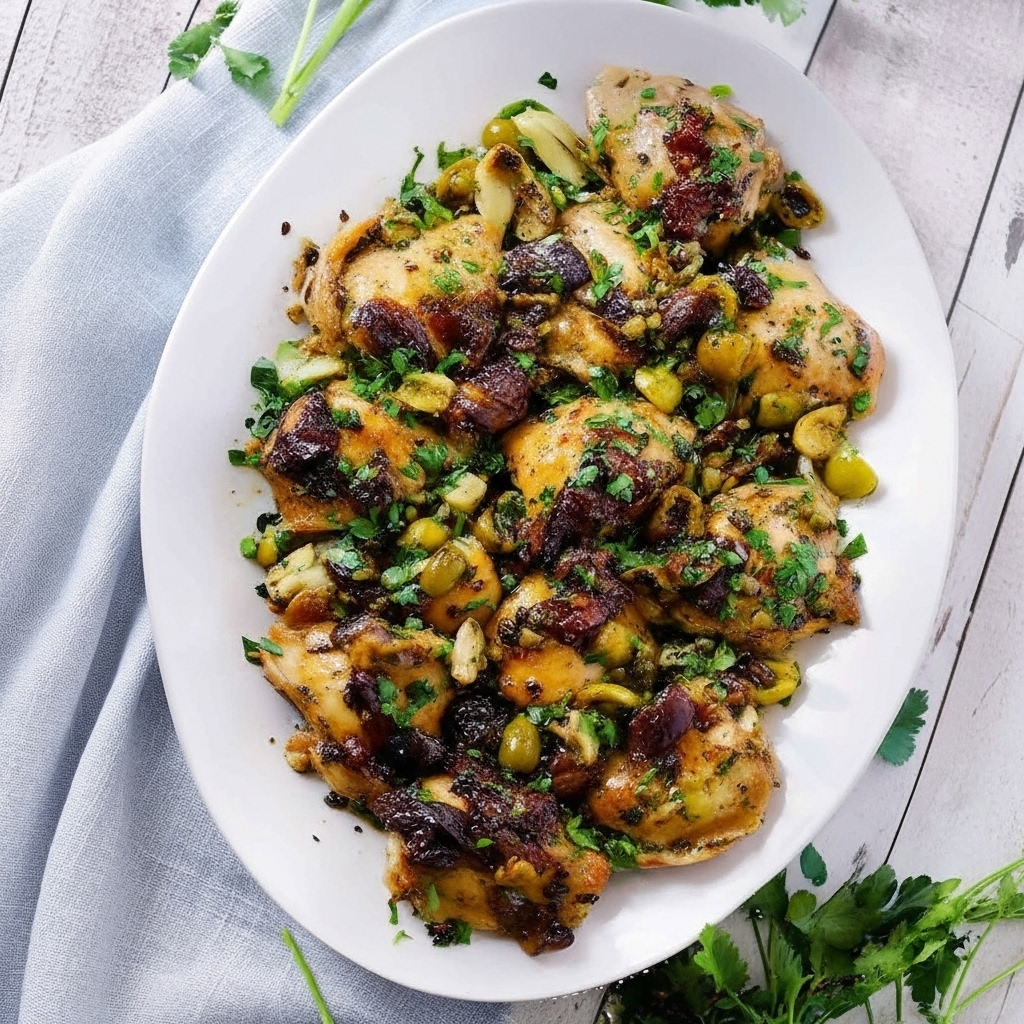
There are Christmas dinner mains that demand your attention all day, and then there is chicken marbella, which does most of its work while you sleep. Ina Garten Chicken Marbella is a Mediterranean-inspired dish of chicken marinated overnight with prunes, green olives, capers, garlic and red wine vinegar, then baked until golden and juicy. It tastes like something from a restaurant, it costs very little effort, and it is exactly the kind of main course that makes a Christmas table feel special without keeping the cook in the kitchen.
Chicken marbella is one of those recipes that sounds unusual on paper and makes perfect sense on the plate. Sweet prunes, salty olives, briny capers and a sharp splash of vinegar come together in a marinade that turns ordinary chicken into something rich, savoury and deeply flavoured. The recipe takes 15 minutes of prep and 50 minutes in the oven, it serves 6 people, and the overnight marinade means the hard work is done the day before. This guide walks you through the full recipe exactly as it appears on Recipes Walay, with every ingredient, every step, expert tips, variations, serving ideas and answers to the questions people actually ask before they make it.
The full recipe is on Recipes Walay at https://recipeswalay.com/ina-garten-chicken-marbella-recipe/
Why You Will Love Ina Garten Chicken Marbella
Some recipes earn their place through speed, and some through flavour. This one manages both, which is why it is such a useful dish to have in your collection. It takes just 15 minutes of hands-on prep, the oven does the rest in 50 minutes, and it feeds 6 people generously, so it is easy to fit into a busy Christmas schedule or a relaxed family dinner.
First, the flavour is unlike anything else on a holiday table. Sweet prunes melt into the sauce as the chicken bakes, green olives and capers bring a salty, briny edge, and red wine vinegar keeps the whole dish bright instead of heavy. Brown sugar rounds everything out, dried oregano adds a warm herbal note, and the chicken itself stays juicy because the marinade works on it overnight. It is the kind of flavour combination that makes guests ask for the recipe before they have finished eating.
Second, the method is almost embarrassingly easy. There is no searing, no fussy technique and no last-minute juggling. You mix the marinade, pour it over the chicken, cover the dish and put it in the fridge. The next day you slide it into the oven, baste it once, and take it out. That is the whole recipe. For a Christmas dinner, where the oven is already busy and the cook is already stretched, a main course that asks for so little is worth its weight in gold.
Third, it is a genuine make-ahead dish. The overnight marinade is not an optional extra, it is the heart of the recipe, and it means the dish is fully prepared a day before you need it. On Christmas Day itself you only have to bake it, which frees up the morning for everything else. And because it serves 6 from a single chicken, it scales easily: make two dishes and you have fed a crowd.
What Is Chicken Marbella?
Chicken marbella is a Mediterranean-style baked chicken dish built around a sweet-and-savoury marinade. The chicken is coated in olive oil, red wine vinegar, garlic, dried oregano, brown sugar, prunes, green olives and capers, then left to marinate overnight so the flavours sink deep into the meat. The next day the whole dish goes into the oven, where the chicken roasts in its own marinade until golden, and the prunes soften into the pan juices to make a rich, glossy sauce.
The dish is famous for the way it balances opposites. The prunes bring sweetness, the olives and capers bring salt and brine, the vinegar brings sharpness, and the brown sugar ties it all together. None of these flavours dominates. Instead they melt into each other during the long marinade and the slow bake, and the result is a sauce that is sweet, salty, tangy and savoury all at once. It is a combination that sounds surprising the first time you hear it and obvious the first time you taste it.
Ina Garten’s version follows this classic pattern with her usual calm confidence. There are no complicated steps and no hard-to-find ingredients, just good ingredients treated properly: bone-in chicken for juiciness, plenty of garlic, and a marinade that does the work overnight. The recipe is Mediterranean in cuisine, a main course by definition, and it has become a favourite for special gatherings precisely because it feels elegant while asking so little of the cook. The olives, capers and prunes are not decoration here, they are the dish, and that is what makes it stand out from every other roast chicken on the Christmas table.
It is worth saying plainly what chicken marbella is not. It is not a stew, because the chicken bakes uncovered and browns. It is not a quick weeknight chicken, because the overnight marinade is essential to the flavour. And it is not a dish you can rush: the time in the fridge is doing real work, softening the chicken and letting the sweet and salty flavours blend. Give it that time, and the dish rewards you.
Ingredients You Need for Ina Garten Chicken Marbella (with Quantities)
One of the best things about this recipe is how short the shopping list is. Twelve ingredients, all easy to find, and every one of them earns its place. Here is the full list, with the exact quantities from the recipe on Recipes Walay:
- 1 whole chicken, cut into pieces
- 6 cloves garlic, minced
- 1/2 cup pitted prunes
- 1/2 cup green olives
- 1/4 cup capers with juice
- 1/4 cup red wine vinegar
- 1/2 cup olive oil
- 1/4 cup brown sugar
- 2 tablespoons dried oregano
- 1 teaspoon salt
- 1 teaspoon black pepper
- 2 bay leaves
A few notes on the ingredients will help you get the best result. First, use a whole chicken cut into pieces, and keep the bone in. The recipe is written for bone-in chicken, and the bone is doing real work here: it keeps the meat juicy through a 50-minute bake and adds flavour to the pan juices. Boneless chicken cooks faster and dries out more easily, so if you do use it, watch the timing closely.
Second, use pitted prunes and do not be tempted to leave them out. The prunes are the sweet heart of this dish, and they soften in the oven until they almost melt into the sauce. They are what make chicken marbella different from any other roast chicken, and without them the dish loses the sweet half of its sweet-and-savoury balance. Buy them pitted, or pit them yourself before they go into the bowl.
Third, use the juice from the capers, not just the capers themselves. The recipe lists a quarter cup of capers with juice, and that juice is part of the marinade, not an accident. It adds a briny, salty depth that plain capers alone cannot give, and the recipe is clear that you should not skip it. The same applies to the green olives: their brine adds to the marinade, so do not rinse them.
Finally, use a good olive oil and a proper red wine vinegar. These two liquids make up most of the marinade, so their quality shows in the finished dish. You do not need an expensive bottle of either, but use an olive oil you would happily taste on its own, and a red wine vinegar that smells bright rather than harsh. Dried oregano is the right choice here rather than fresh, because it stands up to the overnight marinade and the long bake without turning bitter.
Equipment You Need
You do not need any special equipment for this recipe, and that is part of its charm. Everything on this list is standard kitchen equipment:
- Large mixing bowl
- Measuring cups and spoons
- Sharp knife
- Cutting board
- Baking dish
- Aluminum foil
- Tongs
- Oven
The large mixing bowl matters more than it might seem, because the marinade has to coat every piece of chicken evenly, and a bowl that is too small makes that hard. The baking dish should be large enough to hold the chicken in a single layer with the marinade poured over it, so the pieces brown properly instead of steaming on top of each other. The aluminum foil is there to cover the bowl while the chicken marinates overnight in the fridge. The tongs are useful for turning and arranging the chicken without piercing the meat, which keeps the juices inside. And the sharp knife and cutting board are for cutting the whole chicken into pieces, if it does not already come cut.
How to Make Ina Garten Chicken Marbella Step by Step
The recipe card gives a total time of 1 hour and 5 minutes: 15 minutes of prep and 50 minutes of cooking. That total does not include the overnight marinade, which is a separate step the day before. The steps below follow the recipe on Recipes Walay exactly, broken into twelve clear stages so you can follow them one at a time without losing your place.
1. Place the Chicken Pieces in a Large Bowl
Start with 1 whole chicken, cut into pieces, and place the pieces in a large mixing bowl. If your chicken is not already cut up, use a sharp knife and a cutting board to cut it into pieces first. The bowl needs to be large enough for the chicken to sit comfortably with room to mix, because every piece has to be coated in the marinade. Bone-in pieces are what the recipe calls for, and they are the best choice for a long bake.
2. Add the Garlic, Prunes, Olives and Capers
Add 6 cloves of minced garlic, half a cup of pitted prunes, half a cup of green olives and a quarter cup of capers with their juice to the bowl. Scatter them over the chicken rather than dumping them in one spot, so they distribute evenly when you mix. The garlic should be finely minced so it coats the chicken rather than sitting in chunks, and the caper juice goes in with the capers, because it is part of the marinade.
3. Pour in the Red Wine Vinegar and Olive Oil
Pour a quarter cup of red wine vinegar and half a cup of olive oil evenly over the chicken. Pour slowly and move the jug around the bowl so the liquids reach every piece. The oil and vinegar are the base of the marinade: the oil carries the flavours and keeps the chicken moist, while the vinegar brightens everything and helps tenderise the meat during the long overnight rest.
4. Sprinkle Over the Brown Sugar, Oregano, Salt and Pepper
Sprinkle a quarter cup of brown sugar, 2 tablespoons of dried oregano, 1 teaspoon of salt and 1 teaspoon of black pepper over the chicken. Try to spread the seasonings evenly rather than letting them land in one pile. The brown sugar is what balances the vinegar and the olives, so it matters that it reaches all the pieces, and the oregano should be crumbled between your fingers as you sprinkle it, which wakes up its flavour.
5. Add the Bay Leaves and Mix Everything Well
Add 2 bay leaves to the bowl and mix everything together well. Use your hands or tongs to turn the chicken pieces over in the marinade, making sure every piece is coated on all sides and the prunes, olives and capers are tucked in around the meat rather than sitting on top. Take a moment over this step: the marinade can only do its work where it touches the chicken, so a thorough mix now is what makes the flavour even later.
6. Cover and Marinate Overnight in the Refrigerator
Cover the bowl tightly with aluminum foil, or transfer the chicken and marinade to a covered container, and put it in the refrigerator to marinate overnight. This is the most important step in the whole recipe, and it is not optional. Overnight in the fridge, the vinegar and salt gently tenderise the chicken, the garlic and oregano sink into the meat, and the sweet prunes and salty olives begin to share their flavours with each other. A few hours is not enough: the recipe is written for an overnight marinade, and that is what gives the dish its depth.
7. Preheat the Oven to 350°F
The next day, preheat your oven to 350 degrees Fahrenheit. Take the chicken out of the fridge while the oven heats, so it loses a little of the fridge chill before it goes in. Do not skip the preheating: the chicken should go into a properly hot oven so it starts browning straight away, rather than warming up slowly in a cold oven.
8. Arrange the Chicken and Marinade in the Baking Dish
Arrange the chicken pieces in a baking dish, in a single layer, and pour all of the marinade over the top, including the prunes, olives, capers and bay leaves. Do not throw any of the marinade away: it is the sauce, and it is what the chicken bakes in. Spread the prunes and olives around the pieces so they roast alongside the chicken, and make sure the skin side of the pieces is facing up where you can see it.
9. Bake Uncovered for 50 Minutes
Bake the chicken uncovered for 50 minutes. Baking uncovered matters, because it is what lets the skin turn golden and the sauce reduce and thicken in the heat of the oven. If you covered the dish, the chicken would steam instead of roast, and you would lose the golden colour and the concentrated flavour. Let the oven do its work, and resist opening the door more than you need to, because every opening drops the temperature.
10. Baste Once During Cooking
Baste the chicken once during cooking, spooning the pan juices over the pieces. Do this about halfway through the bake, when the chicken is starting to colour. One good basting is enough: it keeps the tops of the pieces moist, it carries the sweet and salty flavours of the sauce back over the skin, and it helps the chicken brown evenly. More than once is unnecessary, and opening the oven too often will slow the cooking.
11. Check the Chicken Is Golden and Cooked Through
Towards the end of the 50 minutes, check that the chicken is golden on top and cooked through. The skin should be nicely browned, the prunes should be soft and glossy, and the pan juices should be bubbling and slightly thickened. The chicken should be cooked right through to the bone, with no pink meat near the bone and clear juices when pierced. If the pieces are very large, give them a few extra minutes, but do not overcook them, or the meat will dry out.
12. Rest Briefly, Then Serve Hot with the Pan Juices
Take the dish out of the oven and let the chicken rest briefly before serving, so the juices settle back into the meat. Then serve it hot, with the pan juices spooned generously over each piece. The pan juices are the sauce, and they are too good to leave in the dish: the prunes, olives and capers have cooked down into them, and they are sweet, salty and rich. Spoon them over the chicken and over whatever you serve alongside it.
Expert Tips for Perfect Chicken Marbella
The recipe itself is simple, but a few habits make the difference between good chicken marbella and great chicken marbella. These tips come directly from the recipe on Recipes Walay, and they are worth reading before you start cooking, not after.
Marinate overnight for deeper flavour. This is the single most important tip in the recipe, and it is repeated in both the method and the tips section for a reason. The overnight marinade is what turns a good chicken dish into chicken marbella. If you are tempted to cut it short, remember that the flavours need time to travel into the meat, and the prunes need time to soften and share their sweetness. Start the dish the day before you plan to serve it, and the recipe will take care of itself.
Use bone-in chicken for juiciness. Bone-in pieces stay moist through a 50-minute bake, and the bone adds flavour to the pan juices as they cook. Boneless chicken cooks faster and dries out more easily, so it is a poor swap for this recipe. If you do use boneless pieces, reduce the cooking time and check them early, but bone-in is the right choice.
Do not skip the caper juice. The recipe is explicit about this, and it is easy to see why: the juice is part of the marinade, not packaging. It brings a briny, salty depth that the capers alone cannot provide, and it works with the vinegar to keep the dish bright. Pour the capers in with their juice, and do not rinse them first.
Baste once for even browning. One good basting, about halfway through the bake, is enough. It keeps the tops of the pieces moist, carries the sauce over the skin, and helps the chicken brown evenly. Basting more often means opening the oven more often, which drops the temperature and slows the cooking, so once is the right number.
Let the chicken rest before serving. A brief rest after the chicken comes out of the oven lets the juices settle back into the meat instead of running out onto the plate the moment you cut into it. It also gives you a few minutes to finish the side dishes and get everything to the table while the chicken is still hot.
Variations to Try
Once you have made the classic version, this recipe is easy to adapt, and the variations below all stay true to the ingredients and method of the original. They are simple swaps that fit the same overnight marinade and the same bake.
Swap the prunes for dried apricots or dates. If prunes are not to your taste, dried apricots or pitted dates play the same role in the marinade: a sweet dried fruit that softens in the oven and melts into the sauce. Apricots give a slightly sharper, brighter sweetness, while dates give a deeper, more caramel-like sweetness. Use the same quantity, half a cup, and everything else stays the same.
Use Kalamata olives instead of green olives. Green olives are the classic choice, but Kalamata olives give a richer, fruitier flavour and a darker colour in the finished dish. They are a little softer than green olives, so they blend into the sauce more, which some people prefer. Keep the quantity the same, half a cup.
Add a splash of white wine to the marinade. Some versions of chicken marbella include white wine alongside the vinegar, and it adds a gentle acidity and a little extra depth to the sauce. If you try this, add about half a cup of dry white wine to the marinade and reduce the olive oil slightly, so the total liquid stays roughly the same. It is an optional extra, not part of the original recipe, but it fits the method perfectly.
Make it a little spicy. A pinch of red pepper flakes stirred into the marinade gives the dish a gentle warmth that works well against the sweetness of the prunes. Start with a quarter of a teaspoon and add more to taste. The heat should be a background note, not the main event, so keep it light.
Double the sauce for serving over rice. If you love the pan juices as much as most people do, you can double the liquid part of the marinade, the vinegar and the olive oil, and add a few extra prunes and olives, so there is plenty of sauce to spoon over rice or couscous. The chicken itself stays the same, but the table gets a much more generous sauce.
Use boneless thighs for a quicker weeknight version. Bone-in pieces are the right choice for the full recipe, but if you want a faster version for a weeknight, boneless chicken thighs will cook in less time and stay reasonably juicy. Check them after about 35 minutes, because they will be done sooner than bone-in pieces, and keep the overnight marinade, because that is where the flavour comes from.
What to Serve with Chicken Marbella
Chicken marbella is a rich, saucy main course, and the recipe on Recipes Walay suggests several pairings that show just how many kinds of meals it fits into. The sauce is the key: whatever you serve alongside it should be able to soak it up.
For the classic pairing, serve it with steamed rice. Plain steamed rice absorbs the rich pan juices beautifully, and each spoonful of rice with a little of the sweet and salty sauce is exactly the combination this dish was made for. Rice is also the most practical choice for a crowd, because it is easy to cook in a large batch and it keeps the meal simple.
For something lighter, serve it with roasted vegetables. Roasted vegetables add colour and texture to the plate, and their caramelised edges pair perfectly with the bold Mediterranean flavours of the chicken. Carrots, courgettes, peppers or aubergines all work well, roasted in the same oven while the chicken bakes, which saves time and effort.
For a lighter grain, serve it with couscous or quinoa. These grains feel light and fluffy next to the richness of the chicken, and they complement the bold Mediterranean notes without competing with them. Couscous is the quicker of the two, needing only a few minutes in hot water, while quinoa takes a little longer but adds a gentle nuttiness.
At a Christmas table, this dish sits happily next to the rest of the holiday spread. Good companions from Recipes Walay include Gordon Ramsay’s steak pie at https://recipeswalay.com/easy-gordon-ramsay-steak-pie-for-christmas-dinner/ for a second show-stopping main, Ina Garten’s beef bourguignon at https://recipeswalay.com/easy-ina-garten-beef-bourguignon-for-winter-nights/ for a rich winter alternative, and Martha Stewart’s roast turkey at https://recipeswalay.com/easy-martha-stewart-roast-turkey-for-thanksgiving/ if you are serving more than one main. For sides, classic mashed potatoes at https://recipeswalay.com/easy-mashed-potatoes-for-thanksgiving/ soak up the sauce beautifully, Paula Deen’s green bean casserole at https://recipeswalay.com/easy-paula-deen-green-bean-casserole-for-thanksgiving/ adds a fresh green contrast, and Grandma’s Thanksgiving stuffing at https://recipeswalay.com/easy-grandmas-thanksgiving-stuffing-for-the-holiday-table/ rounds out the plate. Thanksgiving prime rib at https://recipeswalay.com/easy-thanksgiving-prime-rib-for-the-holidays/ is another strong main for a big table, Christmas cranberry meatballs at https://recipeswalay.com/easy-christmas-cranberry-meatballs-for-the-holidays/ make a lovely starter, and Joanna Gaines’ creamy mac and cheese at https://recipeswalay.com/easy-joanna-gaines-creamy-mac-and-cheese-for-the-holidays/ is always welcome next to a rich main.
Make-Ahead and Storage
One of the practical strengths of this dish is that it is a make-ahead recipe by design. The overnight marinade is not an optional extra, it is the recipe, and it means the dish is fully assembled a day before you need it. That is the whole point of chicken marbella for a Christmas dinner: you do the work on Christmas Eve, and on Christmas Day you only have to bake it.
Assemble the chicken and marinade the day before, cover it tightly, and keep it in the refrigerator overnight. The next day, take it out while the oven preheats and bake it as directed. If you need to assemble it even earlier, the chicken can sit in the marinade for up to a full day, but overnight is the timing the recipe is written for, and it gives the best result.
It is worth saying plainly that the recipe on Recipes Walay does not give leftover storage times for this dish. The recipe card covers the marinade, the bake and the serving, and it does not say how long leftovers keep or whether they freeze well. As general food-safety practice, cooked chicken should be refrigerated promptly in a covered container and eaten within a few days, and reheated gently until it is hot all the way through, but those are general guidelines, not instructions from the recipe itself. If you are cooking for a crowd, it is better to make the right quantity and enjoy it fresh than to rely on leftovers.
For a Christmas dinner, the best plan is simple: marinate on Christmas Eve, bake on Christmas Day, and serve it hot from the oven with the pan juices. That takes the pressure off the day itself and still gives you a main course that tastes like you spent hours on it.
Nutrition and Calories
The recipe gives a clear headline number and is honest about what this dish is: rich, flavourful comfort food, best enjoyed as part of a balanced plate rather than on its own. Each serving contains 420 calories, and the recipe serves 6 people.
It is worth saying plainly that the recipe on Recipes Walay does not give a fuller nutrition breakdown for this dish. There is no fat, protein, carbohydrate or sodium figure on the recipe card, only the 420 calories per serving, so this guide does not invent one. What the ingredients tell you is straightforward: half a cup of olive oil across 6 servings, a quarter cup of brown sugar, and the natural fat of a whole chicken with the skin on. The prunes add natural sweetness and fibre, the olives and capers add salt, and the chicken itself provides the protein. It is a generous, satisfying main course, and it sits best on a plate with lighter sides, such as roasted vegetables or a simple salad, to balance the richness.
If you want a lighter version, you can remove the skin from the chicken before marinating, which reduces the fat, but the recipe as written uses the skin, and the skin is part of what keeps the meat juicy and gives the dish its golden finish. For a Christmas dinner, the classic version is the right choice, and the rest of the plate can carry the lighter dishes.
Occasions to Serve Chicken Marbella
This is a dish that fits more occasions than most main courses, and the recipe on Recipes Walay shows its range. For Christmas dinner, it is a natural fit: it is elegant enough for the occasion, it feeds 6 from a single chicken, and the overnight marinade means the cook is free on the day itself. It is one of the few Christmas mains that actually gets easier when you are cooking for a crowd, because the marinade and the bake scale without any extra effort.
For a dinner party, it is a reliable crowd-pleaser. The sweet and salty flavours feel sophisticated without being fussy, the dish looks beautiful in its baking dish with the glossy prunes and olives on top, and it is the kind of main course that gets people talking. Serve it family-style, in the dish it baked in, and let people help themselves to the pan juices.
For a holiday potluck or a festive gathering, it travels well and holds its heat, because it is a baked dish in a single container. Make it the day before, bake it at home, and carry it in the dish. It is also a good choice for a winter weekend dinner, when you want something special without spending the whole day in the kitchen: start it on Saturday evening, bake it on Sunday, and you have a proper family dinner with very little work.
And of course, for Thanksgiving, it is a worthy alternative to turkey. Not everyone wants turkey every year, and chicken marbella gives a table a completely different centrepiece, one that is quicker to cook, easier to serve, and full of flavour. Thanksgiving is ten days away as this guide is published, and the holiday table is exactly where a make-ahead main course earns its place.
FAQs about Ina Garten Chicken Marbella
1. Do I really need to marinate the chicken overnight?
Yes. The overnight marinade is the heart of this recipe, not an optional extra. The vinegar and salt need time to tenderise the chicken, the garlic and oregano need time to sink into the meat, and the prunes and olives need time to share their flavours with each other. A few hours will give you some flavour, but it will not give you chicken marbella. Start the dish the day before you plan to serve it, and let the fridge do the work.
2. Should I use bone-in chicken?
Yes, bone-in chicken is what the recipe calls for, and it is the right choice for a 50-minute bake. The bone keeps the meat juicy, it adds flavour to the pan juices, and it helps the chicken cook evenly. Boneless chicken cooks faster and dries out more easily, so if you do use it, check it early and expect a shorter cooking time. For the full recipe, bone-in pieces are the way to go.
3. What do the prunes do, and can I leave them out?
The prunes are the sweet heart of the dish, and they are what make chicken marbella different from any other roast chicken. As the chicken bakes, the prunes soften and almost melt into the pan juices, giving the sauce its sweetness and its glossy richness. Leaving them out would remove the sweet half of the dish’s sweet-and-savoury balance, and the result would be a much plainer chicken. If prunes are not to your taste, dried apricots or dates are a better swap than leaving the fruit out altogether.
4. Why is the caper juice important?
The recipe lists a quarter cup of capers with juice, and that juice is part of the marinade. It adds a briny, salty depth that the capers alone cannot give, and it works with the red wine vinegar to keep the dish bright. The recipe is clear that you should not skip it, and you should not rinse the capers first. Pour them in with their juice, and let the brine do its work.
5. Can I use chicken breasts instead of a whole cut-up chicken?
The recipe is written for a whole chicken cut into pieces, and that mix of dark and white meat is part of what makes it work: the darker pieces stay juicy through the long bake, while the breast pieces cook through in the same time. If you use only chicken breasts, they will cook faster and can dry out, so check them early and take them out when they are done. For the best result, use the whole chicken as the recipe intends.
6. What should I serve with chicken marbella?
The recipe on Recipes Walay suggests steamed rice, roasted vegetables, or couscous and quinoa. Steamed rice is the classic choice, because it absorbs the rich pan juices so well. Roasted vegetables add colour and caramelised flavour, and couscous or quinoa give a lighter, fluffier grain. At a Christmas table, mashed potatoes and green bean casserole also work well alongside it, because they soak up the sauce and add a fresh contrast.
Final Thoughts
Ina Garten Chicken Marbella is a true holiday treasure, and this guide has walked through the full recipe exactly as it appears on Recipes Walay: 12 ingredients, 15 minutes of prep, 50 minutes in the oven, an overnight marinade, and 6 generous servings of sweet, salty, golden chicken. The technique is simple, the ingredients are easy to find, and the result is a main course that works at a Christmas dinner, a dinner party, a holiday potluck, or an ordinary winter weekend.
The habits that make it work are worth remembering: marinate overnight, use bone-in chicken, do not skip the caper juice, baste once, and let the chicken rest briefly before serving. Get those right, and you will have chicken that is juicy, golden and full of flavour, every single time. Whether it is for Christmas Day or a simple family dinner, this dish never disappoints, and your family will love it as much as the recipe promises. Happy cooking!