

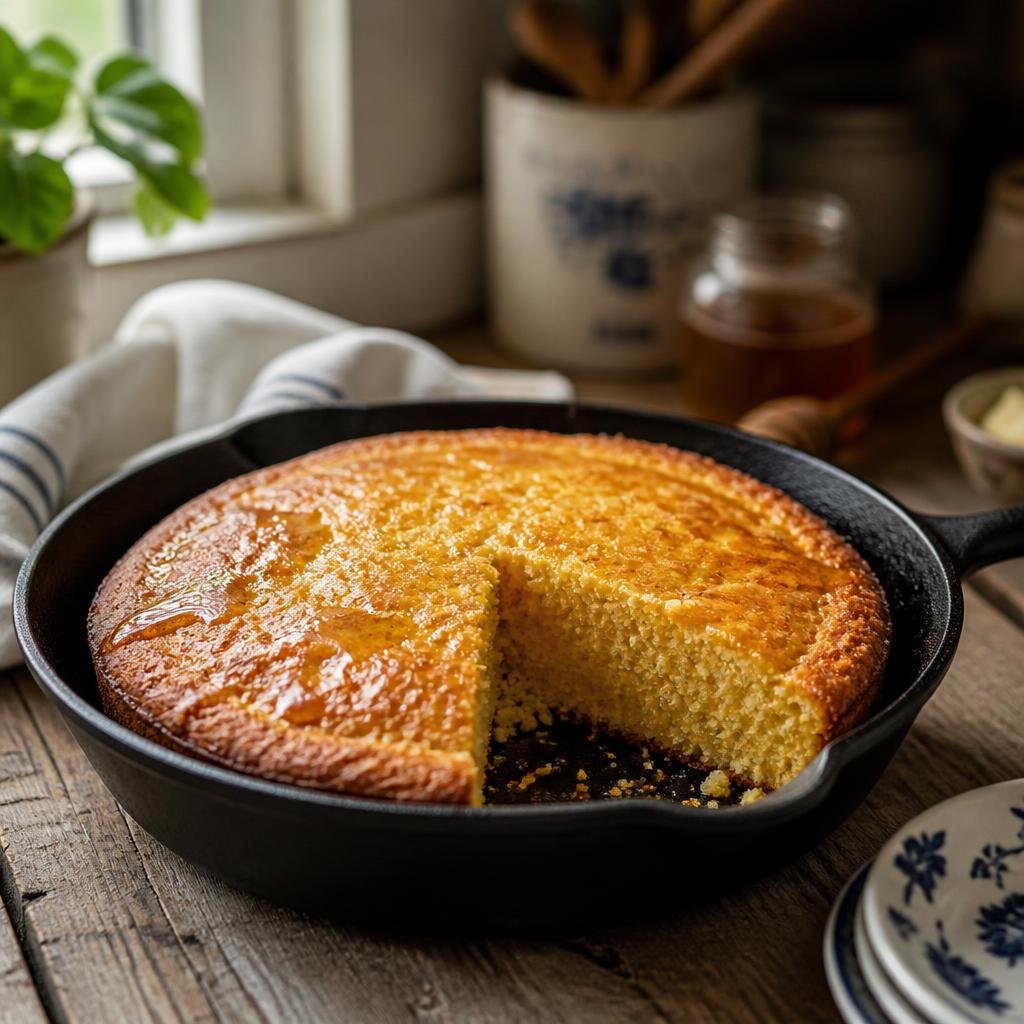
There is a particular kind of comfort that only a pan of warm cornbread can deliver. The edges are crisp and golden, the middle is soft and tender, and when you cut into it the steam rises with the smell of butter and toasted cornmeal. This Joanna Gaines Cornbread is that kind of cooking: simple, warm and deeply satisfying. It takes just 35 minutes from start to finish, it serves 12 people, and it turns 8 simple ingredients into a classic Southern side dish that tastes like it came from a proper family kitchen, made entirely at home.
Cornbread is one of the great traditional American dishes, and Joanna Gaines’ version, from the Magnolia Table cookbook, keeps it straightforward and approachable. It is sweet, buttery, and has a perfect golden crust, and it is simple enough for a busy weeknight yet delicious enough for a holiday feast. There is no fussy technique here, just good habits done well: whisk the dry ingredients, whisk the wet ingredients separately, combine them gently without overmixing, and bake until golden. The result is bread that is slightly sweet, very soft, and loved by children and adults alike. Whether you are planning a Thanksgiving dinner side dish, a holiday gathering, or a simple weeknight meal, this guide walks you through the full recipe exactly as it appears on Recipes Walay, with every ingredient, every step, expert tips, variations, serving ideas, storage guidance and answers to the questions people actually ask before they make it.
The full recipe is on Recipes Walay at https://recipeswalay.com/joanna-gaines-cornbread-recipe/
Why You Will Love Joanna Gaines Cornbread
Some recipes earn their place on the table through speed, and some through flavour. This one manages both, which is why it is such a useful dish to have in your collection. It takes 35 minutes in total, with only 10 minutes of prep and 20 to 25 minutes of baking, and it feeds 9 to 12 people, so it is easy to fit into a busy holiday schedule or a relaxed family dinner.
First, it is genuinely impressive with very little work. The total time is 35 minutes, and most of that is hands-off baking: 10 minutes of prep, and then the oven does the rest while you get on with the rest of the meal. That rhythm makes it perfect for entertaining, because the cook is free when the guests arrive, and the bread comes out of the oven warm just as everyone sits down.
Second, the flavour is exactly what people expect from good Southern cornbread, and the balance is the reason it works so well. Many people argue about sugar in cornbread, and Joanna finds the perfect middle ground: half a cup of sugar gives it a gentle sweetness that children love, while the cornmeal gives it a rustic texture and the butter adds a rich, savoury depth. It is sweet enough to enjoy with honey and butter, and savoury enough to sit next to chilli, roast chicken or barbecue ribs.
Third, the technique is forgiving and the ingredients are familiar. Flour, yellow cornmeal, sugar, baking powder, salt, milk, butter and one egg are all easy to find, and the recipe explains each step clearly, so even a first-time baker can make it with confidence. If you have ever wanted to make proper cornbread at home, this is the one to start with, and it is the kind of recipe that becomes a go-to side dish after the first time you make it.
What Is Cornbread?
Cornbread is a traditional American quick bread made with cornmeal, and its name says exactly what it is: bread made from corn. At its heart it is a simple batter of flour, cornmeal, sugar, baking powder, salt, milk, butter and egg, mixed gently, poured into a pan and baked until golden. It rises with baking powder rather than yeast, which is why it is called a quick bread, and it is ready in about half an hour from the moment you start.
Joanna Gaines’ version follows that classic pattern closely, and it comes from her Magnolia Table cookbook, which is where its balance of flavours comes from. The cornmeal gives the bread its rustic texture and its gentle corn flavour, the butter adds richness, and the sugar gives it the slight sweetness that sets Southern-style cornbread apart from plainer versions. The real trick, according to the recipe, is the baking dish: a heavy cast-iron skillet creates a crispy edge that is hard to beat, although an 8-inch or 9-inch square baking pan works just as well. The other secret is not to overmix the batter. Small lumps are okay, and they keep the bread light and airy instead of tough, because overmixing develops gluten and makes the cornbread tough and chewy.
Cornbread is a staple in many Southern homes, and it represents simple living and shared meals. It is the bread that goes with chilli, beans, barbecue and roast chicken, the bread that soaks up sauces and gravies, and the bread that turns a simple bowl of soup into a proper meal. It is also a natural Thanksgiving side dish, because it is quick to make, it feeds a crowd, and it sits happily on a holiday table next to turkey, stuffing and cranberry sauce.
Ingredients You Need for Joanna Gaines Cornbread (with Quantities)
One of the best things about this recipe is how short the shopping list is. Eight ingredients, all easy to find, and every one of them earns its place. Here is the full list, with the exact quantities from the recipe on Recipes Walay:
- 1 cup all-purpose flour
- 1 cup yellow cornmeal
- 1/2 cup granulated sugar
- 1 tablespoon baking powder
- 1/2 teaspoon salt
- 1 cup whole milk
- 1/2 cup unsalted butter (melted and cooled)
- 1 large egg (room temperature)
A few notes on the ingredients will help you get the best result. First, use yellow cornmeal, which is traditional for this recipe. White cornmeal works just as well, and the main difference is the colour and a slightly milder flavour. Avoid using corn flour, because it is too fine and will change the texture of the bread completely. The coarse texture of cornmeal is what gives cornbread its characteristic crumb.
Second, let the butter cool after you melt it, and use an egg at room temperature. The recipe is specific on both points, and they matter: butter that is too hot can cook the egg when the two meet, and a cold egg does not blend as smoothly into the batter. Melt the butter first, set it aside to cool while you measure the dry ingredients, and take the egg out of the fridge at the same time so it warms up.
Third, use whole milk rather than skimmed milk. The fat in whole milk helps keep the bread moist and tender, and it is part of what gives the finished cornbread its soft, rich crumb. If you want a tangier version, you can use buttermilk instead of regular milk, which adds a nice tang and extra moisture. And use unsalted butter, so that you control the salt: the recipe already includes half a teaspoon of salt, and unsalted butter keeps the seasoning exactly where the recipe intends it.
Equipment You Need
You do not need any special equipment for this recipe, and that is part of its charm. Everything on this list is standard kitchen equipment:
- Large mixing bowl
- Medium mixing bowl
- Whisk or wooden spoon
- 8-inch or 9-inch square baking pan (or cast-iron skillet)
- Measuring cups and spoons
- Wire cooling rack
The two bowls matter more than they might seem. Keeping the dry ingredients and the wet ingredients separate until the last moment is what lets you combine them gently, without overmixing, and that gentle mixing is the difference between tender cornbread and tough cornbread. The cast-iron skillet is the recipe’s preferred pan, because a heavy skillet holds heat and creates a crispy edge that is hard to beat, but a square baking pan works well too. The wire cooling rack is there so the bread can cool evenly once it comes out of the oven, and so the bottom does not go soggy sitting in the hot pan.
How to Make Joanna Gaines Cornbread Step by Step
The recipe gives a total time of 35 minutes: 10 minutes of prep and 20 to 25 minutes of cooking. The recipe card lists 12 servings and a cook time of 25 minutes, while the article overview gives 9 to 12 servings and a cook time of 20 to 25 minutes. The steps below follow the recipe on Recipes Walay exactly, broken into twelve clear stages so you can follow them one at a time without losing your place.
1. Preheat the Oven to 400°F (200°C)
First, turn your oven to 400 degrees Fahrenheit (200 degrees Celsius) and let it get nice and hot while you prep. A hot oven ensures a good rise for the bread, because the baking powder starts working the moment the batter hits the heat, and a properly preheated oven gives the cornbread its lift and its golden crust. Do not put the batter into a cold oven and hope for the best: the rise will be flat and the crust will be pale.
2. Grease the Baking Pan
Grease your baking pan with butter or non-stick spray before the batter is ready. Use an 8-inch or 9-inch square baking pan, or a cast-iron skillet if you have one. The skillet is the recipe’s preferred pan, because a heavy cast-iron skillet creates a crispy edge that is hard to beat, and it holds heat so well that the bottom of the bread crisps beautifully. Whichever pan you use, grease it well so the bread releases cleanly when it is time to slice it.
3. Whisk the Dry Ingredients Together
In a large bowl, whisk the flour, cornmeal, sugar and baking powder together. Add the salt and stir well. Make sure there are no large clumps of flour, because clumps in the dry mixture become pockets of flour in the finished bread. Whisking the dry ingredients first also spreads the baking powder evenly through the batter, which is what gives the bread an even rise instead of a lopsided one. This takes less than a minute, and it is worth doing properly.
4. Whisk the Milk and Egg Together
In a separate medium bowl, whisk the milk and the egg together until they are fully combined. Keeping the wet ingredients in their own bowl, separate from the dry ingredients, is what lets you combine the two mixtures gently at the next stage, without overworking the batter. Use an egg at room temperature, because a cold egg does not blend as smoothly, and whole milk, because its fat helps keep the bread moist and tender.
5. Slowly Add the Melted Butter
Slowly pour the melted butter into the milk and egg mixture while whisking. Make sure the butter is not too hot, because you do not want to cook the egg. Melt the butter first and set it aside to cool while you measure the dry ingredients, and by the time you need it, it will be warm rather than hot. Pour it in a thin stream, whisking all the time, so it blends smoothly into the milk and egg instead of sitting on top in a separate layer.
6. Make a Well in the Dry Ingredients
Make a small hole in the centre of the dry ingredients, like a well. This old-fashioned technique gives the wet mixture somewhere to go, so that when you pour it in, it spreads outward through the dry ingredients evenly instead of pooling on one side. It is a small step, but it helps the batter come together evenly with less stirring, and less stirring is exactly what tender cornbread needs.
7. Pour the Wet Mixture into the Dry Bowl
Pour the milk, egg and butter mixture into the well in the dry ingredients. Pour it in steadily, and let it settle into the centre of the dry mixture before you start stirring. The batter will look thick at this stage, and that is normal: cornbread batter is thicker than cake batter, and it should hold its shape when you spoon it.
8. Stir Gently Until Just Combined
Stir gently until just combined, and stop mixing as soon as the flour disappears. This is the most important instruction in the whole recipe. Do not overmix the batter, because overmixing develops gluten and makes the cornbread tough and chewy instead of tender. Small lumps are okay, and they keep the bread light and airy. Stir with a wooden spoon or a whisk, use as few strokes as you can, and put the spoon down the moment you can no longer see dry flour.
9. Pour the Batter into the Pan
Transfer the thick batter into your prepared baking pan. Use a spatula to spread it evenly to the corners, and smooth the top so it bakes flat. An even layer means even baking, so take a moment to push the batter into the corners and level the surface. The batter should look thick and golden, and it should fill the pan in a level layer about an inch deep.
10. Bake for 20 to 25 Minutes Until Golden
Place the pan on the centre rack of the oven and bake for 20 to 25 minutes. The edges should pull away from the sides of the pan, and the top should look light golden brown. The recipe card lists a cook time of 25 minutes, which sits at the top of the range, so start checking at 20 minutes and give it the extra few minutes only if the top is still pale. A golden top and edges pulling away from the pan are the signs that the bread is done.
11. Test with a Toothpick
Insert a toothpick into the centre of the cornbread. If it comes out clean, the bread is done. If it has wet batter on it, bake for 3 more minutes and test again. Do not overbake it, because overbaking is the main reason cornbread turns dry. The toothpick test is more reliable than the clock, because ovens vary, and three extra minutes is enough to finish the centre without drying out the edges.
12. Cool for 10 Minutes, Slice and Serve
Let the cornbread sit in the pan for 10 minutes before you slice it. This helps it set so it does not crumble, because cornbread is naturally crumbly from the cornmeal, and cutting it too soon will make it fall apart. After 10 minutes, slice it into squares or wedges, and serve it warm with extra butter or honey. The cooling time also lets the internal structure firm up, so the slices hold together when you lift them out of the pan.
Expert Tips for Perfect Cornbread
The recipe itself is simple, but a few habits make the difference between good cornbread and great cornbread. These tips come directly from the recipe on Recipes Walay, and they are worth reading before you start baking, not after.
Do not overmix. This is the single most important tip in the recipe. Overmixing develops gluten, which makes the cornbread tough and chewy instead of tender. Stir gently until just combined, stop as soon as the flour disappears, and remember that small lumps are okay. They keep the bread light and airy.
Use a cast-iron skillet if you have one. The recipe’s real trick is the baking dish, and a heavy cast-iron skillet creates a crispy edge that is hard to beat. If you do not have one, an 8-inch or 9-inch square baking pan works well, but the skillet is worth using if you own one, especially for a holiday table where the presentation matters.
Do not overbake. Overbaking is the main reason cornbread turns dry, so start checking at 20 minutes and use the toothpick test rather than the clock. If the toothpick comes out clean, take the bread out, even if the top looks paler than you expected. Three extra minutes is enough to finish a wet centre, and any more than that risks drying out the whole pan.
Let it cool before you cut it. Cornbread is naturally crumbly because of the cornmeal, and cutting it straight out of the oven will make it fall apart. Let it sit in the pan for at least 10 minutes, which allows the internal structure to firm up before you slice into it. This is a small wait, and it makes a real difference to how the slices hold together.
Use the right cornmeal. Yellow cornmeal is traditional for this recipe, and white cornmeal works just as well, with the main difference being the colour and a slightly milder flavour. Avoid using corn flour, because it is too fine and will change the texture of the bread completely.
Variations to Try
Once you have made the classic version, this recipe is easy to adapt, and the variations below all stay true to the ingredients and method of the original. They are drawn from the tips on Recipes Walay, plus simple swaps that fit the same baking process.
Honey butter topping. Brush the top with honey and butter right after baking. It adds a lovely shine and sweetness, and it melts into the warm crust so that every slice has a glossy, sweet finish. This is the simplest variation, and it is the one children love most.
Add some heat. Fold in a handful of chopped jalapeños for a spicy kick. This tastes great with chilli, and the heat works beautifully against the gentle sweetness of the bread. Remove the seeds if you want flavour without too much fire, and fold the peppers in gently at the same stage as the wet ingredients so they are spread evenly through the batter.
Cheesy cornbread. Stir half a cup of shredded cheddar cheese into the batter. It makes the bread very savoury, and the cheese melts into pockets of richness as the bread bakes. This version is especially good next to barbecue or a bowl of beans, where the savoury cheese balances the sweetness of the corn.
Buttermilk swap. You can use buttermilk instead of regular milk. It adds a nice tang and extra moisture, and it gives the bread a slightly more complex flavour without changing anything else about the recipe. Use the same quantity, one cup, and mix it exactly as you would the milk.
Cast-iron skillet bake. If you usually bake in a square pan, try the cast-iron skillet version. Preheat the skillet in the oven while it heats, grease it well, pour the batter in and bake as normal. The hot skillet gives the bottom and edges an extra crispness that a regular pan cannot match, and it makes a beautiful presentation at the table.
What to Serve with Cornbread
Cornbread is one of the most versatile side dishes in Southern cooking, and the recipe on Recipes Walay suggests five pairings that show just how many kinds of meals it fits into. The sweetness of the bread balances rich, salty and spicy food beautifully, which is why it works with so many different dishes.
Beef chilli is the classic pairing. Nothing beats a bowl of spicy chilli with a side of sweet cornbread, and the bread is perfect for scooping up the sauce and cooling the heat of the chillies. Roasted chicken is another natural partner, because the buttery bread complements the savoury juices of the meat perfectly, and a slice of cornbread next to roast chicken turns a simple dinner into a proper meal. Barbecue ribs are a third classic: use the bread to soak up extra barbecue sauce, which is exactly what cornbread is for. Collard greens work too, because the sweetness of the bread balances the bitterness of the greens, and a simple bowl of pinto beans and cornbread is a traditional, filling meal on its own.
At a Thanksgiving table, cornbread sits happily next to the rest of the holiday spread. It works alongside roast turkey, stuffing and cranberry sauce without repeating any flavours, and it gives guests something warm and buttery to enjoy while the turkey is being carved. Good companions from Recipes Walay include Martha Stewart’s roast turkey at https://recipeswalay.com/easy-martha-stewart-roast-turkey-for-thanksgiving/, Grandma’s Thanksgiving stuffing at https://recipeswalay.com/easy-grandmas-thanksgiving-stuffing-for-the-holiday-table/, and Thanksgiving prime rib at https://recipeswalay.com/easy-thanksgiving-prime-rib-for-the-holidays/. For the rest of the table, Joanna Gaines’ creamy mac and cheese at https://recipeswalay.com/easy-joanna-gaines-creamy-mac-and-cheese-for-the-holidays/ is a natural partner, and corn pudding at https://recipeswalay.com/easy-corn-pudding-for-thanksgiving/ doubles down on the sweet corn flavour of the holiday. White chicken chilli at https://recipeswalay.com/easy-white-chicken-chili-for-winter-nights/ is a great winter pairing for a weeknight, baked beans at https://recipeswalay.com/easy-baked-beans-for-the-holidays/ belong on the same plate, and sweet potato pie at https://recipeswalay.com/easy-sweet-potato-pie-for-thanksgiving/ finishes the meal. For dessert, Joanna Gaines’ snickerdoodle cookies at https://recipeswalay.com/easy-joanna-gaines-snickerdoodle-cookies-for-christmas/ keep the same warm, homemade feeling going.
Make-Ahead and Storage
One of the practical strengths of this bread is that it stores well, and the recipe on Recipes Walay gives clear guidance for every situation. Unlike some baked goods that go stale within hours, cornbread keeps for days if you store it properly, and it even freezes well, which makes it a practical dish to make ahead for a holiday.
At room temperature, wrap leftovers in plastic wrap or foil and keep them on the counter for up to 2 days. In the fridge, store the bread in an airtight container for up to 5 days, which keeps the moisture locked in. For longer storage, you can freeze slices for up to 3 months. Wrap them individually for easy snacking later, so you can take out one slice at a time instead of defrosting the whole loaf.
To reheat, put a slice on a plate and heat it in the microwave for 15 to 20 seconds with a damp paper towel, which stops it drying out. Or wrap slices in foil and heat them in the oven at 350 degrees Fahrenheit for 10 minutes, which restores the crispy edges and makes the bread taste freshly baked. Both methods work well, and the oven method is better when you are reheating several slices at once for a meal.
Because the bread is so quick to make, you do not need to bake it far in advance. But knowing that it freezes for up to 3 months means you can bake a double batch, freeze half, and have homemade cornbread ready whenever you need it. That is a practical advantage in the busy weeks before Thanksgiving and Christmas, when the oven is already working hard.
Nutrition and Calories
The recipe gives a clear nutrition picture, and it is honest about what this bread is: a sweet, buttery quick bread, best enjoyed as part of a balanced plate rather than on its own. Each serving contains 210 calories, and the recipe on Recipes Walay lists the full breakdown per serving as follows: total fat 9 grams, of which saturated fat is 5 grams, cholesterol 35 milligrams, sodium 280 milligrams, total carbohydrates 28 grams, of which sugars are 11 grams, and protein 4 grams.
Those numbers make sense when you look at the ingredients. Half a cup of sugar and half a cup of butter across 12 servings is generous, and it is the reason the bread tastes so good. The 11 grams of sugars per serving come from the sugar in the batter, and they are what give the bread its gentle sweetness. The 4 grams of protein come mostly from the egg and the milk. If you want a lighter version, you can reduce the sugar slightly, but the recipe as written is the classic Magnolia Table version, and it is meant to be enjoyed as a treat, especially at a holiday meal where the rest of the plate can carry the lighter dishes.
The bread is not gluten-free, because it contains a full cup of all-purpose flour, so it is not suitable for guests who avoid gluten. It is, however, a simple and honest bake: flour, cornmeal, sugar, baking powder, salt, milk, butter and egg, with nothing hidden and nothing artificial.
Occasions to Serve Cornbread
This is a bread that fits more occasions than most side dishes, and the recipe on Recipes Walay lists several that show its range. For Thanksgiving dinner, it is a must-have as a side dish, and it is one of the quickest things on the holiday table to make. For a summer potluck or a backyard barbecue, it travels well and is always popular, because it is easy to slice, easy to share, and it goes with almost everything on a grill menu. For a casual Sunday brunch, serve it warm with jam, and it feels special without any extra effort. Because it is so quick, it fits into a busy holiday schedule, and even a simple weeknight dinner feels special with a fresh pan of bread. Kids love it because it is slightly sweet and very soft, which makes it one of the most reliable dishes to put in front of a family.
And of course, for Thanksgiving, it is a natural fit. Thanksgiving is ten days away as this guide is published, and the holiday table is exactly where a warm, golden, make-ahead bread earns its place. The cornbread can be baked in the morning, kept warm, and served alongside the turkey and the rest of the spread, and it gives guests who might not love every dish on the table something warm and buttery to enjoy.
FAQs about Joanna Gaines Cornbread
1. How do I make my cornbread more moist?
To ensure your bread is moist, do not overbake it in the oven. Start checking at 20 minutes and use the toothpick test, because overbaking is the main reason cornbread turns dry. You can also add a tablespoon of sour cream to the batter. This adds moisture without changing the flavour too much, and it is a simple trick that works with the recipe exactly as written.
2. Can I use a different type of cornmeal for this?
Yellow cornmeal is traditional for this recipe. However, white cornmeal works just as well. The main difference is the colour and a slightly milder flavour. Avoid using corn flour, because it is too fine and will change the texture of the bread completely. The coarse texture of cornmeal is what gives cornbread its characteristic crumb, so stick with proper cornmeal in either colour.
3. Why did my cornbread crumble when I cut it?
Cornbread is naturally crumbly because of the cornmeal, and that is normal. To prevent it falling apart, let it cool for at least 10 minutes before you slice into it. This allows the internal structure to firm up before you cut, and the slices will hold together much better. Cutting the bread straight out of the oven, while it is still soft and steaming, is the most common reason it crumbles.
4. Is this recipe the same as the Magnolia Table version?
Yes, this recipe follows the core ingredients and ratios used by Joanna Gaines in the Magnolia Table cookbook. It focuses on that classic Southern taste, and it is designed to be easy and approachable for everyone. The balance of flavours, the gentle sweetness, the buttery crumb and the golden crust are all exactly as the cookbook intends them.
5. Can I freeze cornbread?
Yes. You can freeze slices for up to 3 months. Wrap them individually in plastic wrap or foil, so you can take out one slice at a time instead of defrosting the whole loaf. To reheat a frozen slice, warm it in the microwave for 15 to 20 seconds with a damp paper towel, or wrap it in foil and heat it in the oven at 350 degrees Fahrenheit for 10 minutes, which restores the crispy edges.
6. What should I serve with cornbread?
Cornbread goes with almost any rich, savoury meal. Serve it with beef chilli, roasted chicken, barbecue ribs, collard greens or a simple bowl of pinto beans. At Thanksgiving, it sits well next to roast turkey, stuffing and cranberry sauce. For a weeknight, it turns a bowl of white chicken chilli or baked beans into a proper dinner, and for brunch, serve it warm with jam and butter.
Final Thoughts
Joanna Gaines Cornbread is a joy for any home cook, and this guide has walked through the full recipe exactly as it appears on Recipes Walay: 8 ingredients, 10 minutes of prep, 20 to 25 minutes of baking, 35 minutes in total, and 9 to 12 servings of sweet, buttery, golden-crusted bread. The technique is simple, the ingredients are easy to find, and the result is a side dish that works at a Thanksgiving table, a summer barbecue, a Sunday brunch, or an ordinary weeknight dinner.
The habits that make it work are worth remembering: preheat the oven properly, keep the wet and dry ingredients separate until the last moment, stir gently until just combined and then stop, and let the bread cool for 10 minutes before you cut it. Get those right, and you will have cornbread that is light, tender and golden, every single time. Whether you like it sweet or savoury, this bread will satisfy your cravings, and your family will surely thank you for making it. Grab your mixing bowl and try it tonight.