

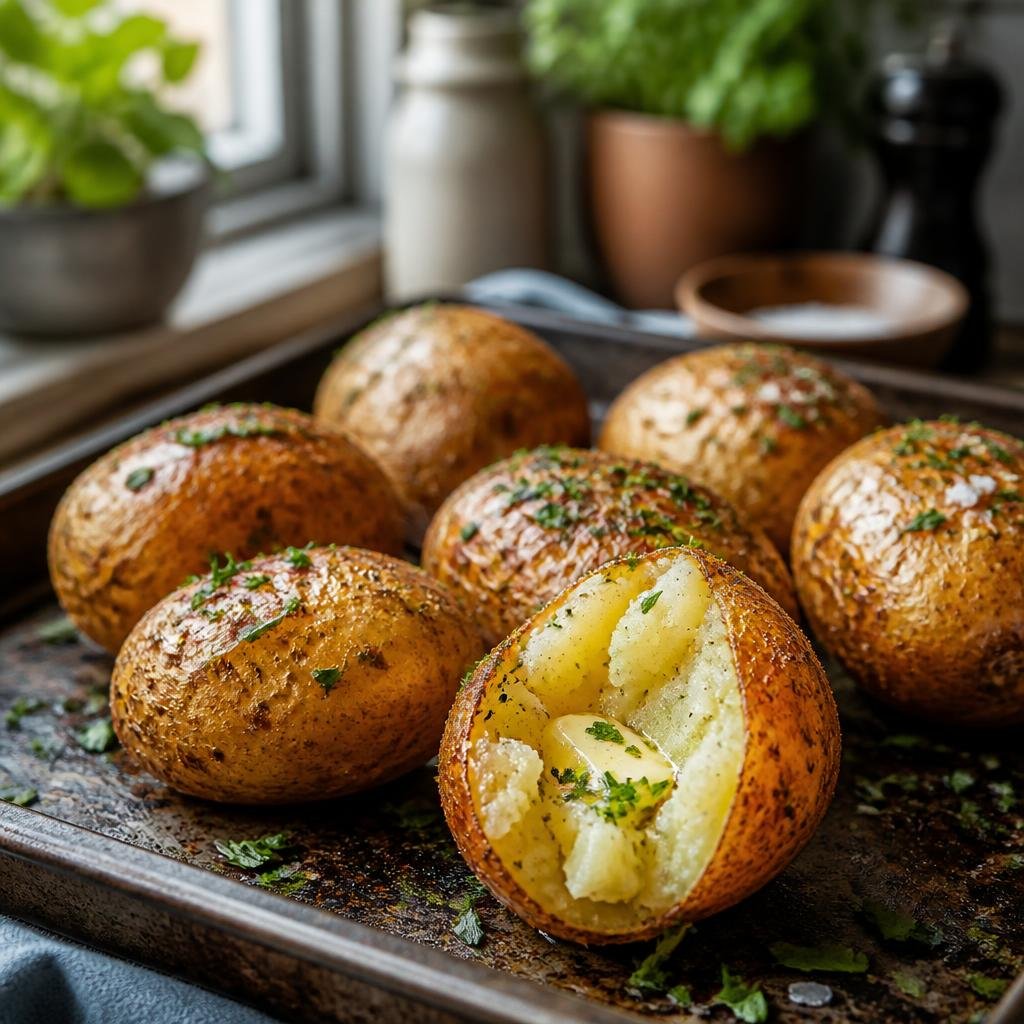
There are side dishes that ask for a long list of ingredients and a lot of attention, and then there are baked potatoes, which ask for four potatoes, a hot oven, and a little patience — and reward you with something that tastes like it came from a restaurant kitchen. Gordon Ramsay Baked Potatoes are all about texture: a crisp, salty skin on the outside and a soft, fluffy inside that soaks up butter beautifully. The recipe is simple, honest, and very hard to get wrong once you know the two things that matter most: high heat and enough time. This guide walks you through the full recipe exactly as it appears on Recipes Walay, with every ingredient, every step, expert tips, variations, serving ideas, and answers to the questions people actually ask before they make it.
A baked potato is one of those dishes that sounds too simple to need a guide, until you have eaten one with a truly crispy skin and a light, airy centre — and then you realise the difference is in the details. The secret, as the recipe puts it, is high heat and patience: do not rush the baking time, rub salt and oil well into the skin, and let the steam escape after baking so the inside stays fluffy. The recipe takes 10 minutes of prep and 60 to 75 minutes in the oven, it serves 4, and each serving is 250 kcal, so it fits easily into a winter weeknight dinner or a slow weekend meal. There is no fancy equipment and nothing you need to buy specially — a baking tray, a fork, and an oven at 200°C (400°F) will do the job.
The full recipe is on Recipes Walay at https://recipeswalay.com/gordon-ramsay-baked-potatoes-recipe/
Why You Will Love Gordon Ramsay Baked Potatoes
Some recipes earn their place through drama, and some through reliability. This one manages both, which is why it is such a useful side dish to have in your collection. It takes just 10 minutes of hands-on prep, the oven does the rest over the next hour or so, and it serves 4 generously, so it is easy to fit into a busy winter schedule. Most of that cooking time is hands-off: put the potatoes in the oven, get on with the main course, and come back to a side dish that smells wonderful and looks impressive on the plate.
The first reason to love this recipe is the texture. A good baked potato has two completely different textures in one bite — the skin is crisp and salty, almost like a cracker, while the inside is soft, steamy, and fluffy enough to mash lightly with a fork. That contrast is what makes a baked potato feel special instead of plain, and it comes from three simple decisions in this recipe: drying the potatoes properly after washing, rubbing oil and sea salt into the skin, and baking at a high temperature without wrapping the potatoes in foil.
The second reason is how little the recipe asks of you. The ingredient list has seven items, and three of them are optional. You do not need a mixer, a food processor, or any special pan. You do not need to watch the oven constantly — the recipe specifically says not to open the oven too often, because steady heat is what makes the skin crisp and the inside cook evenly. That makes this a genuinely relaxing recipe to cook, which is exactly what you want from a winter side dish.
The third reason is flexibility. A baked potato works with almost any main course, from grilled chicken to steak to a bowl of soup, and it takes toppings beautifully — butter and herbs for a simple version, or cheese and sour cream when you want something richer. It is also easy to scale: the recipe serves 4, but you can bake as many potatoes as fit on your tray, spaced out so the hot air can move around them. And because the recipe is so simple, it is a wonderful first recipe for a beginner cook, and a reliable favourite for everyone else.
Finally, this is a recipe that suits the season. Winter cooking is about warmth and comfort, and few things feel more comforting than a hot baked potato on a cold evening, steam rising as you cut it open. It is the kind of food that slows a meal down in a good way — everyone at the table is busy with their own potato, adding butter, choosing toppings, and enjoying something simple done well.
What Is Gordon Ramsay Baked Potatoes?
Gordon Ramsay Baked Potatoes is a classic baked potato recipe built around one idea: the best baked potato has a crispy outside and a soft, fluffy inside. The method is straightforward — wash and dry large russet potatoes, poke holes in them so steam can escape, rub the skins with olive oil, sea salt, and black pepper, and bake them in a hot oven until the skin is crisp and a knife slides in easily. There is no stuffing, no complicated filling, and no sauce to make. The potato itself is the dish, and the recipe treats it with the care it deserves.
Gordon Ramsay is known for simple food cooked perfectly, and this recipe is a good example of that approach. Instead of adding lots of ingredients, the recipe focuses on technique: clean ingredients, dry skin, a generous rub of oil and salt, high heat, and patience. The result is a potato that tastes like it came from a good steakhouse, made with ingredients you almost certainly already have in your kitchen.
The recipe is a side dish — its course is listed as Side Dish and its cuisine as British / International — but it is a generous one. At 250 kcal per serving, with 37 g of carbohydrates, 5 g of protein, 9 g of fat, 4 g of fibre, and 300 mg of sodium, it is filling enough to anchor a lighter meal, and it pairs with everything from grilled chicken to BBQ ribs. It is also naturally simple: the potatoes are the star, the seasoning is salt, pepper, and olive oil, and the only extras — butter, fresh herbs, and garlic powder — are optional.
One thing that makes this recipe stand out is its honesty about what matters. The recipe does not pretend that baking a potato is complicated. It tells you plainly that the secret is high heat and patience, that you should not rush the baking time, and that you should let steam escape after baking so the inside stays fluffy and light. Those are small details, but they are the difference between a potato that is soft all the way through and one that has a crisp skin and a cloud-like centre. This guide follows the recipe exactly, step by step, so you can get that result the first time.
Ingredients You Need for Gordon Ramsay Baked Potatoes (with Quantities)
One of the best things about this recipe is how short the ingredient list is. You need seven ingredients, and three of them are optional, which means you can make a wonderful version of this dish with just four things: potatoes, olive oil, sea salt, and black pepper. Everything is measured in simple amounts, and there is nothing to weigh or chop beyond the potatoes themselves.
Here is the full list, exactly as it appears in the recipe — the quantities below are taken from the recipe card at https://recipeswalay.com/gordon-ramsay-baked-potatoes-recipe/:
- 4 large russet potatoes
- 3 tablespoons olive oil
- 1 tablespoon sea salt
- 1 teaspoon black pepper
- 2 tablespoons butter (optional, for serving)
- Fresh herbs like parsley (optional)
- 1 teaspoon garlic powder (optional, for flavour)
Russet potatoes are the best choice for this recipe, and the recipe says so directly. They have a thick skin that crisps up beautifully in a hot oven, and a starchy, fluffy inside that goes light and airy when it is baked properly. Choose large ones, as the recipe directs, because larger potatoes give you more of that fluffy centre and are easier to handle when you cut them open and fluff the inside. If you cannot find russets, the recipe notes that Maris Piper potatoes work very well too, giving a similar texture. Whatever variety you use, pick potatoes that are firm, without soft spots or green patches, and roughly the same size so they cook in the same time.
The olive oil has a job to do: brushed all over the skin, it helps the skin crisp in the oven and carries the salt and pepper so the seasoning sticks. Three tablespoons is enough to coat four large potatoes generously. Use a regular olive oil for this — there is no need for an expensive finishing oil, because the heat of the oven will do the work.
Sea salt matters here more than table salt. The recipe recommends sea salt for better crispiness, and the coarse crystals also give the skin a pleasant crunch and a stronger flavour. One tablespoon spread across four potatoes is generous, and it is what makes the skin taste seasoned rather than plain. The black pepper adds a gentle warmth; one teaspoon is enough to season without overpowering the potato.
The optional ingredients are where you can make the dish your own. Butter, added when you serve, melts into the fluffy inside and makes it richer — two tablespoons across four potatoes is a light touch, and you can add more or less to taste. Fresh herbs like parsley add colour and a fresh flavour, and garlic powder gives a warm, savoury note if you want a little more flavour in the skin. None of these are necessary, and the potatoes are wonderful without them, but they are easy ways to change the dish to suit your meal.
Equipment You Need
You do not need any special equipment for this recipe. Everything on the list is standard kitchen equipment, and you probably already have all of it. Here is what the recipe lists:
- Baking tray
- Fork
- Sharp knife
- Oven
- Mixing bowl
- Brush for oil
- Aluminium foil (optional)
- Tongs
The baking tray holds the potatoes in the oven. Choose one large enough to space the potatoes out with gaps between them, because the recipe is clear that the potatoes should not be stacked — heat needs to circulate around each one so they cook evenly and the skins crisp properly. If your tray is crowded, use two trays rather than squeezing them together.
The fork does two jobs: poking holes in the potatoes so steam can escape during baking, and later, fluffing the inside once the potatoes are cooked and cut open. The sharp knife is for cutting the potatoes open after baking, and for checking doneness — a knife should slide into a cooked potato smoothly, with no resistance in the centre.
The brush for oil is a small detail that makes a real difference. Brushing the oil on, rather than pouring it, gives you an even coating on every part of the skin, which is what makes the skin crisp all over instead of in patches. If you do not have a brush, you can rub the oil on with your hands, but a brush is quicker and more even. The mixing bowl is useful for tossing the potatoes with oil and seasoning, though you can also season them directly on the tray.
The tongs are for handling the hot potatoes safely — turning them if needed and lifting them off the tray without burning your fingers. The aluminium foil is optional, and it is worth understanding when to use it and when not to: the recipe lists foil as an option for a softer skin, and for wrapping the potatoes when you reheat them in the oven. If you want a crispy skin, do not wrap the potatoes in foil while they bake — the foil traps steam and softens the skin, which is the opposite of what this recipe is aiming for.
How to Make Gordon Ramsay Baked Potatoes Step by Step
The recipe has seven steps, and this guide expands them into twelve smaller steps so that nothing is rushed and every detail is clear. Each step follows the recipe exactly. The total time is 70 to 85 minutes — 10 minutes of prep and 60 to 75 minutes in the oven — and most of that time is hands-off.
Step 1: Wash the Potatoes Well
Start by washing the potatoes very well under running water. Potatoes grow in the ground, and their skins carry soil, so this step matters more than it might seem — you are going to eat the skin, and it needs to be clean. Hold each potato under the tap and scrub the skin gently with your hands or a vegetable brush to remove the dirt. Gordon Ramsay always says clean ingredients matter, and this is the first place that principle shows up in the recipe. Take your time here; a potato that is properly washed will taste cleaner and its skin will crisp better.
Step 2: Dry the Potatoes Completely
After washing, dry the potatoes completely using a kitchen towel. This step is very important, and the recipe is direct about it: do not skip drying the potatoes after washing. Dry skin is what allows the skin to become crispy in the oven — wet skin steams instead of crisping, and you end up with a soft, pale skin instead of a golden, crunchy one. Pat each potato dry all over, including any creases or eyes, and let them sit for a moment so any last dampness evaporates before you move on.
Step 3: Poke Holes in the Potatoes
Take a fork and poke small holes all around each potato. This helps steam escape during baking, which is important for two reasons. First, without holes, potatoes may burst in the oven as steam builds up inside them — poking holes is a safety step as well as a cooking step. Second, letting the steam out helps the inside cook evenly and become soft and fluffy, instead of dense and wet. Make sure you poke evenly on all sides, pressing the fork in firmly but not so hard that you break the potato apart. A dozen or so holes per potato, spread around the surface, is plenty.
Step 4: Brush the Potatoes with Olive Oil
Now brush olive oil all over each potato, using the three tablespoons from the ingredient list. Make sure every part is covered well — the top, the bottom, and the sides. The oil is what helps the skin crisp in the oven, and an even coating means an evenly crisp skin. Work over the tray or the mixing bowl so any drips are caught, and turn each potato as you brush so you do not miss a spot. If you are adding the optional garlic powder, this is a good moment to think about it: the recipe lists garlic powder as an optional flavouring, and you can sprinkle it over the oiled skin with the salt and pepper in the next step.
Step 5: Season the Skin with Salt and Pepper
Sprinkle the sea salt and black pepper over the oiled skins. The oil helps the seasoning stick, and the salt is what gives the skin its flavour and its crunch — Gordon Ramsay baked potatoes get their signature crunch from this step. Use the full tablespoon of sea salt across the four potatoes, and the teaspoon of black pepper, turning each potato so the seasoning reaches every side. The skin should look visibly salted, with crystals you can see. This is not the time to be shy with the salt: the inside of the potato is unseasoned, so the skin carries the flavour for the whole dish.
Step 6: Preheat the Oven to 200°C (400°F)
Preheat your oven to 200°C (400°F). A hot oven is very important for perfect baking — it is the high heat that crisps the skin while the inside slowly becomes fluffy. Do not put the potatoes into a cold or lukewarm oven and hope for the best; the skin will not crisp properly, and the potatoes will take longer and cook unevenly. Give the oven enough time to reach temperature fully before the potatoes go in, and use the waiting time to finish seasoning the potatoes if you have not already.
Step 7: Arrange the Potatoes on the Baking Tray
Place the potatoes on a baking tray, evenly spaced. Do not stack them, and leave a gap between each one. Heat circulation is what makes the potatoes cook evenly — hot air needs to move around each potato so every side gets the same heat. If the potatoes are crowded together, the sides that touch each other will steam instead of crisping, and you will get soft patches on the skin. If your tray is not large enough to space four large potatoes comfortably, use two trays rather than squeezing them onto one.
Step 8: Bake for 60 to 75 Minutes
Put the tray in the oven and bake for 60 to 75 minutes. The exact cooking time depends on the size of your potatoes — larger ones need the full time, smaller ones may be ready sooner. Do not open the oven too often while they bake. Every time you open the door, heat escapes and the temperature drops, which slows the cooking and softens the skin. Let them bake slowly and trust the process. You will know they are ready when the skin is crisp and a knife goes in easily — that is the test the recipe gives you, and it is the only one you need.
Step 9: Check for Doneness
Carefully insert a knife or fork into the centre of a potato. If it goes in smoothly, with no resistance and no hard centre, the potato is done. If the knife meets resistance or the centre still feels firm, the potato needs more time — put it back in the oven for 10 more minutes and check again. Gordon Ramsay always checks texture before serving, and this is the moment that habit matters. A potato that looks done on the outside can still be firm in the middle, and only the knife test tells you the truth. Check the largest potato, since it will be the last to finish.
Step 10: Rest the Potatoes for 5 Minutes
Remove the potatoes from the oven and let them rest for 5 minutes. This short rest matters: it lets the steam inside the potato settle, so the inside stays fluffy instead of collapsing when you cut the potato open, and it lets the skin set and stay crisp. It also gives you time to get the butter, herbs, or other toppings ready. Use tongs to move the potatoes, because they will be very hot, and rest them on the tray or a board where the steam can escape — do not cover them, or the trapped steam will soften the skin you worked so hard to crisp.
Step 11: Slice and Fluff the Inside
Cut each potato open carefully with a sharp knife, slicing along the top, and then use a fork to fluff the inside gently. Push the fork into the soft centre and lift and turn it, breaking up the flesh so it becomes light and airy. This is the moment the texture you have been working toward appears: the inside should look like soft, steamy clouds, not a solid mass. Be gentle — you are fluffing, not mashing — and keep the skin intact so it holds its shape and stays crisp around the edges.
Step 12: Add Butter and Serve
Add the butter, salt, or herbs if you like, while the potato is still hot so the butter melts straight into the fluffy inside. Two tablespoons of butter across four potatoes is the amount the recipe suggests, but you can adjust to taste. A scatter of fresh parsley adds colour and freshness, and a little extra sea salt on the inside balances the richness. Serve the potatoes immediately, while the skin is still crisp and the inside is steaming — a baked potato waits for no one, and it is at its best in the first few minutes after it is cut open.
Expert Tips for Perfect Baked Potatoes
The recipe gives eight tips, and each one is worth following. They are simple, practical, and they all come back to the same idea: the skin should be crisp, the inside should be fluffy, and nothing should be rushed.
Always choose large russet potatoes for best texture. Russets have thick skins and starchy, fluffy flesh, which is exactly the combination this recipe needs. Large potatoes also give you more of the fluffy centre to enjoy, and they hold their shape better when you cut them open. If russets are not available, Maris Piper potatoes are the recipe’s suggested alternative, because they give a similar texture.
Do not skip drying potatoes after washing. This is the tip the recipe repeats most firmly, and for good reason. Wet skin steams in the oven instead of crisping, and no amount of oil or salt will fix a skin that went into the oven wet. Dry each potato completely with a kitchen towel before you oil and season it.
Use sea salt for better crispiness. Coarse sea salt does two things table salt does not do as well: its crystals help draw moisture from the skin so it crisps, and its crunch adds texture to the finished potato. A full tablespoon across four potatoes may sound like a lot, but remember that the skin is the only part that gets seasoned, and it needs to carry the flavour for the whole potato.
Bake directly on the rack for extra crispy skin. If you want the crispiest possible skin, you can place the potatoes directly on the oven rack instead of on a tray, so hot air reaches every side including the bottom. Put a tray on the shelf below to catch any drips. This is an option, not a requirement — the tray method in the recipe already gives a very good result — but it is the way to get the skin at its very best.
Add cheese and sour cream for extra richness. Once the potato is open and fluffed, a spoonful of sour cream and a handful of grated cheese melt into the hot flesh and turn a simple side into something richer. Add the cheese first so the heat melts it, then the sour cream on top.
Try garlic butter for stronger flavour. If you like garlic, melt the butter with the optional teaspoon of garlic powder before you spoon it over the potato. The warm butter carries the garlic flavour through the fluffy inside, and it is a small change that makes a noticeable difference.
Wrap in foil for a softer skin option. Not everyone wants a crispy skin. If you prefer a softer skin, wrap each potato in aluminium foil before baking. The foil traps steam, so the skin stays soft and the inside becomes very tender. This is a genuine choice rather than a mistake — it just produces a different kind of baked potato, so decide which texture you want before the potatoes go into the oven.
Add rosemary for aromatic taste. A few sprigs of fresh rosemary, tucked around the potatoes on the tray or scattered over the finished potato, add a warm, piney aroma that suits winter cooking particularly well. Rosemary and potato are a classic combination, and it costs nothing to add.
Variations to Try
One of the pleasures of a baked potato is how easily it changes with the topping. The recipe itself suggests several directions, and the variations below all stay within what the recipe offers — different toppings and different ways of handling the skin — so nothing here changes the core method.
Cheesy baked potatoes. After fluffing the inside, add grated cheese and let it melt into the hot potato, then finish with sour cream. The recipe lists cheese and sour cream as its suggestion for extra richness, and they are the most popular topping combination for a reason: the cheese adds savoury depth and the sour cream adds a cool tang that balances the salty skin.
Garlic butter baked potatoes. Melt the butter with the optional garlic powder and spoon it over the fluffed inside. This is the recipe’s own suggestion for stronger flavour, and it works particularly well when the potato is served with grilled chicken or steak, because the garlic butter ties the plate together.
Bacon and chilli baked potatoes. The recipe’s FAQ notes that bacon bits and chilli are popular toppings, and they turn a side dish into a heartier plate. Crisp bacon bits add salt and crunch, and a spoonful of chilli — or a pinch of chilli flakes — adds warmth. This is a good variation for a casual winter dinner, when the potato is doing more of the work on the plate.
Herb butter baked potatoes. Mix softened butter with chopped fresh parsley and any other soft herbs you like, and spoon it over the hot potato so it melts into the flesh. The herbs stay bright and fresh against the rich potato, and the colour makes the dish look as good as it tastes.
Foil-wrapped soft-skin potatoes. If you are serving people who prefer a soft skin — children, for example, or anyone who finds crisp skin too crunchy — wrap the potatoes in foil before baking. The inside will be just as fluffy, and the skin will be soft and easy to eat. The recipe offers this as a real alternative, not a compromise.
Rosemary and sea salt potatoes. Scatter fresh rosemary over the potatoes before baking, or tuck sprigs around them on the tray, so the heat releases the herb’s aroma into the oven. Combined with the sea salt already on the skin, this gives the potato a fragrant, wintry character that suits a roast dinner or a Christmas table.
What to Serve with Gordon Ramsay Baked Potatoes
A baked potato is a team player: it goes with almost anything, and it is generous enough to hold its own next to a strong main course. The recipe suggests six pairings, and each one works for a different kind of meal. For more ideas from the same kitchen, the winter side dish collection at Recipes Walay has plenty to choose from — see https://recipeswalay.com/easy-winter-side-dish-recipes/ for the full list.
Grilled chicken for protein balance. A simply grilled chicken breast or thigh next to a baked potato is a balanced, satisfying plate: lean protein, a starchy side, and room for a green vegetable. The potato’s salty skin and fluffy inside complement the chicken without competing with it, and the meal stays light enough for a weeknight.
Steak with pepper sauce. This is the classic steakhouse pairing, and it is the one that shows off the potato at its best. A rich, peppery sauce over steak, with a crisp-skinned potato on the side, is a restaurant meal made at home — and the potato’s mild flavour is the perfect counterpoint to the sauce. If you are planning a special winter dinner, this combination is hard to beat. Gordon Ramsay’s own steak pie is another winter favourite on the site — see https://recipeswalay.com/easy-gordon-ramsay-steak-pie-for-christmas-dinner/.
Fresh green salad. A crisp green salad with a sharp dressing cuts through the richness of the potato and keeps the meal fresh. This is the pairing to choose when the potato is the richest thing on the plate, because the salad’s acidity and crunch reset your palate between bites.
Roasted vegetables. Roasted carrots, parsnips, or Brussels sprouts share the oven with the potatoes and the same kind of cooking — high heat, a little oil, a little salt — so they feel like part of the same meal rather than an afterthought. They also add colour and sweetness to the plate.
Creamy mushroom soup. A bowl of creamy mushroom soup with a baked potato on the side is a deeply comforting winter lunch. The potato can be broken into the soup or eaten alongside it, and the two together make a meal that feels generous without needing meat at all. A warming winter stew makes a similar partner — see https://recipeswalay.com/easy-winter-stew-recipes/.
BBQ ribs for a rich meal. When the meal is already rich and smoky, a baked potato holds its own: its clean, salty flavour and fluffy texture stand up to the ribs without adding more richness, and it soaks up the barbecue sauce beautifully. This is the pairing for a weekend gathering or a BBQ party, where the potato is part of a big, generous spread.
For a fuller winter table, mashed potatoes are the classic alternative side — see https://recipeswalay.com/easy-mashed-potatoes-for-thanksgiving/ — and the corn casserole from the same season is another crowd-pleaser: https://recipeswalay.com/easy-ina-garten-corn-casserole-for-thanksgiving/. If you are building a whole winter menu, the creamy mac and cheese guide (https://recipeswalay.com/easy-joanna-gaines-creamy-mac-and-cheese-for-the-holidays/) and the winter casserole collection (https://recipeswalay.com/easy-winter-casserole-recipes/) are worth a look, along with the Gordon Ramsay winter recipes roundup (https://recipeswalay.com/easy-gordon-ramsay-winter-recipes-for-cozy-nights/) and the winter potato collection (https://recipeswalay.com/easy-winter-potato-recipes/).
Make-Ahead and Storage
Baked potatoes are best eaten fresh from the oven, when the skin is crisp and the inside is steaming, but the recipe gives clear guidance for leftovers, and it is worth knowing because it protects the texture you worked for.
Storing leftovers. Store leftover baked potatoes in an airtight container and keep them in the refrigerator for up to 3 days. Let the potatoes cool before you put them in the container, and do not leave them sitting out at room temperature for a long time. The airtight container keeps them from drying out and from picking up flavours from other food in the fridge.
Reheating. Reheat leftover potatoes in the oven for the best texture. The oven’s dry heat helps the skin crisp up again and warms the inside evenly. Add a little butter before reheating, as the recipe suggests, so the inside stays moist. Wrap the potatoes in foil when reheating in the oven — the foil protects them from drying out while the inside warms through, and you can unwrap them for the last few minutes if you want the skin to crisp again.
Avoid the microwave for crispy skin. The recipe is direct about this: avoid the microwave if you want to keep the skin crispy. A microwave heats by exciting water molecules, which steams the potato from the inside and leaves the skin soft and slightly rubbery. If you are in a hurry and do not mind a soft skin, the microwave will warm the potato, but the texture will be different — soft all the way through, without the crunch that makes this recipe special.
Can you make them ahead? The recipe does not give a make-ahead method for serving baked potatoes later, and it is honest to say so. The honest answer is that the potato itself is best baked fresh — the crisp skin does not survive storage. What you can do ahead is the preparation: wash and dry the potatoes, and have the oil, salt, and pepper ready, so that when it is time to cook, the prep takes only a few minutes. If you do need to bake ahead, follow the storage guidance above: refrigerate for up to 3 days and reheat in the oven with a little butter.
Nutrition and Calories
Each serving of Gordon Ramsay Baked Potatoes — one large potato with its seasoning — contains 250 kcal. The recipe gives the full nutrition picture per serving, so here it is exactly as the recipe states:
- Calories: 250 kcal
- Carbohydrates: 37 g
- Protein: 5 g
- Fat: 9 g
- Fibre: 4 g
- Sodium: 300 mg
The numbers tell a clear story. Most of the energy comes from the potato’s carbohydrates, which is what makes the dish filling, and the 4 g of fibre is a meaningful amount for a side dish — fibre is one of the reasons a baked potato feels satisfying rather than just starchy. The 9 g of fat comes mainly from the olive oil brushed on the skin and the optional butter, and the 300 mg of sodium comes from the sea salt on the skin. The protein is modest at 5 g, which is normal for a potato dish and is why the recipe pairs the potato with protein-rich mains like grilled chicken or steak.
It is worth noting that the nutrition figures describe the potato as the recipe makes it, with the oil and seasoning but before any toppings are added. Cheese, sour cream, bacon, and extra butter will all add calories and fat, so if you are watching those numbers, keep the toppings light — a spoonful of sour cream or a little butter goes a long way on a potato that is already well seasoned. The recipe itself is a good example of a side dish that is satisfying without being heavy, and at 250 kcal it leaves plenty of room on the plate for a main course.
Occasions to Serve Gordon Ramsay Baked Potatoes
This recipe is flexible enough for almost any occasion, and the recipe lists several. Here is how to think about each one, so you can match the potato to the meal.
Family dinners. A baked potato is a natural family dinner side: everyone gets their own potato, everyone chooses their own toppings, and the cook does not have to plate anything fussy. Children tend to love the combination of crispy skin and soft inside, and the foil-wrapped soft-skin variation is there for anyone who prefers it that way.
Weekend meals. When there is a little more time, a baked potato is a good excuse to slow down. The hour in the oven is hands-off, so you can cook the main course, set the table, and enjoy the evening while the potatoes take care of themselves. It suits a relaxed Saturday or Sunday dinner, when nobody is in a rush.
BBQ parties. Baked potatoes are a classic BBQ side, and the recipe says so directly. They can be prepared ahead and put in the oven while the grill is going, and they are easy to serve to a crowd — just put a tray of them on the table with butter, sour cream, and cheese, and let people help themselves.
Holiday gatherings. Holiday meals feel more special with a dish that is cooked with care, and a baked potato with a properly crisp skin fits that description. It works as part of a Christmas dinner spread or a Thanksgiving table, especially when the main course is rich and the potato offers something simpler alongside it.
Simple weekday meals. Even on an ordinary weeknight, a baked potato turns a simple main — a piece of grilled chicken, a bowl of soup — into a complete and comforting meal. The prep takes 10 minutes, the oven does the rest, and the result feels like more effort than it was. That is the best kind of weekday cooking.
FAQs about Gordon Ramsay Baked Potatoes
Can I make Gordon Ramsay Baked Potatoes in the microwave?
Yes, you can, but the texture will be different. A microwave makes potatoes soft but not crispy, and the oven is always better for real Gordon Ramsay style baked potatoes. The oven gives the perfect crunchy skin and fluffy inside, which is the main highlight of this recipe. If you do use a microwave, remember to poke holes in the potato first — the same steam that needs to escape in the oven needs to escape in the microwave too — but expect a soft skin rather than a crisp one.
What potatoes are best for this recipe?
Russet potatoes are the best choice. They have thick skin and a fluffy inside, which makes them perfect for baking. The recipe also notes that you can use Maris Piper potatoes if they are available, because they give a similar texture and work very well for this style of baked potato. Whatever you choose, pick large potatoes that are firm and roughly the same size, so they cook evenly and finish at the same time.
Why do I need to poke holes in potatoes?
Poking holes helps steam escape while the potatoes bake. If you skip this step, the potatoes may crack or burst in the oven as steam builds up inside them, which is a safety issue as well as a cooking problem. Poking holes also helps the inside cook evenly, so the centre becomes soft and fluffy instead of dense. It is a simple step, and the recipe is clear that it is very important for safety and for the perfect texture in Gordon Ramsay baked potatoes.
Can I add toppings to this recipe?
Yes, you can add many toppings. Cheese, sour cream, butter, and herbs are very popular, and the recipe mentions them directly. You can also try bacon bits or chilli, which the recipe’s FAQ also names. Gordon Ramsay style allows creativity while keeping the base simple and crispy, so choose toppings that suit your meal — but keep the base the same, because the crisp skin and fluffy inside are what make the dish work.
How do I make the skin extra crispy?
Use enough olive oil and salt on the skin, and bake at a high temperature without covering the potatoes. Do not wrap them in foil if you want a crisp skin, because the foil traps steam and softens it. Place the potatoes directly on the oven rack or on a tray with space around each one, so hot air reaches every side. Dry the potatoes completely after washing, and do not open the oven too often — steady, high heat is what makes the skin crisp. These small steps make a big difference.
Can I make these baked potatoes ahead of time?
The recipe does not give a make-ahead method, and it is honest to say so — a baked potato is at its best straight from the oven, when the skin is crisp. What you can do is store leftovers: keep them in an airtight container in the refrigerator for up to 3 days, then reheat them in the oven with a little butter, wrapped in foil. The skin will not be quite as crisp as it was fresh, but the potato will still be good. If you want to prepare ahead, wash and dry the potatoes and measure out the oil, salt, and pepper in advance, so the cooking itself takes only minutes to start.
Final Thoughts
The Gordon Ramsay Baked Potatoes Recipe is simple, tasty, and very satisfying. It is perfect for beginners and home cooks, because it asks for so little and gives back so much: four ingredients you already have, ten minutes of preparation, and an hour in the oven that mostly takes care of itself. With basic ingredients, you can make something that tastes restaurant-quality, and if you follow each step carefully — dry the skin, oil and salt it well, bake it hot and patiently — you will get a crispy skin and a soft, fluffy inside every time.
What makes this recipe worth keeping is not just how good the potatoes are, but how reliable it is. The method does not depend on luck or on special equipment, and the recipe tells you plainly what matters: high heat, patience, dry skin, and a knife test to check that the centre is done. Those are habits that will serve you well in any kind of cooking, and this recipe is a gentle way to learn them.
Try this Gordon Ramsay Baked Potatoes Recipe once, and it will become a favourite comfort food at home — a side dish that turns an ordinary winter dinner into something worth sitting down for, and a recipe you will come back to whenever you want something simple, warm, and done properly.