

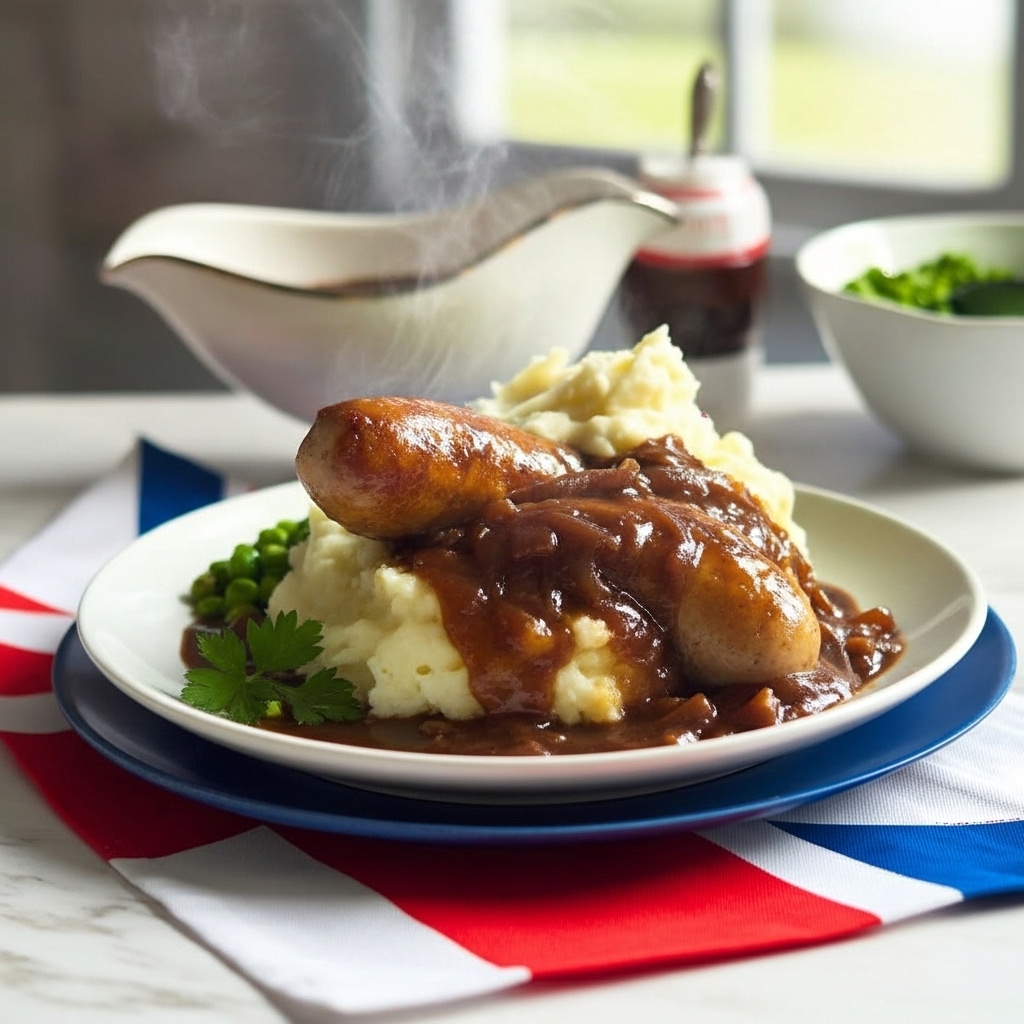
There are dinners that ask for a long list of ingredients and a lot of attention, and then there are bangers and mash, which ask for six good sausages, two onions, a bag of potatoes, and a little patience — and reward you with something that tastes like it came from a proper British pub kitchen. Ina Garten Bangers and Mash are all about balance: juicy sausages with browned, savoury skins, a smooth onion gravy that ties the plate together, and a soft, buttery mash that soaks it all up. The recipe is simple, honest, and very hard to get wrong once you know the two things that matter most: good sausages and onions cooked slowly enough to turn sweet and golden. This guide walks you through the full recipe exactly as it appears on Recipes Walay, with every ingredient, every step, expert tips, variations, serving ideas, and answers to the questions people actually ask before they make it.
Bangers and mash is one of those dishes that sounds too simple to need a guide, until you have eaten one where the gravy is silky rather than lumpy, the sausages are juicy rather than dry, and the mash is creamy rather than gluey — and then you realise the difference is in the details. The secret, as the recipe puts it, is balance and quality ingredients: good sausages make a big difference, potatoes should be creamy and well mashed, and onions cooked slowly give the gravy its deep flavour. The recipe takes 15 minutes of prep and 35 minutes of cooking, it serves 4, and each serving is 520 kcal, so it fits easily into a winter weeknight dinner or a slow weekend meal. There is no fancy equipment and nothing you need to buy specially — a large skillet, a pot, a potato masher, and a stove will do the job.
The full recipe is on Recipes Walay at https://recipeswalay.com/ina-garten-bangers-and-mash-recipe/
Why You Will Love Ina Garten Bangers and Mash
Some recipes earn their place through drama, and some through reliability. This one manages both, which is why it is such a useful dinner to have in your collection. It takes just 15 minutes of hands-on prep, the stove does the rest over the next half hour or so, and it serves 4 generously, so it is easy to fit into a busy winter schedule. Most of that cooking time is gentle and forgiving: the potatoes boil while the sausages brown, the onions soften while the gravy thickens, and nothing needs to be watched every second.
The first reason to love this recipe is the texture. A good plate of bangers and mash has three completely different textures in one bite — the sausage skin is browned and lightly crisp, the inside is juicy and well seasoned, and the mash is soft, buttery, and smooth enough to scoop up the gravy. That contrast is what makes the dish feel so satisfying, and it is also what makes it feel like a proper meal rather than a quick fix. The gravy is the third texture: smooth, rich, and glossy, it pulls the sausage and the mash together so that every forkful has a little of everything.
The second reason is how easy it is to get right. The steps are clear and friendly, the ingredients are pantry staples, and the recipe tells you plainly what matters: use high-quality sausages, cook the onions slowly, do not overcook the potatoes, warm the milk before it goes into the mash, and stir the gravy constantly so it stays smooth. Follow those five tips and the dish almost cooks itself. It works for family dinners, and it also suits casual guests, because it looks generous and tastes like you spent far longer on it than you did.
The third reason is versatility. Bangers and mash feel classic but still fresh today, and the dish works for any season, though it truly shines on cold winter nights when something warm and filling is exactly what everyone wants. It is hearty without being heavy, rich without being fussy, and it suits a quiet Tuesday just as well as a weekend gathering. Once you have made it, it becomes one of those recipes you return to whenever you want a dinner that everyone at the table will enjoy.
What Is Ina Garten Bangers and Mash?
Bangers and mash is a classic British comfort dish: pork sausages served over creamy mashed potatoes with a rich onion gravy poured over the top. The name comes from the sausages themselves — “bangers” is the old British nickname for sausages, said to come from the way they used to pop or bang in the pan as they cooked. The mash is the soft, buttery base, and the gravy is the sauce that brings the whole plate together. It is the kind of food that has been served in British homes and pubs for generations, and it has stayed popular because it is simple, filling, and deeply comforting.
Ina Garten’s version keeps the classic structure and focuses on doing each part properly. The sausages are browned evenly on all sides so they stay juicy inside. The onions are cooked slowly in the same skillet, so they pick up all the browned flavour the sausages left behind, and they turn golden and soft before the flour and beef stock turn them into a smooth gravy. The potatoes are Yukon Gold, boiled until fork tender and mashed with butter and warm milk until they are creamy and smooth. Nothing is rushed, and nothing is overcomplicated — the recipe trusts good ingredients and patient cooking.
On Recipes Walay, the recipe is listed as a main course in the British cuisine tradition, and it serves 4 people. The card gives 15 minutes of prep time, 35 minutes of cook time, and a total time of 50 minutes, with 520 kcal per serving. The dish is, in the recipe’s own words, simple, hearty, and satisfying, and it feels timeless: elegant enough for guests, easy enough for busy nights, and impressive without stress. That is exactly what a winter dinner should be.
Ingredients You Need for Ina Garten Bangers and Mash (with Quantities)
One of the best things about this recipe is how short the shopping list is. Everything is divided into two groups — the sausages and gravy, and the mashed potatoes — and every quantity below comes straight from the recipe card on Recipes Walay. There is nothing exotic here, and most of it is probably already in your kitchen.
For the sausages and gravy:
- 6 pork sausages
- 2 tablespoons olive oil
- 2 large onions, sliced
- 2 tablespoons butter
- 2 tablespoons all-purpose flour
- 1 1/2 cups beef stock
- Salt to taste
- Black pepper to taste
The sausages are the star of the dish, so this is the one place where quality matters most. The recipe’s first tip is to use high-quality sausages for the best flavour, and it is worth following: a good pork sausage with a proper casing will brown beautifully, stay juicy inside, and give the gravy its savoury depth. Cheap sausages with a lot of filler tend to split, dry out, and leave the gravy tasting flat. If your butcher has a good pork sausage, that is the one to buy. The two large onions are the second most important ingredient — they are not a garnish, they are the body of the gravy, and they need time to cook slowly until they are golden and soft. Beef stock gives the gravy its rich, savoury base, and the flour is what thickens it, so measure both carefully.
For the mashed potatoes:
- 2 pounds Yukon Gold potatoes
- 1/2 cup whole milk
- 4 tablespoons unsalted butter
- Salt to taste
Yukon Gold potatoes are the recipe’s choice for the mash, and they are a good one: they are naturally buttery, they mash into a smooth, creamy texture without turning gluey, and they hold their flavour well. Two pounds is the right amount for four generous servings, and the half cup of whole milk and four tablespoons of unsalted butter are what make the mash rich and soft. The recipe’s tip to warm the milk before adding it to the mash is a small step that makes a real difference — cold milk cools the potatoes down and makes the mash stiff, while warm milk keeps everything soft and easy to mix. If you want more potato ideas for winter meals, the winter potato collection on Recipes Walay is a good place to look: https://recipeswalay.com/easy-winter-potato-recipes/
A note on quantities: salt and black pepper are listed “to taste” in both parts of the recipe, which means the recipe leaves the seasoning to you. Start with a little, taste the gravy before you serve it, and adjust at the end. The beef stock already carries some salt, so it is better to under-season early and correct at the end than to over-salt and have no way back. The same applies to the mash — salt the potato water lightly, then taste the finished mash and add more if it needs it.
Equipment You Need
You do not need any special equipment for bangers and mash, and the list below is everything the recipe calls for. A large skillet does most of the work — it browns the sausages, cooks the onions, and becomes the pan the gravy is made in, so the flavour builds in one place. A large pot is for the potatoes, and a medium saucepan is there if you prefer to warm the milk separately, though you can also warm it in a small pan or in the microwave.
- Large skillet
- Medium saucepan
- Large pot
- Potato masher
- Cutting board
- Sharp knife
- Wooden spoon
- Measuring cups
- Measuring spoons
The potato masher is worth a mention because it is the difference between a creamy mash and a gluey one. A masher breaks the potatoes down gently, while a food processor or a blender overworks them and turns them sticky. If you do not have a masher, a fork will work for a smaller batch, but a masher is a cheap tool that earns its place in the drawer. The wooden spoon matters for the gravy: you will be stirring constantly as the stock goes in, and a wooden spoon lets you feel the gravy thickening and scrape the bottom of the pan so nothing sticks or burns. Have your measuring cups and spoons out before you start, because the gravy steps move quickly once the flour goes in.
How to Make Ina Garten Bangers and Mash Step by Step
The recipe gives 15 short steps, and this guide expands them into 12 clear stages so you can follow along without losing your place. The potatoes and the sausages cook at the same time, so start the potatoes first — they take the longest — and then move on to the skillet while they boil. The whole dish comes together in about 50 minutes from start to finish.
Step 1: Peel and Cut the Potatoes into Chunks
Peel the 2 pounds of Yukon Gold potatoes and cut them into even chunks, roughly the same size so they cook at the same rate. Even pieces matter more than small pieces: if some chunks are much bigger than others, the small ones will be overcooked and watery by the time the big ones are tender. Aim for chunks about the size of a golf ball, and do not cut them too small, because very small pieces absorb too much water and make a wet mash.
Step 2: Boil the Potatoes Until Fork Tender
Put the potato chunks in the large pot, cover them with cold water, add a pinch of salt, and bring the pot to a boil over high heat. Once it is boiling, turn the heat down to a steady simmer and cook the potatoes until they are fork tender — a fork should slide into the centre of a chunk with no resistance. This usually takes about 15 to 20 minutes, depending on the size of your chunks. Do not overcook them: the recipe warns against it, and overcooked potatoes fall apart in the water, absorb too much liquid, and make a mash that is heavy and wet rather than light and creamy. Drain them well as soon as they are tender, and let the steam escape for a minute so the surfaces dry out slightly.
Step 3: Heat the Oil and Brown the Sausages
While the potatoes are boiling, heat the 2 tablespoons of olive oil in the large skillet over medium heat. When the oil is hot and shimmering, add the 6 pork sausages and brown them evenly on all sides, turning them gently with tongs so each side gets a good golden colour. Take your time here: proper browning is what gives the sausages their flavour, and it also leaves browned bits in the pan that will flavour the gravy later. Do not rush this step on high heat, or the outside will burn before the inside is cooked.
Step 4: Remove the Sausages and Set Them Aside
Once the sausages are browned all over, lift them out of the skillet and set them aside on a plate. They do not need to be fully cooked through at this point — they will go back into the pan later and finish cooking gently in the gravy, which is what keeps them juicy. What matters now is that they are browned on the outside and resting, while you use the same skillet, with all its browned flavour still in it, to build the gravy. Do not wash the skillet and do not wipe it out.
Step 5: Cook the Onions Slowly Until Golden and Soft
Add the 2 sliced large onions to the same skillet, in the oil and juices the sausages left behind. Cook them slowly over medium-low heat, stirring now and then, until they are golden and soft. This is the step that makes the gravy taste deep and sweet rather than sharp and raw, and it cannot be rushed: the recipe’s tip to cook the onions slowly for deeper taste is the single most important piece of advice in the whole dish. Give them a good 8 to 10 minutes, and let them turn a soft golden colour before you move on. If they start to catch or brown too fast, turn the heat down.
Step 6: Stir in the Butter and Flour
Once the onions are golden and soft, stir in the 2 tablespoons of butter and let it melt into the onions. Then sprinkle in the 2 tablespoons of all-purpose flour and stir it through so that every bit of flour is coated in the butter and onion mixture. The flour is what will thicken the gravy, and it needs to be evenly mixed in before any liquid goes near the pan, or you will get lumps that are very hard to stir out later.
Step 7: Cook the Flour for One Minute
Keep stirring and cook the flour for one minute. This short cook matters: raw flour tastes pasty and chalky, and a minute in the hot butter is enough to cook that taste out and let the flour start to turn very lightly golden. Keep the spoon moving the whole time so the flour does not stick to the bottom of the pan or catch, and do not let it brown — you are cooking the flour, not toasting it.
Step 8: Slowly Add the Beef Stock
Now pour in the 1 1/2 cups of beef stock, but do it slowly, a little at a time, stirring constantly as you go. This is the moment the gravy is made, and the slow pour is what keeps it smooth: if you dump all the stock in at once, the flour seizes into lumps, but a slow stream with constant stirring lets the flour absorb the liquid evenly. Scrape the bottom of the skillet with your wooden spoon as you pour, because the browned bits stuck to the pan will dissolve into the stock and give the gravy its colour and savoury depth.
Step 9: Stir Until the Gravy Thickens
Keep stirring and let the gravy come to a gentle simmer. As it heats, it will thicken into a smooth, glossy sauce that coats the back of a spoon. Keep stirring constantly — the recipe’s tip is explicit about this, because a gravy left still will catch on the bottom and go lumpy. It should take a couple of minutes to reach the right consistency: thick enough to coat the sausages and pool gently on the mash, but still pourable. If it gets too thick, a splash more stock will loosen it; if it is too thin, let it simmer a little longer.
Step 10: Return the Sausages and Simmer Gently
Slide the browned sausages back into the skillet, nestling them into the gravy so they are mostly covered. Turn the heat down low and simmer gently until the sausages are cooked through. This gentle finish is what keeps them juicy: the gravy surrounds them, the heat is low and even, and they cook through without drying out. Give them a few minutes, turning them once so both sides sit in the gravy, and taste the gravy now for salt and pepper — the stock has had time to season it, and this is the moment to adjust it before serving.
Step 11: Mash the Potatoes with Butter and Milk
While the sausages finish in the gravy, mash the drained potatoes. Add the 4 tablespoons of unsalted butter first and mash until it melts in, then pour in the 1/2 cup of warm whole milk a little at a time, mashing as you go until the potatoes are creamy and smooth. Warm the milk before you add it — the recipe is clear about this, and it keeps the mash soft and fluffy instead of stiff and cool. Mash just until the potatoes are smooth; over-mashing, especially with a machine, turns them gluey, so stop as soon as the texture looks right.
Step 12: Season the Potatoes and Serve
Taste the mash and season it with salt until it tastes right, then serve straight away while everything is hot. Spoon a generous mound of mash onto each plate, lay the sausages on top or alongside, and ladle the onion gravy over everything so it runs down into the mash. Bangers and mash are at their best the moment they leave the pan — the sausages juicy, the gravy glossy, and the mash soft and steaming — so have your plates warm and your table ready before the last step.
Expert Tips for Perfect Bangers and Mash
The recipe gives five tips, and each one protects a different part of the dish. Together they are the difference between a good plate of bangers and mash and a great one, and they are all easy to follow once you know why they matter.
Use high-quality sausages for the best flavour. This is the first tip in the recipe, and it is the one that matters most, because the sausages are the main event and there is nowhere for a poor sausage to hide. A good pork sausage has a proper casing that crisps when it browns, a filling that stays juicy, and seasoning you can actually taste. Ask your butcher what is fresh, and choose a classic pork sausage rather than something heavily flavoured or smoked, so the onion gravy can do its work without competing flavours.
Cook the onions slowly for deeper taste. The onions are not a quick step, and treating them as one is the most common mistake in this dish. Slow cooking lets the onions soften fully, turn sweet, and build the deep flavour that makes the gravy taste like it has been cooking for hours. If you rush them on high heat, they brown on the edges while staying raw and sharp in the middle, and the gravy tastes thin and oniony instead of rich. Medium-low heat, a little patience, and regular stirring will get you there.
Do not overcook the potatoes. Potatoes that have boiled too long fall apart, soak up water, and make a mash that is heavy, wet, and hard to fix. Start checking them a little early, and take them off the heat the moment a fork slides in easily. Drain them straight away and let them steam dry for a minute before mashing, because dry potatoes make a lighter mash.
Warm the milk before adding it to the mash. Cold milk straight from the fridge cools the potatoes down and makes the mash stiff and hard to mix smoothly. Warm milk — just heated in a small pan or in the microwave until it is warm to the touch — keeps the potatoes hot, lets the butter melt evenly, and gives you a mash that is soft, creamy, and easy to spoon. It is a thirty-second step that changes the texture completely.
Stir the gravy constantly to avoid lumps. From the moment the flour goes in until the gravy is served, keep the spoon moving. Flour thickens fast and unevenly if it is left still, and once lumps form they are very hard to stir out. Constant stirring also stops the gravy catching on the bottom of the pan, so it stays smooth and glossy. If you do end up with a few lumps despite your best efforts, a quick pass through a fine sieve will save the gravy — but steady stirring should mean you never need it.
One more habit that helps: have everything measured and ready before you start. The gravy steps move quickly once the flour is in the pan, and you do not want to be measuring stock with one hand while stirring with the other. A few minutes of preparation at the start makes the whole cook calmer and the result better.
Variations to Try
The recipe as written is the classic version, and it is worth making exactly as it stands the first time. Once you know it, though, the dish is forgiving, and there are a few simple twists that stay true to the original while giving it a different character. These are cook’s variations, not part of the recipe card — the quantities and method below are the recipe’s, and the ideas here are ways to play with it once you are comfortable.
Try different sausages. The recipe calls for pork sausages, and they are the classic choice, but the same method works well with chicken sausages for a lighter plate, or with a good Cumberland sausage if you can find one, which brings a peppery, herby note to the gravy. Keep the browning and the gentle simmer in the gravy exactly the same, and let the sausage be the only thing that changes, so you can taste the difference properly.
Add mustard to the mash. A spoonful of wholegrain mustard stirred into the mashed potatoes with the butter and milk gives the mash a gentle warmth and a little texture that works beautifully with the rich gravy. It is a small change, and it does not suit everyone, so add it a little at a time and taste as you go. A smooth Dijon works too, if you prefer a cleaner flavour.
Add mushrooms to the gravy. A handful of sliced mushrooms, cooked with the onions until they are soft and golden, adds an earthy depth to the gravy that suits the sausages very well. Add them at the same time as the onions so they cook slowly together, and keep the rest of the method unchanged. This is a good option when you want the dish to feel a little more substantial without adding another side.
Swap the stock for a lighter gravy. Beef stock gives the classic rich gravy, but chicken stock makes a lighter, gentler version that some people prefer, especially if the sausages are already well seasoned. The method is identical — the same flour, the same slow pour, the same constant stirring — and the result is a paler gravy that lets the onion flavour come through more clearly.
Make a cheesy mash. If you like a richer mash, a small handful of grated mature cheddar stirred in with the butter and warm milk will melt through the potatoes and give them a savoury depth. Keep the cheese modest — too much will make the mash heavy and stringy — and remember that the gravy is already rich, so the mash does not need to carry the whole flavour of the plate on its own. For more winter dinner ideas built around the same kind of comfort, the Gordon Ramsay winter recipes roundup is worth a look: https://recipeswalay.com/easy-gordon-ramsay-winter-recipes-for-cozy-nights/
What to Serve with Ina Garten Bangers and Mash
Bangers and mash are a complete meal on their own, but the right side dish makes the plate feel finished. The recipe suggests three sides, and each one works for a different reason. Beyond those, the Recipes Walay winter collections have plenty of ideas for building a fuller table around this dish.
Steamed Green Beans. They add freshness and light crunch, and they balance the rich gravy well. Green beans are the classic partner for bangers and mash because they cut through the richness without competing with it: a little butter, a pinch of salt, and a short steam so they stay bright green and slightly crisp. They also add colour to a plate that is otherwise brown and cream, which makes the meal look as good as it tastes.
Roasted Carrots. They bring natural sweetness, and they pair nicely with the savoury sausages. Roasted until their edges are lightly caramelised, carrots add a gentle sweetness that echoes the slow-cooked onions in the gravy, and their soft texture sits well next to the creamy mash. A tray of carrots can roast in the oven while the sausages cook, so they add almost no extra work to the meal.
Simple Garden Salad. It keeps the meal light and adds crisp texture and freshness. A few leaves, some sliced cucumber and tomato, and a light dressing are all it needs — the salad is there to refresh the palate between bites of rich sausage and gravy, not to compete with them. It is the best choice when you want the meal to feel lighter, or when you are serving guests who prefer something fresh on the side.
For a fuller winter table, the recipe’s own suggestions are only the start. A baked potato is a generous alternative side when you want two potato dishes on the table — the baked potato guide on the site covers exactly that: https://recipeswalay.com/easy-gordon-ramsay-baked-potatoes-for-winter-nights/ — and mashed potatoes in their Thanksgiving style are another classic option: https://recipeswalay.com/easy-mashed-potatoes-for-thanksgiving/. The corn casserole from the same season is another crowd-pleaser: https://recipeswalay.com/easy-ina-garten-corn-casserole-for-thanksgiving/. A warming winter stew makes a similar partner on a cold night — see https://recipeswalay.com/easy-winter-stew-recipes/ — and if you are building a whole winter menu, the winter side dish collection (https://recipeswalay.com/easy-winter-side-dish-recipes/) and the winter casserole collection (https://recipeswalay.com/easy-winter-casserole-recipes/) are worth a look.
Make-Ahead and Storage
Here the guide has to be honest about what the recipe does and does not say. The single recipe on Recipes Walay gives no storage or make-ahead guidance at all, and this guide will not invent any. There is no instruction in the recipe for keeping leftovers, reheating them, or making any part of the dish in advance, so the safest and most honest advice is to make bangers and mash fresh and serve them straight from the pan, while the sausages are juicy, the gravy is glossy, and the mash is hot and steaming.
That is also, in practice, how the dish is at its best. Mash that has been kept waiting goes stiff and dull, gravy that has cooled sets and needs careful reheating to come back smooth, and sausages that have sat too long dry out. If you do need to plan ahead, the practical approach is to prepare rather than to pre-cook: peel and cut the potatoes earlier in the day and keep them in cold water, slice the onions in advance, and measure out the flour and stock so that the actual cooking — which takes only 50 minutes — can happen in one smooth run just before dinner. That way nothing is compromised, and the meal still comes together without a rush.
Nutrition and Calories
The recipe card gives one nutrition figure, and it is the only one this guide will report: each serving of Ina Garten Bangers and Mash is 520 kcal, for 4 servings. The single recipe does not list protein, fat, carbohydrates, fibre, or sodium, and this guide does not estimate or invent those numbers. If you need the full breakdown for dietary reasons, the honest answer is that the recipe does not provide it, and the 520 kcal per serving is the figure the recipe itself stands behind.
What can be said fairly is where those calories come from. The sausages and the butter are the richest parts of the dish, the potatoes and milk make up the bulk of the mash, and the gravy — built on beef stock, a little flour, and the onions — is the lightest element on the plate. The green beans or salad suggested as sides add freshness and crunch for very few calories, which is one reason the recipe pairs them with the dish. If you want a lighter version, the most honest change is in the sausages themselves: a leaner sausage will lower the richness of the plate more than any change to the mash or gravy, and the method stays exactly the same.
Occasions to Serve Ina Garten Bangers and Mash
This is a dish that fits almost any occasion, and the recipe says so plainly: it works for family dinners, it suits casual guests, and it feels classic but still fresh today, in any season. Its real home, though, is winter. A plate of sausages, gravy, and mash is exactly what a cold night calls for, and it is no accident that this guide is written for winter nights — the dish is warming, filling, and unhurried, and it turns an ordinary evening into something worth sitting down for together.
For a relaxed family dinner, it is hard to beat. The ingredients are affordable, the method is forgiving, and children and adults alike tend to love it, which is not something you can say about every dinner. It also scales well: the recipe serves 4, but doubling the sausages, potatoes, and gravy for a bigger table is straightforward, because nothing in the method depends on exact pan sizes. For casual guests, it works because it looks generous and tastes like real cooking, and because it can be served family-style — a big bowl of mash, a platter of sausages, and a jug of gravy on the table — so everyone helps themselves and the meal feels relaxed rather than formal.
For a weekend meal, bangers and mash are a good slow-cooked centrepiece that does not demand constant attention, leaving you free to enjoy the afternoon. And for a winter menu built around comfort food, it sits naturally alongside the other winter guides on the site — the chicken stew and biscuits guide (https://recipeswalay.com/easy-ina-garten-chicken-stew-and-biscuits-for-winter-nights/) is a similar kind of one-pan comfort, and the two together give you a small collection of winter dinners that are all easy, generous, and made for cold nights.
FAQs about Ina Garten Bangers and Mash
What sausages are best for bangers and mash?
The recipe calls for 6 pork sausages, and it advises using high-quality sausages for the best flavour. A good pork sausage from a butcher, with a proper casing and well-seasoned filling, will brown beautifully and stay juicy inside, and it will give the gravy its savoury depth. Avoid very cheap sausages with a lot of filler: they tend to split in the pan, dry out, and leave the gravy tasting flat. Classic pork is the right choice for the traditional dish, and the recipe does not suggest any other kind.
What potatoes are best for the mash?
The recipe uses 2 pounds of Yukon Gold potatoes, and they are a good choice because they are naturally buttery and mash into a smooth, creamy texture without turning gluey. The recipe also warns not to overcook them, which matters more than the variety: potatoes boiled past fork tender absorb too much water and make a wet, heavy mash. Boil them until a fork slides in easily, drain them well, and mash them with the butter and warm milk while they are still hot.
How do I keep the onion gravy smooth and lump-free?
Three things, all from the recipe itself. First, stir the flour evenly into the butter and onions before any liquid goes in, so there are no dry pockets of flour. Second, add the beef stock slowly, a little at a time, while stirring constantly. Third, keep stirring as the gravy simmers and thickens, so it never sits still long enough to catch or clump. Cook the flour for one minute before adding the stock, and the gravy will come out smooth and glossy. If a few lumps do appear, a fine sieve will rescue it.
Why should I warm the milk before adding it to the mash?
Cold milk cools the potatoes down and makes the mash stiff and hard to mix, while warm milk keeps everything hot and lets the butter melt evenly through the potatoes. The result is a mash that is soft, creamy, and easy to spoon, rather than one that sets firm as it cools. Warm the milk in a small pan or in the microwave until it is warm to the touch — it does not need to boil — and add it a little at a time while you mash.
Can I make bangers and mash ahead of time?
The single recipe gives no make-ahead or storage guidance, so this guide cannot promise a method the recipe does not provide. What can be said honestly is that the dish is at its best served fresh from the pan, while the sausages are juicy, the gravy is glossy, and the mash is hot and steaming. If you need to plan ahead, prepare rather than pre-cook: peel and cut the potatoes earlier and keep them in cold water, slice the onions in advance, and measure the flour and stock, so the 50-minute cook can happen in one smooth run just before dinner.
How do I know when the sausages are cooked through?
The recipe judges this by method rather than by a temperature reading: the sausages are browned evenly on all sides first, then returned to the skillet and simmered gently in the gravy until cooked through. No internal temperature is given in the recipe, so this guide does not invent one. In practice, a sausage that has browned well and then simmered gently in hot gravy for several minutes, turning once so both sides sit in the sauce, will be cooked through and still juicy — and the gentle simmer is what protects that juiciness, because high heat is what dries sausages out.
Final Thoughts
Bangers and mash are proof that the simplest dinners are often the best ones, and Ina Garten’s version is a reminder of why this dish has lasted so long. It asks for so little — six good sausages, two onions, a bag of potatoes, and a little patience — and gives back so much: a plate that is warm, filling, and satisfying, with three textures that belong together and a gravy that ties them into a single meal. With basic ingredients, you can make something that tastes like a proper pub dinner, and if you follow the recipe’s five tips carefully — good sausages, slow onions, potatoes that are not overcooked, warm milk, and a gravy that is stirred constantly — you will get it right the first time.
What makes this recipe worth keeping is not just how good it is, but how reliable it is. The method does not depend on luck or on special equipment, and the recipe tells you plainly what matters: quality ingredients, patient cooking, and a gravy made slowly in the same pan the sausages browned in. Those are habits that will serve you well in any kind of cooking, and this recipe is a gentle way to learn them.
Try this Ina Garten Bangers and Mash Recipe once, and it will become a favourite comfort food at home — a main course that turns an ordinary winter night into something worth sitting down for, and a recipe you will come back to whenever you want something simple, warm, and done properly.