

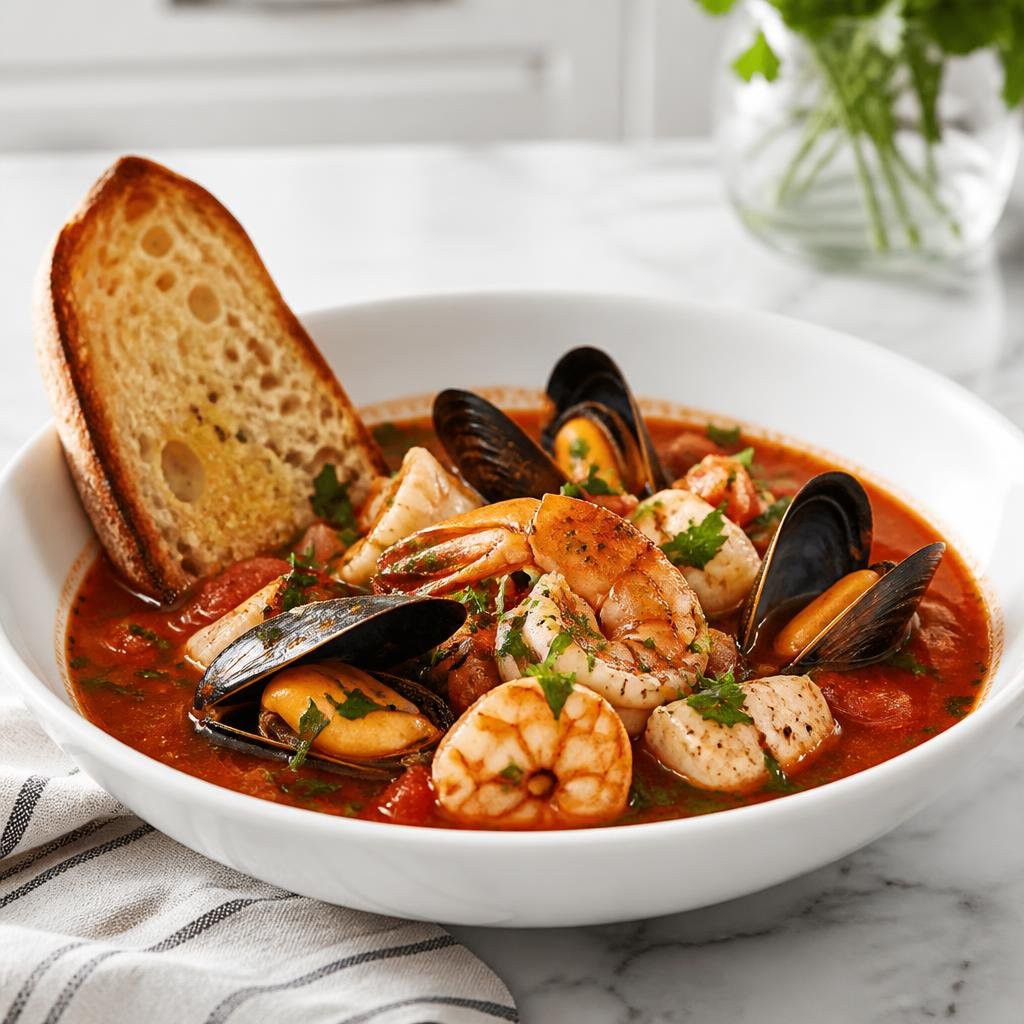
There are dinners that ask for a long list of ingredients and a lot of attention, and then there is cioppino, which asks for a good pot, a rich tomato broth, and the best seafood you can find — and rewards you with something that tastes like it came from a restaurant on the San Francisco waterfront. Ina Garten Cioppino is all about the base: fennel and onions cooked until they are very soft, a tomato broth simmered slowly until it is rich and deep, and fresh seafood added at exactly the right moment so it stays tender.
Why You Will Love Ina Garten Cioppino
Some recipes earn their place through drama, and some through reliability.
This one manages both, which is why it is such a useful dish to have in your collection. It takes just 20 minutes of hands-on prep, the pot does the rest over the next forty minutes, and it serves 6 generously, so it is easy to fit into a holiday dinner or a gathering of friends. Most of that cooking time is a gentle simmer: the broth thickens and blends its flavours while you set the table, and the seafood itself cooks in minutes at the very end.
The first reason to love this recipe is the broth. A good cioppino broth has a depth that tastes like it took all day, but it is built in about half an hour from simple things: onions and fennel cooked soft, garlic and oregano, tomato paste cooked until it darkens, a splash of dry white wine, crushed tomatoes, and seafood stock. Each layer adds something — sweetness from the fennel, warmth from the oregano, brightness from the wine, richness from the tomatoes — and the slow simmer marries them into a broth that is bold, fresh, and full of flavour. It is the kind of broth you will want bread for, just to soak up every last spoonful.
The second reason is how impressive it looks for how little work it takes. A big pot of cioppino, brought to the table with the shells open and the parsley scattered over the top, looks like a celebration. It is perfect for Christmas Eve or a New Year’s dinner, it looks very fancy but is easy to serve to a group, and since it is all in one pot, cleanup is very fast. Your guests will be very impressed by the presentation, and the dish makes any Sunday night feel like a special party.
The third reason is flexibility. The recipe gives you a clear structure — broth first, firm fish second, shellfish and shrimp last — and within that structure there is room to use the seafood you can find and like best. It is a symbol of community and sharing, and it suits the occasions when people gather around one pot and help themselves. Once you have made it, it becomes
one of those recipes you return to whenever you want a dinner that feels special without being stressful.
Cioppino is one of those dishes that sounds too fancy to need a guide, until you have eaten one where the broth is rich rather than thin, the fish is firm rather than falling apart, and the shells have opened wide over a stew that tastes like the sea — and then you realise the difference is in the details. The secret, as the recipe puts it, is the base: cook the fennel and onions until they are very soft, use high-quality seafood, and do not rush the process. The recipe takes 20 minutes of prep and 40 minutes of cooking, it serves 6, and each serving is 450 kcal, so it fits easily into a Christmas Eve dinner or a special weekend meal. There is no fancy equipment and nothing you need to buy specially — a large Dutch oven or heavy stockpot, a sharp knife, and a stove will do the job.
The full recipe is on Recipes Walay at https://recipeswalay.com/ina-garten-cioppino-recipe/
What Is Ina Garten Cioppino?
Cioppino is a classic Italian-American seafood stew from San Francisco, and its story is as good as its flavour. Italian fishermen would “chip in” whatever was left from the day’s catch, throwing it all into a big pot of tomato stew, and the dish that came out of that sharing became cioppino. It is a symbol of community: a pot built from what is fresh and available, made to be shared at a table full of people, with bread to soak up the broth. Ina Garten made this version famous by keeping it simple and elegant, and the recipe on Recipes Walay follows her approach closely.
The dish is built in layers. First comes the broth: olive oil, onions and fennel cooked soft, garlic with oregano and red pepper flakes, tomato paste, dry white wine, crushed tomatoes, and seafood stock, simmered uncovered until it thickens and the flavours blend. Then comes the seafood, in order of how long it needs: firm white fish first, then shrimp, mussels, and clams, all cooked gently in the hot broth until the shrimp turn pink and the shells open wide. Fresh parsley goes in at the end, and the stew is served hot and fresh, immediately, with bread for the broth.
On Recipes Walay, the recipe is listed as a main course in the American and Italian cuisine tradition, and it serves 6 people. The card gives 20 minutes of prep time, 40 minutes of cook time, and a total time of 1 hour, with 450 kcal per serving. The dish is, in the recipe’s own words, bold, fresh, and full of amazing flavours, and it brings the taste of the ocean right to your kitchen table. That is exactly what a Christmas Eve dinner should feel like.
Ingredients You Need for Ina Garten Cioppino (with Quantities)
The shopping list for cioppino looks long at first glance, but it is really two groups: the broth, and the seafood. Every quantity below comes straight from the recipe on Recipes Walay, and the seafood is the one place where quality matters most — fresh fish makes a huge difference in the final taste, and the recipe says so plainly.
- 1/4 cup good olive oil
- 2 cups chopped yellow onions (2 onions)
- 2 cups chopped fennel (1 large bulb)
- 4 teaspoons minced garlic (4 cloves)
- 1 teaspoon dried oregano
- 1/2 teaspoon crushed red pepper flakes
- 1/4 cup tomato paste
- 1 1/2 cups dry white wine (like Pinot Grigio)
- 1 (28-ounce) can crushed tomatoes
- 3 cups seafood stock or clam juice
- 1 pound large shrimp, peeled and deveined
- 1 pound firm white fish (like cod or halibut), cut in chunks
- 1 pound mussels, scrubbed and debearded
- 1 pound clams (littleneck or manila)
- 1/2 cup fresh parsley, chopped
- Salt and black pepper to taste
The fennel is the ingredient people ask about most, and it is worth understanding. Fennel gives the most authentic Italian-American taste in this stew: cooked slowly with the onions, it turns sweet and soft and builds the base flavour the whole broth rests on. If you cannot find fennel, the recipe says you can use celery instead, but the fennel is what makes the dish taste like cioppino rather than like a generic tomato fish soup. Buy a large bulb, chop it the same size as the onions, and give it the full ten minutes to soften.
The seafood needs a little care when you buy it. The shrimp should be large, peeled and deveined; the white fish should be firm — cod or halibut are the recipe’s suggestions — and cut into chunks that are big enough to hold together in the stew; the mussels should be scrubbed and debearded; and the clams should be littleneck or manila. A pound of each is the right amount for six servings, and the mix is what makes the stew feel generous: shrimp for sweetness, fish for body, mussels and clams for the flavour of the sea and the pleasure of opening shells at the table. The dry white wine should be a good one you would drink — Pinot Grigio is the recipe’s suggestion — because a sweet wine would ruin the balance, and the recipe warns against it.
A note on quantities: salt and black pepper are listed “to taste”, which means the recipe leaves the seasoning to you. The seafood stock and the shellfish already carry salt, so season lightly at the start and adjust at the end, when you can taste the finished broth with all its flavours in it. The parsley is half a cup, chopped, and it goes in right at the end so it stays bright and fresh.
Equipment You Need
You do not need any special equipment for cioppino, and the list below is everything the recipe calls for. The large Dutch oven or heavy stockpot is the one thing that matters: it needs to be big enough to hold the broth and all the seafood comfortably, and heavy enough to hold a steady simmer without scorching the bottom. Everything else is basic kitchen equipment, and a small bowl for discarded shells is a thoughtful touch the recipe includes — you will need somewhere to put the shells that do not open.
- Large Dutch oven or heavy stockpot
- Chef’s knife and a solid cutting board
- Large wooden spoon for stirring the stew
- Measuring cups and spoons for accuracy
- A small bowl for discarded shells
- Tongs for handling the delicate seafood
The wooden spoon matters because you will be stirring a tomato broth that can catch if it is left still, and a wooden spoon lets you scrape the bottom of the pot — especially when you deglaze with the wine — so all the browned flavour comes up into the broth. The tongs matter because the seafood is delicate: fish chunks break apart if you stir them roughly, and tongs let you place the fish and shellfish gently into the pot and lift them out without breaking them. Have your measuring cups out before you start, because the wine, stock, and tomato paste all go in in quick succession once the vegetables are soft.
How to Make Ina Garten Cioppino Step by Step
The recipe gives 8 steps, and this guide expands them into 12 clear stages so you can follow along without losing your place. The broth takes about 40 minutes from start to finish, and the seafood itself cooks in under 15 minutes at the very end, so the timing of the last steps matters most: have the seafood ready, the table set, and the bread out before the fish goes in.
Step 1: Prepare the Seafood and Chop the Vegetables
Before any heat goes on, get everything ready. Chop the 2 cups of yellow onions and the 2 cups of fennel into even pieces, mince the 4 cloves of garlic, and chop the half cup of fresh parsley. Rinse the shrimp, cut the firm white fish into chunks, and check the mussels and clams: scrub the mussels and pull off their beards, rinse the clams, and throw away any shells that are already open and do not close when tapped, or any that are cracked. Having everything prepared before you start cooking is what makes the last steps calm instead of rushed, because the seafood cooks fast and you will not have time to chop while it is in the pot.
Step 2: Heat the Olive Oil in a Large Pot
Heat the 1/4 cup of good olive oil in your large Dutch oven or heavy stockpot over medium heat. Let the oil get hot enough to shimmer before anything goes in — oil that is not hot enough will make the vegetables steam instead of sauté, and they will never build the sweet, soft base the broth needs. A large pot matters here: the broth, the tomatoes, the stock, and four pounds of seafood all need room, and a crowded pot cooks unevenly.
Step 3: Sauté the Onions and Fennel Until Soft
Add the chopped onions and fennel to the hot oil and cook them for about 10 minutes, stirring now and then, until they are soft. This is the step the recipe calls its secret, and it is worth taking seriously: the fennel and onions must be very soft before anything else goes in, because this slow sauté is what creates the sweet and savoury foundation for the whole broth. Do not rush it on high heat — softened slowly, the onions and fennel turn sweet; rushed, they stay sharp and the broth tastes thin. Ten minutes, medium heat, and patience will get you there.
Step 4: Add the Garlic, Oregano and Red Pepper Flakes
Stir in the minced garlic, the teaspoon of dried oregano, and the half teaspoon of crushed red pepper flakes, and cook for just one minute. You will smell the amazing aroma almost immediately — that is the garlic and oregano waking up in the hot oil. One minute is enough, and it is also the limit: garlic burns quickly, and burnt garlic turns bitter and will spoil the whole pot. Keep the spoon moving, watch the colour, and move on to the next step as soon as the minute is up.
Step 5: Stir in the Tomato Paste
Add the 1/4 cup of tomato paste to the pot and stir it well with the vegetables. Let it cook for two minutes, stirring often. This short cook is what makes the broth rich and deep in colour and flavour: tomato paste straight from the can tastes raw and sharp, but two minutes in the hot pot caramelises it slightly, deepens its colour to a dark red, and gives the broth a savoury depth that crushed tomatoes alone cannot provide. Keep stirring so the paste does not stick to the bottom.
Step 6: Deglaze with the White Wine
Pour in the 1 1/2 cups of dry white wine and use your spoon to scrape any brown bits from the bottom of the pot. Those brown bits have lots of flavour — they are the caramelised sugars from the onions and the tomato paste — and the wine lifts them up into the broth where they belong. Let the wine simmer for a few minutes to reduce, which cooks off the alcohol and leaves the brightness behind. Use a dry wine, as the recipe insists: a sweet wine would throw the whole balance off and make the broth taste wrong.
Step 7: Add the Crushed Tomatoes and Seafood Stock
Add the 28-ounce can of crushed tomatoes and the 3 cups of seafood stock or clam juice, and stir everything together. The tomatoes give the broth its body and its red colour, and the stock gives it the flavour of the sea that makes the stew taste like cioppino rather than like a pasta sauce. Clam juice is a fine substitute if you cannot find seafood stock — the recipe allows either — but use a good one, because the broth is only as good as the stock that goes into it.
Step 8: Simmer the Broth Base for 30 Minutes
Bring the liquid to a boil, then turn the heat down and let it simmer uncovered for 30 minutes to thicken and blend the spices. Do not rush this simmer: it is the time when the broth stops tasting like separate ingredients and starts tasting like one thing, as the tomatoes soften, the stock reduces slightly, and the oregano, garlic, and pepper flakes melt into the background. Uncovered is important, because a little evaporation is what thickens the broth. Taste it near the end of the simmer and adjust the salt, remembering that the shellfish will add their own saltiness when they go in.
Step 9: Add the Firm White Fish
Gently stir in the chunks of white fish, using your tongs to place them in the broth rather than dropping them in. Cover the pot and cook for 3 to 5 minutes. The fish should just start to turn opaque and firm to the touch — that is the sign it is nearly done, and it will finish cooking in the residual heat when the shellfish go in. Do not stir the fish roughly or it will break apart; a gentle nudge with the tongs is all it needs. This is the moment when the stew starts to look like a meal rather than a sauce.
Step 10: Add the Shrimp, Mussels and Clams
Add the shrimp, mussels, and clams to the pot, nestling them into the hot broth, and cover it again. Cook for 5 to 10 minutes. The shrimp will turn pink and the shells will open wide — those are the two signs to watch for. The shrimp cook fast, and the mussels and clams open when they are done, so you can judge the whole pot by looking at it rather than by the clock. Keep the lid on so the steam stays in the pot and cooks the shellfish evenly.
Step 11: Check the Shells and Season
Lift the lid and check the stew. Throw away any shells that did not open — the recipe is clear about this, and it is a food-safety rule as well as a quality one: a shell that stays shut after cooking was not good to begin with, and it should not be eaten. The small bowl for discarded shells earns its place here. Taste the broth now and add salt and pepper if needed, keeping in mind that the shellfish have already seasoned it, so add a little at a time.
Step 12: Stir in the Parsley and Serve Hot
Stir in the half cup of fresh chopped parsley, which will brighten the whole pot with its colour and fresh flavour, and serve the stew hot and fresh immediately. Ladle it into wide, shallow bowls so everyone gets broth, fish, shrimp, and shells, and put the bread on the table at the same time — a crusty baguette or garlic bread is a must, because the broth is half the pleasure of the dish. Cioppino waits for no one: the seafood is at its best the moment it comes off the heat, so have everyone seated before the last step.
Expert Tips for Perfect Cioppino
The recipe gives five tips, and each one protects a different part of the dish. Together they are the difference between a good seafood stew and a great one, and they are all easy to follow once you know why they matter.
Always use a dry white wine for the best taste. This is the first tip in the recipe, and it is the one that shapes the whole broth. A dry wine like Pinot Grigio adds brightness and acidity that cut through the richness of the tomatoes and lift the seafood flavours. A sweet wine does the opposite: it makes the broth taste cloying and throws the balance off, and no amount of seasoning afterwards will fix it. If you would not drink the wine, do not cook with it — and if you prefer not to use alcohol at all, the recipe’s own FAQ gives the substitute: skip the wine, use extra seafood stock and a tablespoon of lemon juice instead, because the acid is important for the flavour profile.
Do not overcook the seafood. Seafood gets rubbery if it stays on the heat for too long, and this is the most common way a cioppino goes wrong. The fish needs only 3 to 5 minutes, the shrimp and shellfish only 5 to 10, and the stew should come off the heat the moment the shrimp are pink and the shells are open. Remember that the seafood keeps cooking in the hot broth even after the pot comes off the stove, so take it off the heat a touch early rather than a touch late, and serve it straight away.
You can add scallops or calamari for extra variety. If you want a richer mix of seafood, the recipe allows it: add scallops or calamari with the shrimp at the end, so they cook in the same short window and do not go rubbery. Scallops need only a few minutes, and calamari turns tough if it is cooked too long, so the same rule applies — late in the pot, watched closely, and out as soon as they are done. This is a good option when you are cooking for seafood lovers who enjoy a fuller mix.
If you cannot find fennel, use celery. The recipe is honest that fennel gives the most authentic Italian-American taste, and it is worth seeking out for that reason. But if your shop does not have it, celery cooked the same way — soft and slow with the onions — will still give the broth its aromatic base. The flavour will be a little less sweet and anise-like, but the structure of the dish stays the same, and the stew will still be very good.
Make the broth a day early. The flavours get even better after sitting in the fridge overnight, because the tomatoes, stock, and spices have time to marry properly. This is the one make-ahead step the recipe itself recommends: cook the broth through the 30-minute simmer, cool it, and refrigerate it, then reheat it gently the next day and add the seafood fresh. The seafood itself should always be cooked on the day you serve it, and the stew should never be frozen once the seafood is in it — but the broth only improves with a night in the fridge.
One more habit that helps: buy the seafood on the day you cook it, and keep it cold until it goes into the pot. Fresh seafood is the heart of this dish, and the recipe’s emphasis on quality is not decoration — a tired shrimp or an old mussel will show in the finished stew, while fresh seafood makes the whole pot taste like the sea. Ask your fishmonger what is freshest, and let that guide any small substitutions you make.
Variations to Try
The recipe as written is the classic version, and it is worth making exactly as it stands the first time. Once you know it, though, the dish is forgiving, and there are a few simple twists that stay true to the original while giving it a different character. These are cook’s variations, not part of the recipe card — the quantities and method above are the recipe’s, and the ideas here are ways to play with it once you are comfortable.
Try a spicier broth. The recipe uses half a teaspoon of crushed red pepper flakes, which gives the broth a gentle warmth. If you like more heat, a full teaspoon will give the stew a noticeable kick without overwhelming the seafood. Add it at the same time as the garlic and oregano, and taste the broth before the seafood goes in, so you can judge the heat properly. This is a good option for a winter night when you want the stew to feel warming as well as rich.
Add a splash of sherry or brandy. A small splash of dry sherry stirred in with the wine adds a nutty depth to the broth that suits the shellfish very well. Keep it modest — a couple of tablespoons is enough — and let it simmer with the wine so the alcohol cooks off. This is an old restaurant trick for seafood stews, and it works because the sherry’s flavour sits underneath the tomato rather than competing with it.
Make it with whatever the catch brings. The recipe’s own backstory is that cioppino was built from whatever the fishermen had left, and that spirit is still the right one: if your fishmonger has beautiful scallops, fresh crab, or good squid, use them in place of one of the listed seafoods, keeping the total amount about the same and adding them at the same stage as the shrimp. The broth does not care which seafood it holds — what matters is that the seafood is fresh, and that it is not overcooked.
Serve it as a Christmas Eve centrepiece. This is less a variation of the recipe than a variation of the occasion, and it is the one the recipe itself suggests: cioppino is perfect for Christmas Eve or a New Year’s dinner, because it looks very fancy but is easy to serve to a group. For a holiday table, make the broth a day early as the recipe recommends, set the table with wide bowls and plenty of bread, and bring the pot to the table so everyone can see the shells and the steam. For more Christmas dinner ideas built around the same kind of celebration, the steak pie guide is another winter favourite: https://recipeswalay.com/easy-gordon-ramsay-steak-pie-for-christmas-dinner/
What to Serve with Ina Garten Cioppino
Cioppino is a complete meal in one pot, but it needs bread — the recipe is clear about that, and everything else is a supporting player. The sides below are the recipe’s own suggestions, and beyond those the Recipes Walay winter collections have plenty of ideas for building a fuller holiday table around the stew.
Crusty Baguette or Garlic Bread. This stew needs something to soak up the broth, and a crusty baguette or garlic bread is a must. The broth is half the pleasure of the dish, and without bread you will leave the best part of it in the bowl. A baguette torn into chunks works well for a family table, because everyone can tear off as much as they need; garlic bread, brushed with butter and garlic and baked until crisp, adds its own flavour and suits a more formal occasion. Put more bread on the table than you think you need — it will disappear.
Crisp Green Salad. A simple salad with a lemon vinaigrette works wonders for contrast. The stew is rich and warm, and a cold, crisp salad with a sharp lemon dressing refreshes the palate between spoonfuls. Keep it simple: leaves, a little cucumber, and a light vinaigrette made with lemon juice, olive oil, and a pinch of salt. The acidity of the lemon echoes the wine in the broth and cleans the palate without competing with the seafood.
Light Lemon Sorbet. For dessert, a light lemon sorbet is a great way to end the meal. It cleans the palate after the rich seafood flavours, and it keeps the whole evening feeling light rather than heavy. It is the kind of ending that suits a Christmas Eve dinner, where the main course has been rich and the dessert should refresh rather than add more richness.
For a fuller winter table, the recipe’s own suggestions are only the start. A baked potato is a generous, hearty side when you want something warm and filling alongside the stew — the baked potato guide covers exactly that: https://recipeswalay.com/easy-gordon-ramsay-baked-potatoes-for-winter-nights/ — and a warming winter stew makes a similar partner on a cold night: https://recipeswalay.com/easy-winter-stew-recipes/. If you are building a whole winter menu, the winter casserole collection (https://recipeswalay.com/easy-winter-casserole-recipes/) and the Gordon Ramsay winter recipes roundup (https://recipeswalay.com/easy-gordon-ramsay-winter-recipes-for-cozy-nights/) are worth a look, along with the chicken stew and biscuits guide (https://recipeswalay.com/easy-ina-garten-chicken-stew-and-biscuits-for-winter-nights/), which is a similar kind of one-pot comfort.
Make-Ahead and Storage
The recipe gives clear guidance here, and it is worth following exactly. The broth can be made a day early — in fact, the recipe says the flavours get even better after sitting in the fridge overnight. Cook the broth through the 30-minute simmer, let it cool, and store it in the fridge. The next day, reheat it gently and add the seafood fresh, following the same steps. This is the best way to spread the work of a Christmas Eve dinner across two days without compromising the dish at all.
For leftovers, the recipe’s storage guidance is equally clear. Store leftovers in an airtight container in the fridge for up to 2 days. Reheat gently on the stove over low heat, and do not boil the stew again — boiling will overcook the seafood and turn it rubbery, and it will break the fish apart. If the broth is too thick after storing, add a splash of water or stock to loosen it. And do not freeze the finished stew: the recipe is explicit that the seafood texture will become very poor when thawed, so freezing is not a good option for this dish. The broth alone, before the seafood goes in, is a different matter, but the finished stew should be eaten within two days and never frozen.
Nutrition and Calories
The recipe card gives a full nutrition table, and every figure below comes from it. Each serving of Ina Garten Cioppino is 450 kcal, with 45 grams of protein, 12 grams of total fat, 18 grams of carbohydrates, and 850 milligrams of sodium. The recipe serves 6, so those figures are per serving as the recipe defines it.
That is a strong nutritional profile for a celebration dish, and the protein figure is the one that stands out: 45 grams per serving is high, and it comes from the four pounds of seafood — shrimp, fish, mussels, and clams are all lean protein. The fat is low at 12 grams, because the only added fat is the quarter cup of olive oil spread across six servings, and the carbohydrates are low too at 18 grams, because the stew itself has no pasta, rice, or bread in it — the bread you serve alongside is separate, and it is where most of the meal’s carbohydrates will come from. The sodium is the one figure to watch: 850 milligrams per serving is not low, and it comes from the seafood stock and the shellfish themselves, so season the broth lightly and let the seafood do the seasoning. If you are watching sodium, a low-sodium seafood stock and a light hand with the salt at the end will help, though the recipe itself does not give a low-sodium variant.
Occasions to Serve Ina Garten Cioppino
This is a dish that was made for occasions, and the recipe says so plainly: it is perfect for Christmas Eve or a New Year’s dinner, it looks very fancy but is easy to serve to a group, and it makes any Sunday night feel like a special party. Its real home is the holiday table. A pot of cioppino, brought to the table with the shells open and the parsley scattered over the top, is a centrepiece in the truest sense: it is the thing everyone gathers around, the thing people talk about, and the thing that makes the evening feel like a celebration rather than just a dinner.
For Christmas Eve, it is hard to beat. The Feast of the Seven Fishes is an Italian-American Christmas Eve tradition, and a seafood stew is its natural centrepiece — and even for families who do not follow that tradition, a fish stew on Christmas Eve feels right, because it is lighter than a roast, it is made for sharing, and it leaves room for the Christmas Day meal that follows. Make the broth a day early as the recipe recommends, so that Christmas Eve itself is calm: reheat the broth, add the seafood, and serve. The rest of the Christmas table can be built around it — the chicken marbella guide (https://recipeswalay.com/easy-ina-garten-chicken-marbella-for-christmas/) and the pork belly guide (https://recipeswalay.com/easy-gordon-ramsay-pork-belly-for-christmas/) are both Christmas dishes from the same collection, and they show the range of the holiday table this stew belongs to.
For a New Year’s dinner, cioppino works for the same reasons: it is festive, it serves a group easily, and it is all in one pot, so the cook is not stuck in the kitchen while everyone else celebrates. For a summer dinner on the patio, it is also great, because the seafood is light and the meal feels like a holiday even in warm weather. And for a Sunday night, it turns an ordinary evening into a small party, which is sometimes the best occasion of all. If you are planning the morning after a Christmas Eve cioppino, the Christmas morning recipes on the site will help you carry the celebration into the next day: https://recipeswalay.com/easy-christmas-morning-recipes-for-a-sweet-holiday-start/
FAQs about Ina Garten Cioppino
Can I use frozen seafood?
Yes, you can use frozen seafood for this recipe, and the recipe’s own FAQ says so. Make sure to thaw it completely in the fridge first, and pat it dry before adding it to the pot for the best results. This prevents extra water from thinning your broth, which matters because the broth’s richness depends on its thickness. Thaw the seafood overnight in the fridge rather than in warm water, and check the mussels and clams after thawing in the same way you would fresh ones — discard any shells that are open and do not close, or that are cracked.
What if I don’t want to use wine?
If you prefer not to use alcohol, you can skip the wine, and the recipe’s own FAQ gives the substitute: use extra seafood stock and a tablespoon of lemon juice instead. The acid is important for the flavour profile, because it helps cut through the richness of the tomatoes and brightens the whole broth. Without either the wine or the lemon juice, the broth can taste flat and heavy, so do not simply leave the wine out — replace it with the stock and lemon juice, and taste the broth before the seafood goes in to check that it has the brightness it needs.
Is this recipe gluten-free?
The stew itself is naturally gluten-free if your stock is safe, and the recipe’s own FAQ says so. Just make sure to serve it with gluten-free bread, because the bread is an essential part of the meal and ordinary bread would break the gluten-free rule. Always check the labels on your tomato paste and canned tomatoes to be completely sure of the ingredients, and check the stock too, because some stocks contain gluten. The seafood, vegetables, and wine are naturally gluten-free, so the stew itself needs no changes.
Can I make the cioppino broth ahead of time?
Yes, and the recipe recommends it. Make the broth a day early — cook it through the 30-minute simmer, let it cool, and keep it in the fridge overnight. The flavours get even better after sitting in the fridge, because the tomatoes, stock, and spices have time to marry. The next day, reheat the broth gently on the stove and add the seafood fresh, following the same steps. The seafood itself should always be cooked on the day you serve it, and the finished stew should not be frozen, but the broth is the part of the dish that rewards a little patience.
Can I add scallops or calamari to the cioppino?
Yes, the recipe allows it. You can add scallops or calamari for extra variety — just add them with the shrimp at the end, in the same 5-to-10-minute window, so they cook briefly and do not go rubbery. Scallops need only a few minutes in the hot broth, and calamari turns tough if it is cooked too long, so the same rule that applies to the shrimp applies to them: late in the pot, watched closely, and out as soon as they are done. Keep the total amount of seafood about the same, so the broth-to-seafood balance stays right.
Can I freeze leftover cioppino?
No, and the recipe is explicit about this. Do not freeze the finished stew, because the seafood texture will become very poor when thawed — the fish will fall apart, the shrimp will turn rubbery, and the shellfish will lose their texture entirely. Leftovers should be stored in an airtight container in the fridge for up to 2 days and reheated gently on the stove over low heat, without boiling. If you want to prepare ahead, freeze or refrigerate the broth alone before the seafood goes in — but the finished stew, with seafood in it, should be eaten within two days and never frozen.
Final Thoughts
Cioppino is proof that the most memorable dinners are often the simplest ones, and Ina Garten’s version is a reminder of why this dish has lasted so long. It asks for so little — a good pot, a patient broth, and the best seafood you can find — and gives back so much: a stew that is warm, filling, and tastes like the sea, with a broth you will want bread for and seafood that is tender because it was never rushed. With basic ingredients, you can make something that tastes like a restaurant meal, and if you follow the recipe’s five tips carefully — a dry wine, seafood that is never overcooked, fennel cooked until it is very soft, and a broth that is given its full thirty minutes — you will get it right the first time.
What makes this recipe worth keeping is not just how good it is, but how it brings people together. Cioppino began as fishermen sharing whatever they had, and it is still a dish that is made to be shared: one pot, one table, and everyone helping themselves. The method does not depend on luck or on special equipment, and the recipe tells you plainly what matters: a soft, sweet base, a slow simmer, and seafood added at exactly the right moment. Those are habits that will serve you well in any kind of cooking, and this recipe is a generous way to learn them.
Try this Ina Garten Cioppino Recipe once, and it will become a favourite celebration dish at home — a stew that turns Christmas Eve into something worth gathering for, and a recipe you will come back to whenever you want a dinner that feels special, tastes like the sea, and is done properly.