

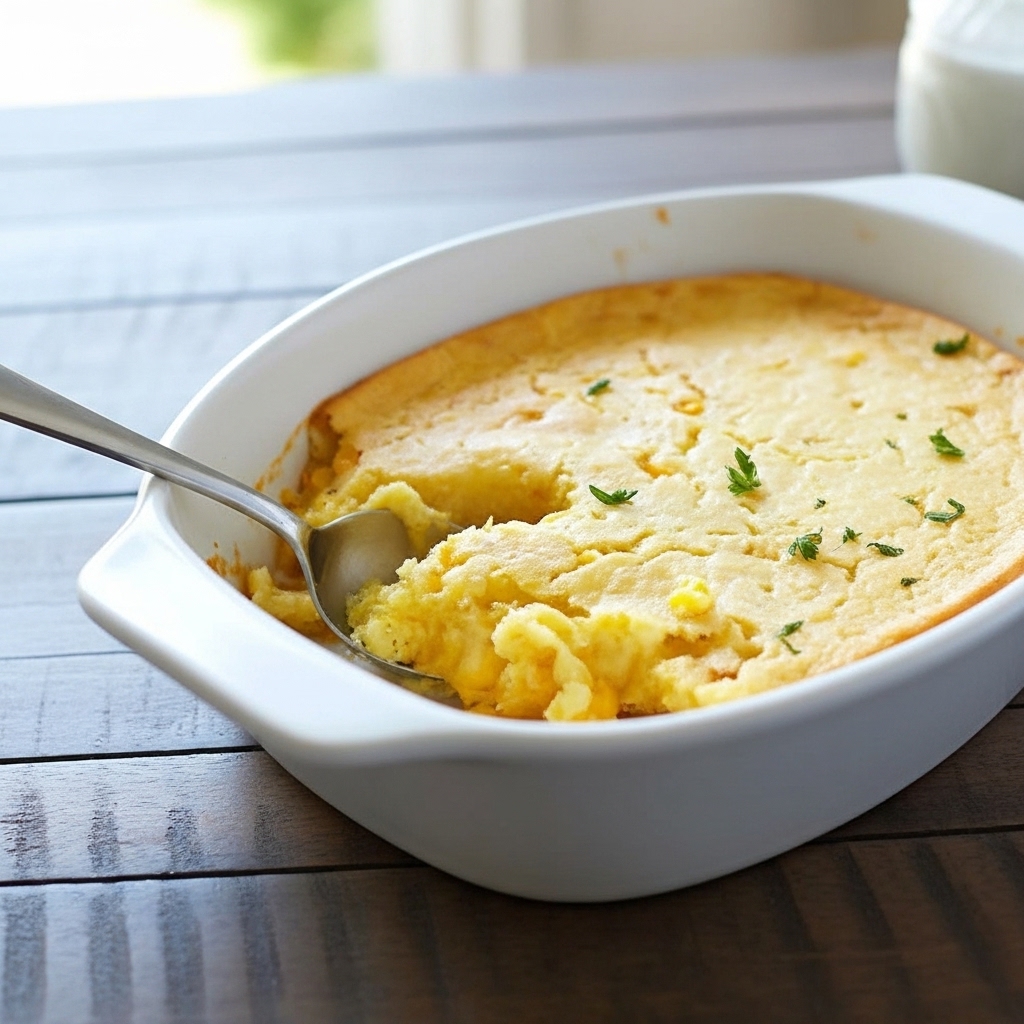
There are Thanksgiving side dishes that demand your attention all day, and then there is corn casserole, which asks for one bowl, one baking dish, and about fifteen minutes of your time before the oven takes over. Ina Garten Corn Casserole is a warm, creamy, deeply satisfying side dish — sweet corn folded into a rich sour cream and cheddar batter, baked until the top turns golden and lightly crisp while the inside stays moist and tender. It tastes like something your grandmother made, it costs very little effort, and it is exactly the kind of side dish that makes a Thanksgiving table feel complete without keeping the cook in the kitchen.
Corn casserole is one of those dishes that sounds humble on paper and makes perfect sense on the plate. Whole corn kernels give it sweetness and bite, creamed corn gives it body, sour cream and butter give it richness, and shredded cheddar melts through the whole thing and turns the top golden. The recipe takes 15 minutes of prep and 45 to 50 minutes in the oven, it serves 8 people, and the method is simple enough for a first-timer: whisk the eggs and dairy, fold in the corn and cheese, pour it into a dish, and bake. This guide walks you through the full recipe exactly as it appears on Recipes Walay, with every ingredient, every step, expert tips, variations, serving ideas and answers to the questions people actually ask before they make it.
The full recipe is on Recipes Walay at https://recipeswalay.com/ina-garten-corn-casserole-recipe/
Why You Will Love Ina Garten Corn Casserole
Some recipes earn their place through speed, and some through comfort. This one manages both in its own way, which is why it is such a useful dish to have in your collection. It takes just 15 minutes of hands-on prep, the oven does the rest over 45 to 50 minutes, and it feeds 8 people generously, so it is easy to fit into a busy Thanksgiving schedule or a relaxed family dinner. Most of that cooking time is completely hands-off, which means you can cook the turkey, set the table, or simply relax while the casserole bakes and the kitchen fills with the smell of butter and sweet corn.
First, the texture is what makes it unforgettable. The contrast between the golden, lightly crisp top and the soft, creamy inside is the whole point of the dish — each spoonful melts in your mouth, but there is enough structure from the corn kernels and the egg to hold a neat serving on the plate. It is soft without being mushy, and rich without being heavy, and that balance is why people go back for seconds.
Second, it is genuinely beginner-friendly. There is no sauce to make, no pastry to roll, no technique to master. You need one large bowl, a whisk, and a 9×13 baking dish, and the recipe forgives small mistakes — a little extra cheese, a few minutes more in the oven, and it still comes out delicious. If you can whisk eggs and stir a batter, you can make this casserole, and it will look like you spent far longer on it than you did.
Third, it is a crowd-pleaser across ages. Children love the sweet corn and melted cheese, adults love the creamy richness, and older guests love that it is soft, familiar comfort food. On a Thanksgiving table full of dishes that divide opinion, corn casserole is the one nobody argues with.
Fourth, you can prepare it ahead of time, which makes hosting stress-free and fun. The recipe itself says so, and that matters on Thanksgiving Day, when the oven is the most contested piece of equipment in the house. Assembling the casserole ahead and baking it when the turkey comes out to rest is the kind of planning that turns a chaotic holiday into a calm one.
Finally, it pairs with almost everything. Roast turkey, roast chicken, ham, prime rib — the casserole sits happily next to all of them, and its creamy sweetness balances rich, salty mains beautifully. One recipe, many tables, and it never disappoints.
What Is Corn Casserole?
A corn casserole is a baked side dish made from corn, eggs, dairy and cheese, set in the oven until it is soft, slightly firm and golden on top. It belongs to the great American family of holiday casseroles — the same family as green bean casserole and sweet potato casserole — dishes that are assembled in one bowl, poured into one dish, and baked until the whole house smells like a holiday. What sets corn casserole apart is its sweetness: the corn itself is naturally sweet, a tablespoon of sugar deepens it, and the cheddar and sour cream keep it savory enough to sit next to a roast instead of a dessert.
Ina Garten’s version, as shared on Recipes Walay, keeps the classic structure: whole corn kernels and creamed corn for texture and body, sour cream and whole milk for creaminess, melted butter for richness, eggs to set the whole thing, a little flour to hold it together, and shredded cheddar cheese that melts through the batter and crisps lightly on top. It is American in style, a side dish course, and it serves 8 at 310 calories each. It bakes at 350°F in a 9×13 baking dish, and the total time from starting to serving is about 1 hour 5 minutes, plus a short rest.
One important distinction, because it confuses people every year: corn casserole is not corn pudding. Corn pudding, which has its own guide on Recipes Walay at https://recipeswalay.com/easy-corn-pudding-for-thanksgiving/, is softer, more custard-like, and usually made without cheese or flour. This casserole is firmer, cheesier, and slices cleanly enough to serve with a spatula. They are cousins, not twins, and both deserve a place on a holiday table — but they are different dishes, and this guide is about the casserole.
Ingredients You Need for Ina Garten Corn Casserole (with Quantities)
Everything in this recipe is a pantry or fridge staple, and that is part of its charm. You need 11 ingredients in total, and every one of them has a job to do. Measure everything before you start, and the whole dish comes together in minutes.
You need 2 cups of whole corn kernels, 1 cup of creamed corn, 1 cup of sour cream, ½ cup of melted butter, 2 large eggs, 1 cup of shredded cheddar cheese, ½ cup of whole milk, ¼ cup of all-purpose flour, 1 tablespoon of sugar, 1 teaspoon of salt, and ½ teaspoon of black pepper. That is the whole list — no exotic ingredients, no special shopping trip.
The two corns do different jobs, and both matter. The whole corn kernels give sweetness and bite, little bursts of corn in every spoonful, while the creamed corn gives body and moisture, binding the casserole together so it slices instead of crumbling. The sour cream is the creamy backbone of the dish, and the recipe’s tip is to use full-fat dairy for richness — low-fat sour cream works, but the result is thinner and less luxurious. The melted butter adds depth and helps the top brown. The eggs set the casserole so it holds its shape when you cut into it. The flour, just a quarter cup, is the quiet structural ingredient that keeps everything together without making the dish heavy. The sugar deepens the corn’s natural sweetness, the salt seasons the whole dish, and the black pepper adds a gentle warmth that keeps the sweetness from becoming one-note.
The cheddar deserves a word of its own. One cup of shredded cheddar melts through the batter and turns the top golden and lightly crisp. Sharp cheddar gives the most flavor, mild cheddar gives the creamiest melt, and either one works — use the cheese you like to eat. Shredding it yourself from a block melts better than pre-shredded cheese, which is coated to keep it from clumping, but pre-shredded is perfectly fine on a busy holiday.
If you are cooking for a crowd and want the casserole to go further, it stretches easily: the 8 generous servings become 10 smaller ones when it is one side among many, and the recipe doubles cleanly into two 9×13 dishes if you are feeding a big family.
Equipment You Need
You need 8 simple pieces of equipment, and you almost certainly own all of them already. Gather them before you start so the dish flows without hunting for a missing bowl halfway through.
You need a large mixing bowl, a medium mixing bowl, measuring cups, measuring spoons, a whisk, a rubber spatula, a 9×13 baking dish, and an oven. The large mixing bowl holds the whole batter — make sure it is genuinely large, because 2 cups of corn, a cup of creamed corn, a cup of sour cream and a cup of cheese take up more room than you think, and a cramped bowl is how batter ends up on the counter. The medium mixing bowl is for the eggs and dairy if you like to work in stages. Measuring cups and spoons keep the ratios honest, which matters for the flour and the seasoning. The whisk blends the eggs and dairy into a smooth base. The rubber spatula folds in the corn and cheese gently and scrapes the bowl clean. The 9×13 baking dish is the standard size for this recipe; a smaller dish will make the casserole too deep and slow to set in the middle, and a larger one will make it too thin and dry. The oven does the rest.
Grease the baking dish lightly before you pour the batter in. A light coat of butter or cooking spray is all it takes, and it is worth doing carefully — a casserole that sticks to the dish is the most common way this simple side goes wrong, and a greased dish also makes serving and cleaning up far easier.
How to Make Ina Garten Corn Casserole Step by Step
The recipe has a compact step list on Recipes Walay, and this guide expands it into 12 steps so nothing is rushed and every move is clear. Follow them in order, do not overmix the batter, and remember the golden rule of this casserole: let it rest before serving, so it sets and slices cleanly.
Step 1: Preheat the Oven and Grease the Dish
Preheat the oven to 350°F. While it heats, grease the 9×13 baking dish lightly with butter or cooking spray, getting into the corners. A properly greased dish is the difference between servings that lift out cleanly and a casserole that has to be scraped out in pieces, so take the extra minute here.
Step 2: Whisk the Eggs
Add the eggs to a large bowl and whisk them until smooth. This is the base of the whole dish, so whisk them properly — no streaks of white or yolk left, just a uniform, pale yellow liquid. A smooth egg base is what gives the casserole its even set and its clean slice.
Step 3: Add the Sour Cream and Milk
Add the sour cream and the whole milk to the whisked eggs, and whisk until fully combined. The mixture should look smooth and creamy, with no lumps of sour cream left. This dairy base is what makes the casserole rich and tender, and getting it smooth now means you will not have to overmix later.
Step 4: Stir in the Melted Butter
Stir in the melted butter slowly, whisking as you pour. Adding the butter slowly, rather than all at once, keeps the mixture smooth and emulsified instead of greasy. The butter should be melted but not hot — if it is steaming, let it cool for a minute first so it does not cook the eggs on contact.
Step 5: Add the Flour, Sugar, Salt and Pepper
Add the flour, sugar, salt and black pepper, and mix until no lumps remain. The flour disappears into the dairy base and gives the casserole its structure, the sugar deepens the sweetness, and the salt and pepper season the whole dish. Mix just until the flour is gone — this is the last smooth mixing stage, and overworking it now is what makes a casserole tough.
Step 6: Fold in the Corn
Fold in the whole corn kernels and the creamed corn, using the rubber spatula and a gentle folding motion rather than vigorous stirring. The whole kernels give sweetness and bite, the creamed corn gives body and moisture, and folding rather than beating keeps the kernels intact and the batter light.
Step 7: Fold in the Cheese
Add the shredded cheddar cheese gently, folding it through the batter so it is spread evenly. The cheese melts as the casserole bakes, running through the whole dish and crisping lightly on top. Save a small handful to sprinkle over the surface if you want an extra golden, cheesy crust — it is not in the original recipe, but it is a cook’s trick that works beautifully with this dish.
Step 8: Pour into the Dish and Smooth the Top
Pour the mixture into the greased baking dish and smooth the top evenly with the spatula. An even top bakes evenly, so take a moment to spread the batter into the corners and level the surface. If you saved cheese for the top, sprinkle it on now.
Step 9: Bake for 45 to 50 Minutes
Bake for 45 to 50 minutes. The casserole is done when the top is golden and lightly crisp, the edges are set and pulling slightly away from the dish, and the center is just set — it should jiggle only slightly when you nudge the dish, not slosh. Start checking at 45 minutes, because ovens vary, and a casserole that bakes 5 minutes too long is a dry casserole.
Step 10: Cover Loosely if the Top Browns Early
If the top is browning too fast while the center is still soft, cover the dish loosely with foil and let the inside finish baking. This is one of the recipe’s own tips, and it is the right fix — the foil slows the browning without trapping so much steam that the top goes soggy. Check again after 5 minutes.
Step 11: Let It Rest Before Serving
Let the casserole rest before serving. This is not optional, and it is one of the recipe’s own tips. The rest lets the eggs finish setting, the cheese settle, and the whole dish firm up enough to slice cleanly. Ten minutes on the counter is enough, and the casserole will still be warm when you serve it. Cut into it too soon and it will slump and run; wait, and it holds a beautiful, neat square.
Step 12: Serve Warm
Serve the casserole warm, spooned or sliced straight from the dish, as a side dish next to the main course. Eight servings is the standard, and each one is 310 calories. It is at its best in the first hour after baking, when the top is still lightly crisp and the inside is soft and creamy.
Expert Tips for Perfect Corn Casserole
These 5 tips come straight from the recipe, and they cover the mistakes that turn a great casserole into an average one. Read them once before you bake, and the dish almost makes itself.
First, use fresh corn for better flavor. Fresh corn kernels, cut straight from the cob, give the sweetest, brightest flavor, and the recipe recommends them. Frozen corn that has been thawed is the next best option, and canned corn works in a pinch — but fresh is the standard the recipe sets, so use it when you can.
Second, do not overmix the batter. Mix just until the flour disappears and the corn and cheese are folded in, then stop. Overmixing develops the flour’s gluten and turns a tender casserole into a dense, rubbery one, and there is no fixing it once it is baked.
Third, let the casserole rest before slicing. This one is worth repeating, because it is the easiest step to rush on a busy holiday. Ten minutes on the counter lets the eggs set and the cheese settle, and the difference between a casserole cut too soon and one cut after a rest is the difference between a slump and a slice.
Fourth, use full-fat dairy for richness. Full-fat sour cream and whole milk are what make this casserole creamy and luxurious. Low-fat versions work, but the result is thinner, and on Thanksgiving, richness is the point.
Fifth, cover loosely if the top browns early. A loose sheet of foil over the dish slows the browning without steaming the top soggy, and it lets the center finish baking at its own pace. Check after 5 minutes and remove the foil for the last few minutes if you want the top to crisp again.
Variations to Try
Once you have made the classic casserole, it takes happily to small changes, and each one keeps the same creamy base and the same simple method. The variations below all use the same batter, the same dish and the same baking time, with only one or two ingredients swapped.
The spicy version adds a diced jalapeño, seeds removed, and a pinch of smoked paprika to the batter. The heat is gentle, the paprika adds a warm, smoky note, and the combination is lovely next to roast turkey. Add the jalapeño with the corn so it is folded through evenly.
The bacon version folds in ½ cup of cooked, crumbled bacon with the cheese. The bacon adds salt, smoke and crunch, and it turns the casserole from a side dish into the thing people talk about after dinner. Cook the bacon until crisp, drain it well, and crumble it fine so it spreads through the dish.
The herbed version adds 2 tablespoons of chopped fresh chives or parsley, folded in with the cheese, and a little extra black pepper. The herbs keep the dish bright and stop the richness from feeling heavy, and the green flecks look beautiful against the golden top.
The extra-cheesy version swaps half the cheddar for pepper jack or adds ½ cup of Parmesan to the top before baking. The Parmesan crisps into a golden, savory crust, and the pepper jack adds a gentle warmth. This is the version to make when the casserole is the star of the table rather than a supporting player.
The lighter version uses low-fat sour cream and milk and skips the extra cheese on top. It will be a little less rich — the recipe itself recommends full-fat dairy, so this is a trade-off, not an improvement — but it still tastes good, and it is a reasonable choice when the rest of the table is very rich.
If you want more holiday side dishes in the same spirit, the green bean casserole guide is the classic companion on the same table at https://recipeswalay.com/easy-paula-deen-green-bean-casserole-for-thanksgiving/ — and the mashed potatoes guide is the other essential at https://recipeswalay.com/easy-mashed-potatoes-for-thanksgiving/.
What to Serve with Corn Casserole
This casserole pairs well with many main dishes, and the recipe itself suggests three companions, each of which balances the creamy richness in a different way. Roasted chicken is the first, and it works because the lean, savory meat balances the creamy texture of the casserole — the flavors work beautifully together, and a roast chicken with corn casserole is a complete, satisfying dinner on its own.
Green bean almondine is the second, and it adds the crunch and freshness the table needs. The light, crisp green beans with toasted almonds cut through the richness of the casserole, and the two dishes look beautiful side by side — golden and green, creamy and crisp. A simple garden salad is the third, and it keeps the meal balanced in the same way: the acidity of a light vinaigrette cuts through the richness, and a few fresh leaves on the plate make the whole meal feel lighter.
For Thanksgiving itself, the casserole sits next to the turkey, and the roast turkey guide is the main course to pair it with at https://recipeswalay.com/easy-martha-stewart-roast-turkey-for-thanksgiving/. The mac and cheese guide is the other creamy side that belongs on the same table at https://recipeswalay.com/easy-joanna-gaines-creamy-mac-and-cheese-for-the-holidays/, and the stuffing guide completes the classic trio at https://recipeswalay.com/easy-grandmas-thanksgiving-stuffing-for-the-holiday-table/. Baked beans are another hearty companion for a big family table at https://recipeswalay.com/easy-baked-beans-for-the-holidays/.
For a Christmas table, the casserole works just as well next to prime rib, and the prime rib guide is at https://recipeswalay.com/easy-thanksgiving-prime-rib-for-the-holidays/ — or next to chicken marbella, whose sweet-savory flavors echo the corn’s sweetness at https://recipeswalay.com/easy-ina-garten-chicken-marbella-for-christmas/.
Make-Ahead and Storage
One of the best things about this casserole is that you can prepare it ahead of time, and the recipe says so plainly. That is a genuine gift on Thanksgiving Day, when the oven is the most contested piece of equipment in the house. Assemble the batter, pour it into the greased dish, cover it tightly, and refrigerate it until you are ready to bake — then bake it when the turkey comes out to rest, so it is hot and golden just as everyone sits down.
An honest note, because this guide does not invent facts: the single recipe does not give specific fridge or freezer durations for this casserole, so this guide does not state any. What the recipe does say is that leftovers reheat very well, and that the dish can be prepared ahead of time. As general kitchen practice — not a claim from the recipe — leftovers should be refrigerated promptly in a covered container and reheated until hot all the way through, and the casserole should not sit at room temperature for hours on a buffet table.
For reheating, warm individual servings in the microwave until hot, or reheat the whole dish covered in a moderate oven until the center is hot. A splash of milk stirred through a reheated serving revives the creaminess if the casserole has dried out slightly in the fridge. The top will not be as crisp the second time, but the flavor will be just as good, and many families say the leftovers are the best part.
If you are baking ahead for Thanksgiving Day, the smart plan is to assemble the casserole the night before, refrigerate it covered, and bake it fresh on the day. A casserole baked fresh on the day has the golden, lightly crisp top that makes it special, and assembling it the night before costs you nothing in quality.
Nutrition and Calories
Each serving of this corn casserole has 310 calories, and that is the one nutrition figure the single recipe gives. This guide states that plainly: the recipe does not list carbohydrate, protein, fat, sugar, fiber or sodium figures, so this guide does not invent them. The 310-calorie figure is for one of the 8 servings, so a smaller spoonful alongside several other sides will be a little less.
What the ingredients tell you, honestly, is that this is a rich side dish. Sour cream, butter, whole milk, cheddar cheese and eggs are all calorie-dense foods, and the sugar and flour add to the total. That richness is the point of the dish — it is Thanksgiving, and a creamy, cheesy casserole is meant to be indulgent. If you want a lighter version, the simplest change is a smaller serving next to a big salad, rather than cutting the butter or cheese, which would change the dish itself.
At 310 calories a serving, the casserole sits in the middle of the Thanksgiving table — richer than green beans, lighter than mac and cheese — and it earns its place by being the side dish people actually finish, rather than the one they pick at politely.
Occasions to Serve Corn Casserole
The recipe says this dish works for holidays and simple dinners, and it genuinely fits both, which is rare for a single side. Thanksgiving is its natural home — it is a classic holiday side, it feeds 8, and it sits happily next to turkey, stuffing and cranberry sauce without competing with any of them. Christmas dinner is the second, because the same creamy, golden dish that works in November works just as well in December next to ham or prime rib.
Family gatherings are the third, because the casserole is the dish that pleases everyone at the table, from children who love the sweet corn and cheese to older guests who love soft, familiar comfort food. Simple weeknight dinners are the fourth — it is easy enough for a Tuesday, and a warm casserole with a roast chicken and a salad is a complete meal that feels like far more effort than it took. And it belongs at any gathering where food is shared, because it is the kind of dish that tastes even better when it is passed around a crowded table.
The timing is worth noting. Casserole searches surge in November — green bean and sweet potato casserole searches are up 2,500% on Pinterest Trends US right now — and corn casserole rides the same wave. Publishing this guide in mid-November puts it in front of cooks who are planning their Thanksgiving menus this week, and the same dish will still be relevant at Christmas, when the casserole habit carries straight through December.
FAQs about Ina Garten Corn Casserole
Can I make this casserole ahead of time?
Yes. The recipe says you can prepare it ahead of time, which makes hosting stress-free. Assemble the batter, pour it into the greased dish, cover it tightly and refrigerate it, then bake it fresh on the day. Baking it fresh gives you the golden, lightly crisp top that makes the dish special, so assemble ahead but bake on the day if you can.
Is corn casserole the same as corn pudding?
No, and the difference matters. Corn casserole is firmer and cheesier — it has cheddar, flour and eggs, and it slices cleanly enough to serve with a spatula. Corn pudding is softer and more custard-like, usually made without cheese or flour. They are cousins, not twins, and both deserve a place on a holiday table, but they are different dishes.
Can I use frozen or canned corn instead of fresh?
The recipe recommends fresh corn for better flavor, and fresh kernels cut from the cob are the standard it sets. Frozen corn that has been thawed and drained is the next best option, and canned corn, drained well, works in a pinch. Whatever you use, keep the quantities the same — 2 cups of whole kernels — and do not add the liquid from the can.
Why do I need to let the casserole rest before serving?
Resting lets the eggs finish setting, the cheese settle, and the whole dish firm up enough to slice cleanly. Ten minutes on the counter is enough, and the casserole will still be warm when you serve it. Cut into it too soon and it will slump and run; wait, and it holds a beautiful, neat square.
What if the top browns too early?
Cover the dish loosely with foil and let the inside finish baking. The foil slows the browning without trapping so much steam that the top goes soggy. Check again after 5 minutes, and remove the foil for the last few minutes if you want the top to crisp again.
Can I freeze the leftovers?
The single recipe does not say whether this casserole freezes well, so this guide does not claim that it does. What the recipe does say is that leftovers reheat very well. As general kitchen practice, refrigerate leftovers promptly in a covered container and reheat them until hot all the way through, and enjoy them within a few days while the flavor and texture are at their best.
Final Thoughts
The Ina Garten Corn Casserole Recipe is classic comfort food. It is creamy, rich, and very satisfying. The recipe uses simple pantry ingredients, anyone can make it successfully, and it works for holidays or family dinners. This dish always gets compliments, and it tastes even better when shared. Serve it warm for the best flavor, let it rest before you slice it, and use fresh corn when you can — and this casserole will belong in your recipe box for years.